EN
EN
What is Aluminum Profile and How Does It Work?
2026/09/30
Source aluminum profiles for versatile modular framing. Learn extrusion mechanics, strength benefits & corrosion resistance. Request details.
2026/09/30
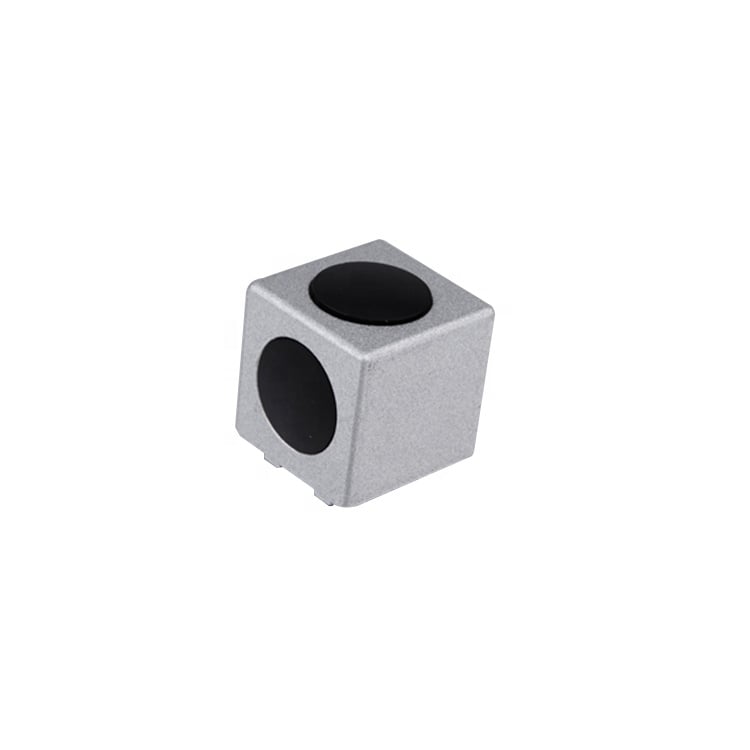
Automation systems demand materials that combine strength, precision, and cost-effectiveness, and aluminum profiles have emerged as the gold standard across industrial sectors. The choice of material foundation can significantly impact system performance, maintenance costs, and long-term reliability. Aluminum Profile systems offer engineers and manufacturers a versatile solution that meets the demanding requirements of modern automated production environments.
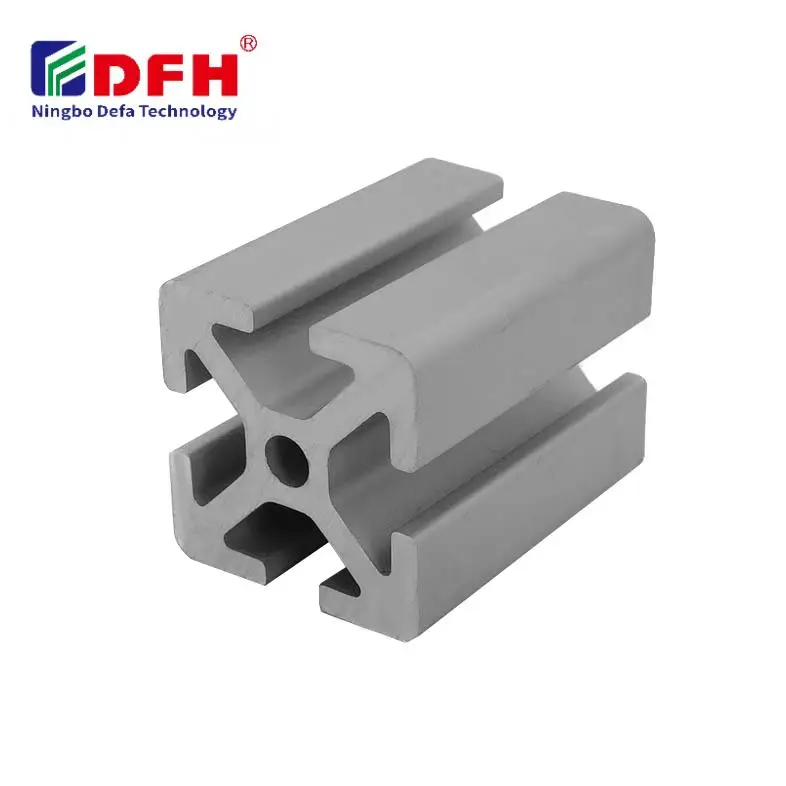
The advantages of selecting aluminum profiles for automation extend far beyond simple material selection; they represent a strategic investment in operational efficiency and scalability. From manufacturing facilities to logistics networks, organizations worldwide rely on extruded aluminum and aluminum frame systems to build robust automation infrastructures. Understanding the core benefits of these materials helps decision-makers select solutions that align with their operational goals and performance benchmarks.
Aluminum profiles deliver exceptional strength-to-weight ratios that make them particularly valuable in automation applications where load capacity must be balanced against system mobility. Industrial aluminum extrusions can support substantial forces while remaining lightweight enough to reduce installation complexity and energy consumption. This characteristic proves especially critical in conveyor systems, robotic arms, and frame assemblies where excessive weight compromises performance and increases operational costs. The material's inherent rigidity ensures dimensional stability under continuous operation, maintaining precision alignment essential for automated processes.
Extruded aluminum maintains tight tolerances throughout manufacturing, providing the consistent dimensions required for seamless component integration. Automation systems depend on exact specifications to ensure proper fit, functionality, and interchangeability across assembly lines and production facilities. Aluminum frame systems benefit from this consistency, allowing engineers to design modular solutions that scale across multiple installations without requiring custom adjustments. The repeatability of aluminum extrusion profiles minimizes compatibility issues and reduces downtime associated with incorrect fitment.
Selecting aluminum profiles for automation reduces both initial capital expenditure and long-term operational expenses compared to heavier materials like steel. The lower weight of industrial aluminum extrusions decreases shipping costs, installation labor, and energy requirements for system operation. Aluminum frame systems require less robust support structures and foundation work, translating to additional savings in infrastructure development. Beyond purchase price, the material's durability extends asset lifespan, creating favorable total cost of ownership metrics that justify investment in quality aluminum profiles.
Aluminum profiles exhibit superior corrosion resistance when properly treated, minimizing maintenance interventions and extending operational life in demanding industrial environments. Extruded aluminum naturally forms a protective oxide layer, and additional anodizing treatments enhance durability against chemical exposure, humidity, and temperature fluctuations. This resilience reduces unplanned downtime, emergency repairs, and replacement cycles that disrupt production schedules. Industrial aluminum extrusions maintain structural integrity through extended operational periods, supporting continuous automation processes without degradation of critical dimensions or load-bearing capacity.
Aluminum frame systems enable modular design approaches that accelerate deployment and facilitate future modifications as operational requirements evolve. The versatility of aluminum profiles allows engineers to create standardized component libraries that can be reconfigured across different automation applications without requiring completely new tooling or manufacturing processes. This modularity supports rapid prototyping, testing, and iteration cycles, reducing time-to-market for innovative automation solutions. Extruded aluminum's flexibility in cross-section design enables specialized profiles optimized for specific functional requirements while maintaining compatibility with standard connection systems.
Aluminum profiles seamlessly integrate with pneumatic, hydraulic, electrical, and mechanical subsystems commonly found in modern automation frameworks. The material's compatibility with standard slot-based fastening systems, sensors, and actuators simplifies assembly and enables quick component substitution when maintenance or upgrades become necessary. Industrial aluminum extrusions facilitate efficient cable management, mounting options, and protective enclosure design without requiring elaborate custom fabrication. This integration simplicity reduces engineering complexity, shortens development cycles, and minimizes the specialized expertise required for system assembly and commissioning.
Aluminum profiles offer superior strength-to-weight ratios, better corrosion resistance, and lower material costs compared to steel alternatives. While steel provides higher absolute strength, the added weight increases installation difficulty, energy consumption, and infrastructure requirements. Extruded aluminum delivers sufficient load capacity for most automation applications while remaining significantly lighter, making systems more efficient and cost-effective throughout their operational lifecycle. The material's ease of machining and modification also enables faster customization compared to traditional steel frame systems.
Extruded aluminum maintains dimensional consistency through controlled manufacturing processes that produce tight tolerances repeatably across large production runs. Industrial aluminum extrusions resist thermal expansion variations through careful alloy selection and heat treatment protocols designed for dimensional stability. The material's inherent rigidity prevents flexing or deflection under dynamic loads typical in high-speed conveyor systems and robotic applications. Aluminum frame systems designed with proper reinforcement at critical stress points maintain geometric accuracy even during extended continuous operation with minimal maintenance intervention.
Properly treated aluminum profiles perform reliably in challenging environments including exposure to moisture, salt air, chemicals, and temperature extremes. Anodizing and specialized coatings enhance the material's natural corrosion resistance, creating protective barriers that prevent degradation in demanding conditions. Industrial aluminum extrusions treated with appropriate surface finishes maintain structural integrity and aesthetic appearance across years of continuous exposure to hostile environmental factors. While site-specific conditions determine exact surface treatment requirements, aluminum frame systems equipped with suitable protective finishes rival or exceed the durability of traditional materials in most industrial automation contexts.
2026/09/30
Source aluminum profiles for versatile modular framing. Learn extrusion mechanics, strength benefits & corrosion resistance. Request details.
2026/09/30
Source aluminum profiles for construction projects. Learn structural framing, cladding & window benefits for maximum ROI. Download guide.
2026/09/30
Source optimal aluminum profile sizing techniques. Evaluate load, space, alloy, environment & cost factors to prevent deflection. Download guide.
2026/09/30
Struggling with fastener failures or rework? Master screw sizing by diameter, pitch, material, and load—plus industry-specific standards. Optimize reliability & compliance now.
2026/09/30
Source aluminum profiles for industrial engineering. Discover strength-to-weight ratios, corrosion resistance & 30% cost savings. Download guide.
2026/09/30
Source heat-resistant aluminum profile systems. Master thermal expansion science & stress management strategies for industrial builds. Download guide.