EN
EN
What is Aluminum Profile and How Does It Work?
2026/09/30
Source aluminum profiles for versatile modular framing. Learn extrusion mechanics, strength benefits & corrosion resistance. Request details.

2026/09/30
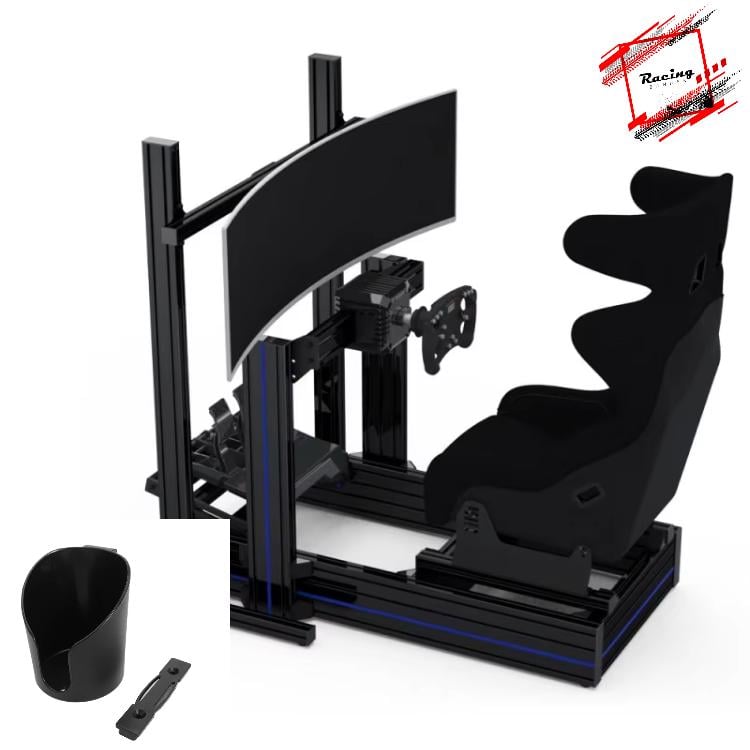
Temperature fluctuations present one of the most critical challenges in industrial design, and understanding how an Aluminum Profile responds to thermal stress is essential for engineers and manufacturers. Aluminum, as a lightweight metal with excellent thermal conductivity, undergoes measurable dimensional changes when exposed to temperature variations. Unlike brittle materials that fracture under thermal shock, aluminum maintains structural integrity through its inherent flexibility and thermal properties, making it a preferred choice across aerospace, automotive, construction, and manufacturing sectors.
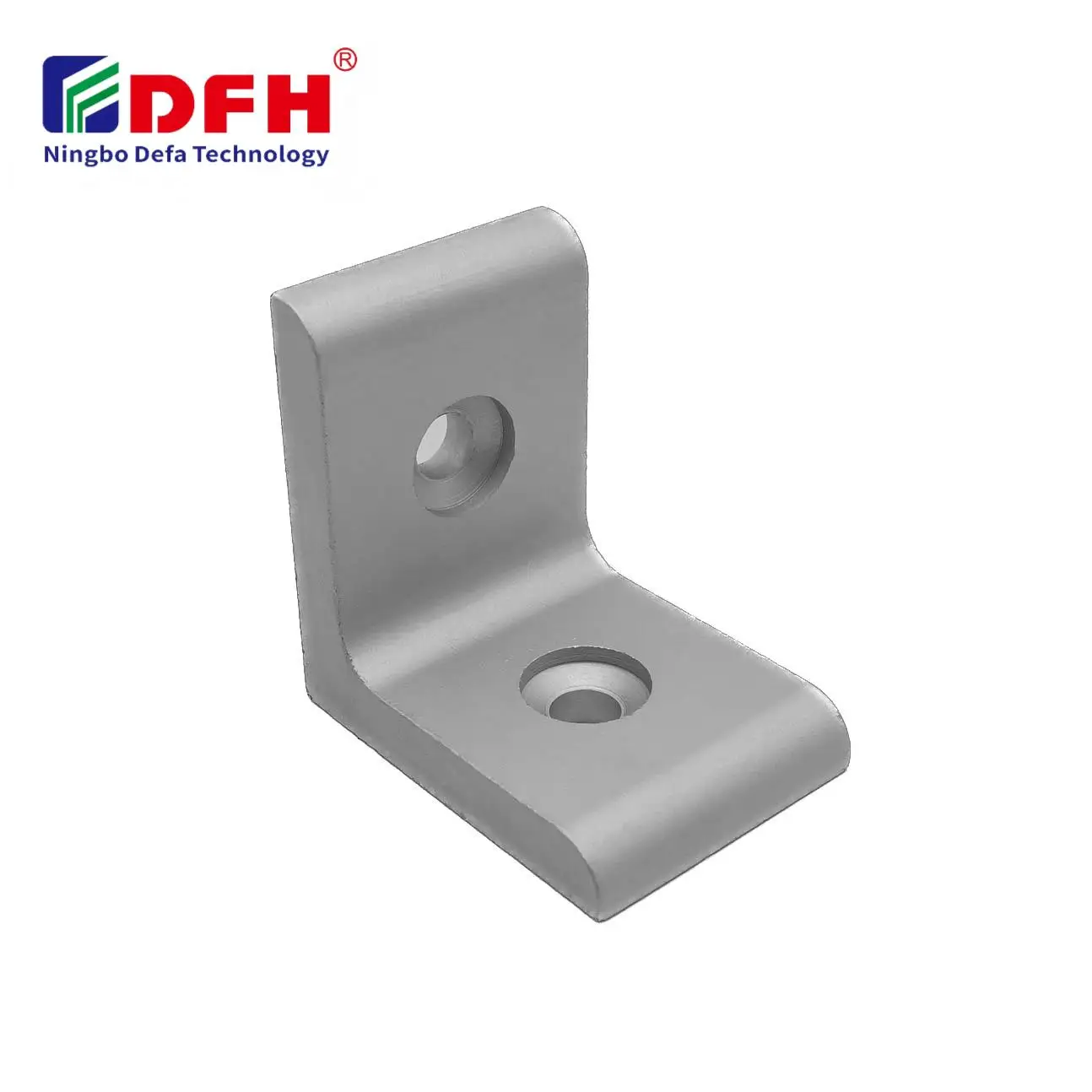
The behavior of extruded aluminum under thermal stress depends on several interconnected factors: the alloy composition, cross-sectional geometry, surface finish, and environmental exposure patterns. Industrial aluminum frame systems must be engineered specifically to accommodate thermal movement without compromising assembly tolerances, connection integrity, or operational performance. This article explores the thermal dynamics of aluminum extrusions, practical design strategies, and real-world implementation approaches that ensure reliable performance across demanding temperature ranges.
Extruded aluminum expands and contracts predictably when temperature changes occur. The linear thermal expansion coefficient for aluminum is approximately 23.1 × 10⁻⁶ per degree Celsius, meaning a one-meter aluminum frame experiences roughly 0.023 millimeters of length change per degree Celsius increase. This property is consistent across most common industrial aluminum alloys, including 6061-T6, 5052, and 7075 series materials. For a 10-meter industrial aluminum extrusion exposed to a 50-degree temperature swing, total expansion or contraction can reach 11.5 millimeters, which becomes critically important in precision assemblies where component fit and alignment must remain within tight tolerances.
Different aluminum frame systems exhibit slightly different thermal responses based on their alloy composition. Extruded aluminum alloys containing copper, magnesium, silicon, or zinc elements experience marginally different expansion rates compared to pure aluminum. T-slot aluminum profiles commonly used in industrial automation maintain consistent thermal properties regardless of whether they incorporate integral channels or mounting surfaces. The anodized or powder-coated surface finishes applied to industrial aluminum extrusions do not significantly alter thermal expansion, though they do provide environmental protection that indirectly enhances structural longevity by preventing corrosion-related degradation that could compromise dimensional stability over extended service periods.
Professional engineers designing aluminum frame systems account for thermal movement through deliberate gap placement and expansion joint configuration. When multiple aluminum profiles connect end-to-end in outdoor or temperature-variable environments, intentional gaps ranging from 5 to 15 millimeters per 10 meters of length allow free expansion without generating internal stresses. Industrial aluminum extrusions used in solar tracking systems, outdoor machinery enclosures, or aerospace structural components require calculated expansion allowances that prevent buckling, warping, or fastener shear stress. The orientation of expansion gaps must align with the direction of maximum thermal movement, typically along the primary load path or longest dimension of the assembly.
Connection methods between aluminum profiles significantly influence how thermal stress distributes throughout an assembly. Rigid bolted connections can concentrate thermal stresses at specific points, potentially causing joint failure or component distortion. Industrial aluminum frame systems employ slotted bolt holes, floating connectors, or compliant mounting systems that permit controlled movement while maintaining structural integrity. Welded connections in aluminum extrusions create permanent bonds that do not accommodate differential thermal expansion, making welding suitable primarily for monolithic structures designed to expand as unified assemblies rather than articulated multi-component systems. The choice between rigid and compliant fastening directly affects whether thermal stress propagates uniformly or concentrates at weak points.
Industrial aluminum extrusions deployed in outdoor environments face dramatic temperature swings that can exceed 80 degrees Celsius between day and night cycles. Solar panel mounting frameworks constructed from aluminum profiles must accommodate thermal movement while maintaining electrical contact integrity and structural stability. Similarly, arctic and desert industrial applications expose aluminum frame systems to temperature extremes where thermal cycling becomes a primary failure mechanism. Thermal stress combined with mechanical vibration or fatigue loading accelerates component wear, making thermal design an integral part of long-term reliability engineering. The exposed surface area and mass of the aluminum extrusion influence how rapidly thermal equilibration occurs, affecting peak stress values and thermal gradient distributions within the material cross-section.
Precision manufacturing environments and laboratory equipment increasingly rely on aluminum profiles to maintain dimensional tolerances despite environmental temperature fluctuations. CNC machine tool tables, optical bench structures, and semiconductor processing equipment utilize extruded aluminum because thermal accommodation mechanisms can be engineered into the design architecture. Control systems that maintain constant-temperature environments through active climate conditioning work in concert with thermally-accommodating structural elements to achieve nanometer-level precision. Industrial aluminum frame systems in these applications often incorporate redundant cooling circuits or thermal isolation elements that decouple critical components from ambient temperature variations, enabling thermal stability without complete environmental enclosure.
Unmanaged thermal expansion in aluminum frame systems can cause misalignment, binding, or failure of moving components. Excessive internal stress from constrained thermal movement may initiate crack propagation in welded regions or cause fastener loosening through fatigue cycling. Precision assemblies experiencing uncontrolled thermal growth typically develop measurable dimensional drift that compromises product performance, measurement accuracy, or safety margins in load-bearing structures. Industrial applications often experience catastrophic failure when thermal accommodation is overlooked during the initial design phase of aluminum profiles or frame systems.
Engineers use the thermal expansion formula: ΔL = L₀ × α × ΔT, where ΔL is dimensional change, L₀ is original length, α is the thermal expansion coefficient, and ΔT is temperature change. For industrial aluminum extrusions, the coefficient is approximately 23.1 × 10⁻⁶ per degree Celsius. Designers multiply this coefficient by the component length and expected temperature range to determine required gap spacing, fastener slot dimensions, or compliant element deflection. Software tools and finite element analysis programs now automate these calculations for complex aluminum frame systems, accounting for multi-directional expansion and stress concentration factors within the profile geometry.
Anodizing, powder coating, and other surface finishes on aluminum profiles do not significantly alter the thermal expansion coefficient or heat capacity of the base material. These protective coatings do, however, affect surface emissivity, which influences how rapidly the aluminum absorbs or radiates thermal energy in solar-exposed environments. A dark powder-coated aluminum extrusion will reach higher peak temperatures than a polished or light-colored profile when exposed to identical solar radiation. This difference in surface temperature can modify the magnitude of thermal stress experienced, making surface finish selection an indirect but important consideration in thermal performance optimization for industrial aluminum frame systems.
2026/09/30
Source aluminum profiles for versatile modular framing. Learn extrusion mechanics, strength benefits & corrosion resistance. Request details.
2026/09/30
Source aluminum profiles for construction projects. Learn structural framing, cladding & window benefits for maximum ROI. Download guide.
2026/09/30
Source optimal aluminum profile sizing techniques. Evaluate load, space, alloy, environment & cost factors to prevent deflection. Download guide.
2026/09/30
Struggling with fastener failures or rework? Master screw sizing by diameter, pitch, material, and load—plus industry-specific standards. Optimize reliability & compliance now.
2026/09/30
Source aluminum profiles for industrial engineering. Discover strength-to-weight ratios, corrosion resistance & 30% cost savings. Download guide.