EN
EN
What is Aluminum Profile and How Does It Work?
2026/09/30
Source aluminum profiles for versatile modular framing. Learn extrusion mechanics, strength benefits & corrosion resistance. Request details.

2026/09/30
The Aluminum Profile has become indispensable across manufacturing, construction, and engineering sectors. Whether designing machinery frames, building window systems, or creating structural components, industrial professionals recognize that the right material selection directly impacts project performance, durability, and lifecycle cost. Aluminum profiles deliver a combination of properties that few alternative materials can match, making them the preferred choice for demanding applications.
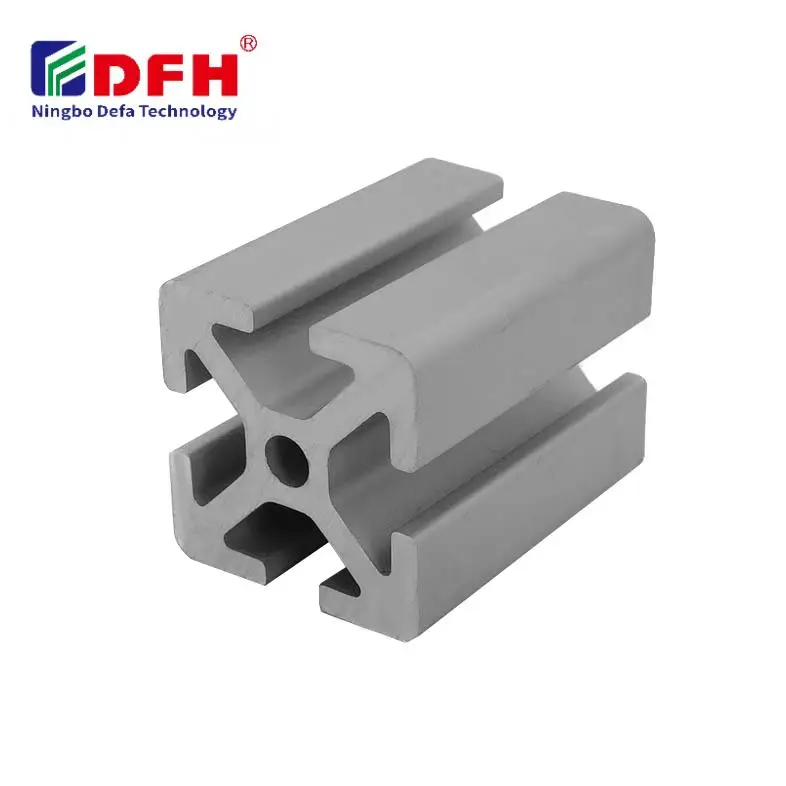
Understanding the main benefits of aluminum profiles helps engineers and procurement teams make informed decisions about material specifications, supplier partnerships, and long-term investment strategy. This guide examines the practical advantages that make extruded aluminum solutions so attractive across diverse industrial sectors and explores how these benefits translate into measurable business value.
Extruded aluminum offers remarkable strength relative to its weight, a property that fundamentally changes design economics across multiple industries. Industrial aluminum extrusions can support substantial loads while remaining significantly lighter than steel alternatives of equivalent strength. This advantage reduces material costs, lowers transportation expenses, and simplifies installation procedures on job sites and manufacturing facilities.
The lightweight nature of aluminum frame systems means faster assembly, reduced labor requirements, and decreased energy consumption during production and transport. Machine builders particularly value this characteristic because lighter frames require smaller motors, simpler support structures, and reduced foundational requirements. When multiplied across hundreds of units in large-scale operations, these cumulative savings create substantial competitive advantages and operational efficiencies that directly improve bottom-line profitability.
Because extruded aluminum provides excellent strength without adding excessive weight, engineers gain freedom to optimize designs for specific functional requirements rather than being constrained by material limitations. Profiles can be tailored with integrated channels, threads, mounting surfaces, and geometric features during the extrusion process, eliminating post-manufacturing assembly steps and reducing component counts. This design flexibility enables innovation in equipment functionality, improved ergonomic considerations, and enhanced user experience in end products.
Aluminum naturally forms a protective oxide layer when exposed to air, providing inherent corrosion resistance that steel and many other metals require expensive coating systems to achieve. Industrial aluminum extrusions resist rust, oxidation, and environmental degradation across diverse climates, from coastal salt-spray environments to humid industrial settings and arid regions. This natural protection dramatically extends equipment lifespan, reduces maintenance downtime, and minimizes the need for protective treatments that add cost and environmental burden.
The durability advantage translates directly into lower lifecycle costs and reduced replacement frequency, which particularly benefits applications in challenging environments or locations where maintenance access is difficult or expensive. Because aluminum frame systems maintain structural integrity across extended operating periods without significant corrosion, manufacturers can confidently design equipment with longer service intervals and improved reliability specifications that customers increasingly demand.
When additional protection is needed, extruded aluminum accepts anodizing, powder coating, and specialized finishes that create durable surface barriers while maintaining the material's inherent advantages. These optional treatments allow customization for specific aesthetic, functional, or environmental requirements without compromising the fundamental benefits of aluminum frame systems. The ability to combine natural corrosion resistance with added surface treatments provides unmatched flexibility compared to materials requiring mandatory protective systems.
Industrial aluminum extrusions offer compelling cost economics compared to alternative materials offering similar performance characteristics. The global supply of aluminum ensures stable pricing with multiple sourcing options, and the mature extrusion industry has optimized manufacturing processes to achieve high production efficiency. When purchasing extruded aluminum products, buyers benefit from established supply chains, competitive pricing pressure, and standardized specifications that simplify sourcing and procurement procedures.
The lower material cost combines with reduced machining, finishing, and assembly requirements to create substantial cost advantages across the production lifecycle. Unlike materials requiring extensive post-processing, aluminum profiles arrive ready for integration with minimal secondary operations, directly reducing manufacturing labor and processing overhead. This operational efficiency particularly benefits high-volume manufacturers where per-unit savings multiply across thousands or millions of components into meaningful profit improvements.
The lightweight property of aluminum frame systems significantly reduces transportation costs, a factor that becomes increasingly important as fuel prices fluctuate and environmental regulations tighten. Shipping aluminum profiles requires less cargo capacity, allowing more units per truckload and reducing overall logistics expense per component. For companies serving geographically dispersed markets or operating in regions where transportation represents substantial cost burden, the weight advantage of extruded aluminum delivers measurable financial benefit that compounds across annual operations.
Aluminum profiles provide superior long-term reliability in corrosive environments because they resist rust without expensive coatings, while steel requires continuous maintenance and protective systems. Though steel offers higher absolute strength per volume, aluminum's strength-to-weight ratio means properly designed aluminum frame systems deliver equivalent performance at lower weight, reduced stress on supporting structures, and lower total cost of ownership across extended service periods. The choice depends on specific environmental conditions and load requirements, but aluminum excels where corrosion resistance, weight savings, and lifecycle cost matter most.
Extruded aluminum offers exceptional customization possibilities through profile design, integrated features, and surface finish options that address specific application requirements. Manufacturers can specify custom cross-sectional shapes, integrated channels, mounting surfaces, and dimensional tolerances during the extrusion process, while surface treatments like anodizing or powder coating further expand aesthetic and functional possibilities. This flexibility allows aluminum profiles to be tailored for specialized applications while maintaining the cost and performance benefits of standardized manufacturing processes.
Aluminum frame systems excel in automation and machinery because they combine lightweight construction that simplifies assembly with inherent corrosion resistance that ensures reliability in industrial environments. The ability to integrate mounting features directly into the profile eliminates fasteners and assembly steps, reducing downtime and maintenance requirements while improving structural consistency. Engineers value the design flexibility that allows optimization for specific equipment requirements while maintaining predictable cost and performance characteristics that support large-scale production deployments.
2026/09/30
Source aluminum profiles for versatile modular framing. Learn extrusion mechanics, strength benefits & corrosion resistance. Request details.
2026/09/30
Source aluminum profiles for construction projects. Learn structural framing, cladding & window benefits for maximum ROI. Download guide.
2026/09/30
Source optimal aluminum profile sizing techniques. Evaluate load, space, alloy, environment & cost factors to prevent deflection. Download guide.
2026/09/30
Struggling with fastener failures or rework? Master screw sizing by diameter, pitch, material, and load—plus industry-specific standards. Optimize reliability & compliance now.
2026/09/30
Source heat-resistant aluminum profile systems. Master thermal expansion science & stress management strategies for industrial builds. Download guide.