EN
EN
What is Aluminum Profile and How Does It Work?
2026/09/30
Source aluminum profiles for versatile modular framing. Learn extrusion mechanics, strength benefits & corrosion resistance. Request details.

2026/09/29
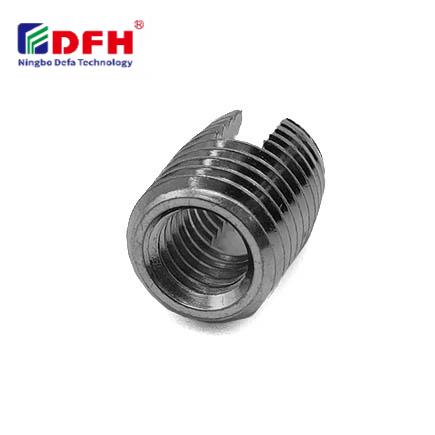
Knowing when to replace worn screws is essential for maintaining the safety, reliability, and longevity of machinery, structures, and assemblies across industrial and commercial applications. Worn screws can compromise joint integrity, increase vibration, reduce load-bearing capacity, and lead to catastrophic failure if left unaddressed. Understanding the warning signs and replacement triggers helps engineers, maintenance teams, and facility managers prevent costly downtime and safety incidents. This guide explores the key indicators that signal when screws require replacement and how to implement effective maintenance protocols.
Different applications demand different replacement schedules, and the severity of wear varies based on operating conditions, material quality, and fastening design. Whether you are managing production equipment, structural frameworks, or precision assemblies, establishing clear replacement criteria for your fasteners ensures consistent performance and reduces liability risks. The decision to replace screws involves evaluating visible damage, measuring dimensional changes, and assessing functional performance under load.
Corrosion is one of the most common reasons to replace screws, particularly in humid, chemical, or marine environments. Surface rust, white oxidation on stainless fasteners, or deep pitting signals that the screw's protective coating has failed and structural integrity is compromised. The affected screw loses cross-sectional area and becomes brittle, reducing its ability to withstand tensile and shear loads. Even light surface corrosion can accelerate over time, especially under vibration or repeated stress cycling.
Stripped or damaged threads represent another critical failure mode. If a screw cannot achieve proper torque or repeatedly loosens during operation, the threads are likely stripped or wear marks are preventing secure seating. Deformed screw heads that are cracked, split, or exhibit permanent plastic deformation indicate overstress or improper installation. Threading damage and head distortion compromise the mechanical advantage of screws and reduce reliability significantly.
Fasteners experience dimensional loss through corrosion, wear, or mechanical abrasion. When measuring fasteners, check for diameter reduction, shortened length, or flattened surfaces that indicate material has been lost. A screw that measures noticeably smaller than specification tolerances should be replaced before it fails under load. Thinning of the shaft, particularly near stress concentration points like the thread transition, signals imminent failure.
Bolt types and fastening configurations vary widely, but all are vulnerable to the same physical degradation mechanisms. Metric and inch-standard fasteners, specialty bolt types, and precision-threaded fastening systems all require periodic inspection for dimensional compliance. Using micrometers, calipers, or precision gauges to verify fastener dimensions ensures objective replacement decisions rather than subjective visual assessment alone.
When a fastened joint experiences repeated vibration, thermal cycling, or impact loading, preload loss occurs as screws relax under stress. If bolts repeatedly loosen despite proper installation, or if disassembly reveals inconsistent tightness across similar fasteners, the screw's ability to maintain clamping force has deteriorated. Progressive preload loss indicates that the fastener material has been strain-hardened beyond its elastic limit or that surface damage prevents effective load transfer.
Testing preload consistency across a joint provides quantitative data for replacement decisions. If measured bolt tension or torque verification shows values below 80 percent of specification, or if some fasteners hold significantly more preload than others, selective replacement of underperforming screws restores joint stability. Threaded fastening systems depend on uniform preload distribution; compromised fasteners disrupt this balance and accelerate wear in neighboring joints.
High-cycle fatigue is a primary failure mode in machinery and structures subject to dynamic loading. Hairline cracks at thread roots, notches, or head fillets indicate fatigue initiation and demand immediate replacement. Once fatigue cracks begin, screw failure becomes unpredictable and can occur suddenly without further warning. Inspecting fasteners under magnification for microcracking, particularly in applications involving vibration or cyclic stress, is a proactive replacement strategy.
Material brittleness, hydrogen embrittlement in certain alloys, or tempering loss from excessive heat exposure also compromise screw performance under fatigue loading. If fasteners fail prematurely in otherwise well-designed assemblies, material degradation or improper fastening design may be responsible. Replacing all fasteners with verified compliance to material specifications and applying appropriate surface treatments extends service life and reduces unexpected failures.
Establishing regular inspection intervals for critical fasteners prevents catastrophic failures. Equipment manuals often specify torque check frequencies and replacement cycles for specific applications. For machinery operating in harsh environments, inspect fasteners every 500–2000 operating hours, depending on severity and consequence of failure. Structural applications, bridges, and load-bearing frameworks benefit from annual or biennial fastener audits by qualified inspectors.
Bolt types and fastening configurations in critical applications warrant higher inspection frequency. Precision-threaded fastening systems holding vibration-sensitive components or high-pressure equipment require more aggressive maintenance protocols than non-critical fastening applications. Documenting inspection dates, measured values, and replacement history builds a maintenance database that informs future replacement decisions and identifies recurring failure patterns.
Immediate screw replacement is necessary when joints exhibit looseness during operation, when fastener noise or rattling occurs, or when leak paths appear around sealed connections. If a fastener fails catastrophically during operation, all similar fasteners in the same assembly should be inspected and replaced proactively rather than waiting for additional failures. Post-failure analysis of broken fasteners often reveals root causes such as inadequate material grade, incorrect installation torque, or environmental factors that should inform replacement strategy.
Safety-critical applications including automotive, aerospace, medical devices, and high-pressure vessels demand zero-tolerance policies for fastener wear. In these industries, fasteners are often replaced on a time-based schedule regardless of visible wear, ensuring that material properties and structural integrity remain within acceptable limits. This conservative approach eliminates uncertainty and protects against liability from fastener-related failures.
Replacement frequency depends on operating environment and application criticality. Most industrial equipment benefits from fastener inspection every 6–12 months, with replacement as needed based on visible wear, corrosion, or preload loss. Harsh environments such as coastal zones, chemical plants, or high-vibration machinery warrant quarterly or bi-monthly inspections. Always follow equipment manufacturer recommendations and industry standards for your specific application.
Isolated corrosion or damage in non-critical applications allows selective screw replacement. However, assemblies experiencing widespread wear, fatigue, or environmental degradation benefit from complete fastener replacement to restore uniform preload, eliminate preload inconsistency, and reduce future maintenance. Complete replacement is especially important in bolt types supporting high-stress joints or precision-threaded fastening systems where performance depends on matched fastener properties.
In most cases, damaged fasteners should be replaced rather than repaired. Stripped threads cannot be reliably restored; attempting to over-tighten a compromised screw risks breaking it and complicating removal. Corroded or cracked fasteners lose material and structural integrity that cannot be recovered through repair. Only minor surface contamination or light corrosion can be addressed through cleaning; actual wear damage demands replacement with fasteners meeting original specification.
2026/09/30
Source aluminum profiles for versatile modular framing. Learn extrusion mechanics, strength benefits & corrosion resistance. Request details.
2026/09/30
Source aluminum profiles for construction projects. Learn structural framing, cladding & window benefits for maximum ROI. Download guide.
2026/09/30
Source optimal aluminum profile sizing techniques. Evaluate load, space, alloy, environment & cost factors to prevent deflection. Download guide.
2026/09/30
Struggling with fastener failures or rework? Master screw sizing by diameter, pitch, material, and load—plus industry-specific standards. Optimize reliability & compliance now.
2026/09/30
Source aluminum profiles for industrial engineering. Discover strength-to-weight ratios, corrosion resistance & 30% cost savings. Download guide.
2026/09/30
Source heat-resistant aluminum profile systems. Master thermal expansion science & stress management strategies for industrial builds. Download guide.