EN
EN
What is Aluminum Profile and How Does It Work?
2026/09/30
Source aluminum profiles for versatile modular framing. Learn extrusion mechanics, strength benefits & corrosion resistance. Request details.

2026/09/30
Corrosion resistance is one of the most critical properties that make aluminum profiles such a valuable material choice in industrial, construction, and architectural applications. When you specify an aluminum profile for a demanding environment, you're banking on its inherent ability to withstand moisture, salt exposure, and chemical attack without degrading. Understanding the science behind this corrosion resistance helps engineers, architects, and procurement professionals make informed decisions about material selection and long-term performance expectations.
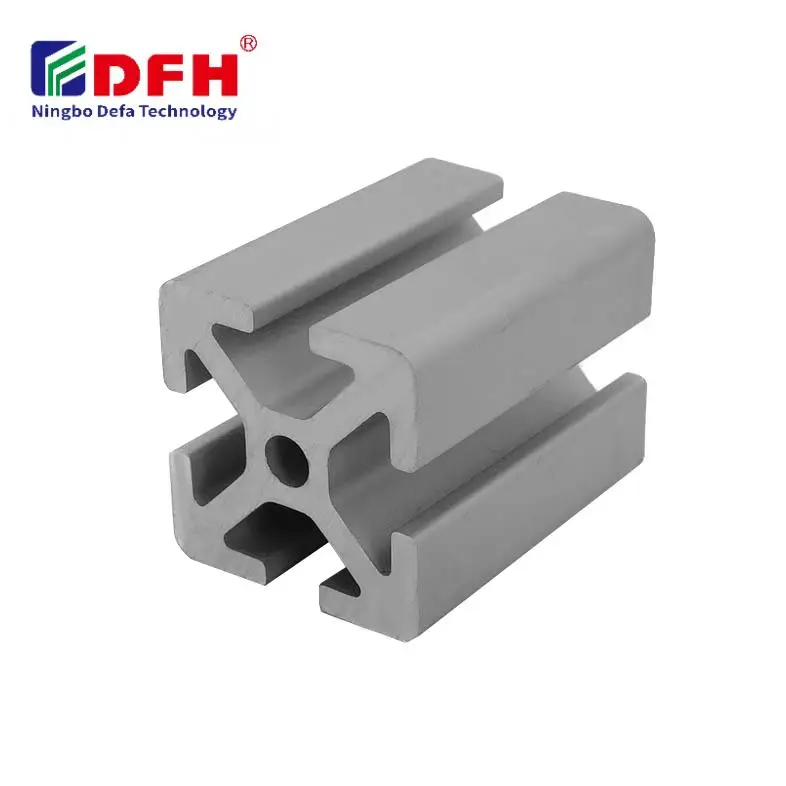
The corrosion resistance of aluminum begins at the atomic level and is fundamentally different from ferrous metals. Unlike steel, which relies on protective coatings or passivation treatments to prevent rust, aluminum naturally develops a protective oxide barrier when exposed to air. This spontaneous oxide formation is the foundation of aluminum's reputation for durability, and it remains effective even when the surface is scratched or disturbed, making extruded aluminum and industrial aluminum extrusions ideal for outdoor and corrosive environments.
Pure aluminum reacts with oxygen in the atmosphere to form aluminum oxide, a ceramic-like compound that adheres tightly to the metal surface. This oxide layer forms instantly and continuously, even when the underlying metal is exposed to air. The oxide layer is typically only a few nanometers thick initially, but it remains remarkably effective at blocking corrosive agents from reaching the base aluminum. This self-healing property means that if the oxide layer is scratched or damaged, a new oxide layer begins forming immediately on the exposed aluminum surface beneath the damage.
The natural oxide layer that forms on aluminum profiles can reach a thickness of around 4 nanometers under standard atmospheric exposure. While this seems impossibly thin, it is sufficient to prevent corrosion because oxygen and water molecules cannot easily penetrate such a dense ceramic barrier. When aluminum frame systems are used in marine or industrial environments where salt spray or chemical exposure is a concern, the oxide layer provides the first line of defense. The density and impermeability of this oxide coating mean that extruded aluminum maintains structural integrity even in harsh conditions where unprotected steel would rust extensively.
Different aluminum alloys exhibit varying degrees of corrosion resistance depending on their chemical composition. Industrial aluminum extrusions often incorporate elements such as magnesium, silicon, and copper to achieve specific mechanical properties, but these additions also influence corrosion behavior. Series 5000 and 6000 aluminum alloys, which are commonly used in architectural and marine applications, offer excellent corrosion resistance because their alloying elements are carefully balanced to enhance oxide stability without introducing galvanic couples that would accelerate attack. An aluminum profile designed for coastal environments typically uses alloy compositions that minimize susceptibility to pitting corrosion and stress cracking.
Some aluminum alloys contain copper in significant quantities, and when these materials are exposed to moisture and electrolytes, copper precipitates can become cathodic to the surrounding aluminum matrix, creating localized galvanic corrosion. Intelligent alloy selection is therefore essential when specifying extruded aluminum for wet or salty environments. Engineers must evaluate not only the mechanical strength of an aluminum frame systems design but also the corrosion susceptibility of the chosen alloy. Alloys in the 1000, 3000, 5000, and 6000 series generally provide superior corrosion resistance compared to higher-copper variants in the 2000 and 7000 series, making them preferred choices for structural applications demanding long service life.
While the natural oxide layer provides baseline corrosion protection, industrial aluminum extrusions and architectural profiles are frequently treated with anodizing, an electrochemical process that thickens the oxide layer to 25 micrometers or more. This anodized layer is far thicker than the native oxide and offers dramatically improved resistance to pitting, general corrosion, and mechanical damage. Anodized aluminum profiles maintain their corrosion resistance even if the anodized coating is scratched because the underlying aluminum continues to passivate. Architects and engineers specify anodized aluminum frame systems for facades, window frames, and exposed structural members because the treatment extends service life to 30 years or more in demanding environments.
In applications where even anodizing provides insufficient protection or where aesthetic requirements demand colored finishes, an aluminum profile can be further protected with powder coatings, paint systems, or conversion coatings like chromate treatment. These additional barriers work in conjunction with the oxide layer and anodize treatment to create multi-layered defense against corrosion. Extruded aluminum destined for marine environments, chemical plants, or industrial facilities with aggressive atmospheres often receives composite coating systems that combine oxide formation, anodizing, and topcoat applications. Each layer serves a specific function: the oxide layer provides baseline passivation, the anodize thickens and stabilizes the oxide, and the topcoat shields the anodized surface from UV damage and direct chemical exposure.
When an aluminum profile or industrial aluminum extrusions are fastened directly to steel or copper components using conventional fasteners, galvanic corrosion can occur if moisture is present. This electrochemical process accelerates corrosion of the more active aluminum metal while leaving the nobler metal (steel or copper) relatively protected. To prevent this galvanic attack, engineers use isolation techniques such as nylon washers, stainless steel fasteners, or insulating tape between aluminum and dissimilar metals. Understanding galvanic compatibility is critical because it represents one of the few scenarios where aluminum's natural corrosion resistance can be compromised. Careful material selection and installation practices ensure that extruded aluminum components maintain their corrosion resistance even in complex multi-material assemblies.
The corrosion resistance of an aluminum profile is always context-dependent. While aluminum performs exceptionally well in fresh water, moderate salt spray, and atmospheric exposure, its behavior changes based on pH levels, temperature, chloride concentration, and the presence of other ionic species. Alkaline or neutral environments favor aluminum's oxide layer stability, whereas highly acidic or acidic environments can thin or dissolve the oxide. Industrial aluminum extrusions specified for food processing facilities, chemical handling areas, or marine installations must be selected and treated based on the specific environmental chemistry. Testing standards such as ASTM B117 salt spray testing help designers predict how aluminum frame systems will perform under years of real-world exposure before committing to material specifications.
Aluminum profiles resist corrosion primarily because of the natural aluminum oxide layer that forms instantly when aluminum is exposed to air. This ceramic-like oxide coating blocks oxygen and moisture from reaching the underlying metal, preventing rust formation. Unlike steel, which requires external protection or coatings to prevent oxidation, aluminum's oxide layer continuously regenerates itself even if scratched. Industrial aluminum extrusions and aluminum frame systems rely on this self-passivating mechanism as their first and most fundamental defense against corrosive environments.
Anodizing is an electrochemical process that thickens the natural aluminum oxide layer to 25 micrometers or more, compared to just a few nanometers for untreated aluminum. This dramatically increased oxide thickness provides superior protection against pitting, general corrosion, and mechanical damage. Anodized aluminum profiles maintain their protective properties even when scratched because the underlying aluminum continues to passivate and form new oxide. Anodizing is widely used for architectural aluminum frame systems and industrial aluminum extrusions because it extends service life to 30 years or more in demanding coastal and industrial environments.
Yes, galvanic corrosion can occur when an aluminum profile is fastened directly to steel or copper using conventional fasteners in the presence of moisture. This electrochemical process accelerates corrosion of the more active aluminum. Prevention requires isolation techniques such as nylon washers, stainless steel fasteners, or insulating materials between aluminum and dissimilar metals. Proper installation practices and careful material selection in multi-material assemblies ensure that extruded aluminum and industrial aluminum extrusions maintain their inherent corrosion resistance despite contact with nobler metals.
2026/09/30
Source aluminum profiles for versatile modular framing. Learn extrusion mechanics, strength benefits & corrosion resistance. Request details.
2026/09/30
Source aluminum profiles for construction projects. Learn structural framing, cladding & window benefits for maximum ROI. Download guide.
2026/09/30
Source optimal aluminum profile sizing techniques. Evaluate load, space, alloy, environment & cost factors to prevent deflection. Download guide.
2026/09/30
Struggling with fastener failures or rework? Master screw sizing by diameter, pitch, material, and load—plus industry-specific standards. Optimize reliability & compliance now.
2026/09/30
Source aluminum profiles for industrial engineering. Discover strength-to-weight ratios, corrosion resistance & 30% cost savings. Download guide.
2026/09/30
Source heat-resistant aluminum profile systems. Master thermal expansion science & stress management strategies for industrial builds. Download guide.