EN
EN
What is Aluminum Profile and How Does It Work?
2026/09/30
Source aluminum profiles for versatile modular framing. Learn extrusion mechanics, strength benefits & corrosion resistance. Request details.

2026/09/23
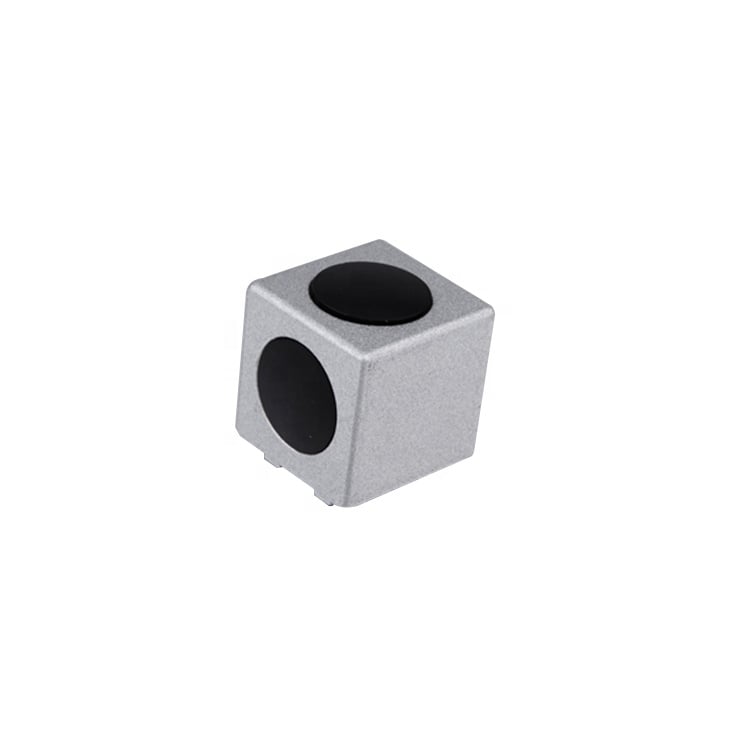
Understanding the load capacity of Bolt Connectors is essential for engineers and manufacturers designing mechanical systems that must withstand operational stresses. Load capacity determines whether a fastening solution will perform safely under actual working conditions or fail prematurely, potentially causing equipment damage or safety hazards. The ability to calculate and verify load ratings ensures that your assembly meets both regulatory requirements and performance specifications. Proper selection of bolt connectors directly impacts the reliability of machinery, structural frames, and industrial equipment across countless applications.
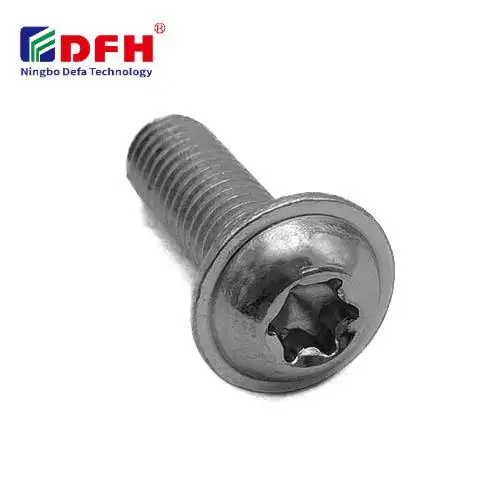
Load capacity depends on multiple interconnected variables, including bolt material grade, diameter, thread pitch, and the specific application environment. Threaded fasteners must distribute forces evenly across their cross-sectional area while resisting tensile, shear, and combined stresses. The engineering challenge lies in matching connector properties to the actual loads your system experiences during operation. This guide explains how load capacity is determined, what factors influence performance, and how proper connector tensioning and installation methods ensure reliable operation.
The material composition of threaded fasteners directly determines their maximum load-bearing capability. Steel bolt connectors are classified by grade designations that correspond to specific tensile strength values, typically ranging from grade 4.6 to grade 10.9 in metric standards. A grade 8.8 bolt connector, for example, offers significantly higher load capacity than a grade 5.8 equivalent of the same diameter, allowing engineers to use smaller fasteners in high-stress applications. The tensile strength value represents the maximum stress the material can withstand before fracturing, measured in megapascals. Understanding these grading systems enables proper selection for structural supports, machinery frames, and precision assemblies.
The bolt connector diameter directly influences load capacity through its cross-sectional area, which increases exponentially as diameter grows. An M10 bolt connector has roughly 78 percent more cross-sectional area than an M8, translating to proportionally higher load-carrying capability. Engineers calculate the stressed area of threaded fasteners using the core diameter at the root of the thread, not the nominal diameter, since stress concentrates in this thinner section. Selecting the appropriate diameter requires careful analysis of expected loads, environmental factors, and space constraints. Common industrial sizes range from M5 through M24, each offering distinct load capacity ranges suitable for different mechanical applications.
Calculating the maximum safe tensile load on bolt connectors involves multiplying the stress area by the material's yield strength, then applying a safety factor appropriate to the application. Most engineering standards recommend safety factors between 2 and 5, depending on whether the connection is permanent, semi-permanent, or subject to vibration and fatigue. For a grade 8.8 M10 bolt connector, the tensile load capacity before safety factor application reaches approximately 50 kilonewtons, providing substantial holding power for structural applications. Connector tensioning must remain below the yield point to prevent permanent deformation or connection failure. Proper calculation ensures that fastened assemblies maintain integrity throughout their operational lifespan.
Shear forces act perpendicular to the bolt connector axis and generate different stress patterns than tensile loading. When bolt connectors experience shear stress, the material can fail at approximately 65 to 75 percent of its tensile strength limit, depending on material type and loading conditions. Double-shear connections, where the fastener experiences stress on two planes, distribute loads more effectively than single-shear arrangements. Bolt installation methods significantly affect shear performance, particularly when connectors experience cyclic or impact loading. Engineers must account for both tensile and shear forces in complex assemblies where loads operate at multiple angles.
Connector tensioning establishes the preload that keeps all components in firm contact while accommodating service loads. Under-tensioned bolt connectors allow joint separation and micro-motion, accelerating fatigue failure and reducing effective load capacity by up to 40 percent. Over-tensioning can exceed the elastic limit and cause permanent thread damage or even fastener breakage. Proper bolt installation methods employ torque wrenches, tension indicators, or ultrasonic measurement to achieve consistent preload values within manufacturer specifications. The relationship between torque and actual tension varies based on friction, surface finish, and lubrication, making calibrated torque application essential for high-reliability assemblies.
The installation environment determines whether threaded fasteners will maintain their designed load capacity throughout service life. Corrosive environments accelerate surface degradation and reduce effective cross-sectional area, ultimately lowering load limits by 20 to 35 percent in extended service. Temperature fluctuations affect material properties and preload retention, particularly in assemblies spanning outdoor or extreme-condition applications. Proper surface treatment, coating selection, and connector grade selection address environmental challenges systematically. Bolt installation methods should include locking devices such as washers, nylon inserts, or thread-locking compounds when vibration might loosen fasteners over time.
Heavy machinery requires bolt connectors rated for sustained loads often exceeding 100 kilonewtons, particularly in base frames and drive components. Aluminum profiles in industrial frameworks depend on correctly selected threaded fasteners to maintain structural integrity under operational vibration and thermal stress. Load calculations must account for peak operational stresses plus safety margins, ensuring reliable performance throughout equipment lifespan. Maintenance schedules should include periodic tension verification to detect loosening before failures occur. Proper bolt connector selection prevents catastrophic equipment failures and extends maintenance intervals.
Applications requiring lightweight construction benefit significantly from high-strength bolt connectors, allowing smaller fasteners to support equivalent loads compared to lower-grade alternatives. High-grade threaded fasteners reduce assembly weight while maintaining required safety margins, improving fuel efficiency in vehicles and equipment performance in mobile applications. Connector tensioning must still follow standard practices despite smaller fastener sizes, preventing the common mistake of assuming lighter fasteners need less preload. Proper bolt installation methods remain critical even in weight-optimized designs to ensure reliability and prevent unexpected failures.
Bolt connector load capacity increases with the square of diameter growth because cross-sectional area expands quadratically. An M12 bolt offers approximately 56 percent greater cross-sectional area than an M10, translating directly to higher stress-carrying capability. This relationship makes diameter selection a primary factor in load capacity engineering, allowing designers to reduce material grade requirements in some applications by increasing fastener diameter instead.
Connector tensioning establishes preload that fundamentally affects how external loads distribute through the joint. Proper connector tensioning keeps components clamped together, preventing separation and ensuring that applied loads distribute evenly across the bolt's cross-section. Under-tensioned connections experience micro-motion and fatigue failure at much lower loads than properly tensioned alternatives, effectively reducing the available load capacity by significant percentages.
Threaded fasteners experience material strain during initial tensioning and load application, and reuse introduces uncertainty about remaining load capacity. Bolt installation methods should specify whether fasteners require replacement, particularly in critical applications or after exposure to vibration and thermal cycling. High-strength bolt connectors used in aerospace or pressure vessel applications typically require replacement, while standard industrial fasteners may be reusable depending on inspection results and specific engineering protocols.
2026/09/30
Source aluminum profiles for versatile modular framing. Learn extrusion mechanics, strength benefits & corrosion resistance. Request details.
2026/09/30
Source aluminum profiles for construction projects. Learn structural framing, cladding & window benefits for maximum ROI. Download guide.
2026/09/30
Source optimal aluminum profile sizing techniques. Evaluate load, space, alloy, environment & cost factors to prevent deflection. Download guide.
2026/09/30
Struggling with fastener failures or rework? Master screw sizing by diameter, pitch, material, and load—plus industry-specific standards. Optimize reliability & compliance now.
2026/09/30
Source aluminum profiles for industrial engineering. Discover strength-to-weight ratios, corrosion resistance & 30% cost savings. Download guide.
2026/09/30
Source heat-resistant aluminum profile systems. Master thermal expansion science & stress management strategies for industrial builds. Download guide.