EN
EN
What is Aluminum Profile and How Does It Work?
2026/09/30
Source aluminum profiles for versatile modular framing. Learn extrusion mechanics, strength benefits & corrosion resistance. Request details.

2026/09/10
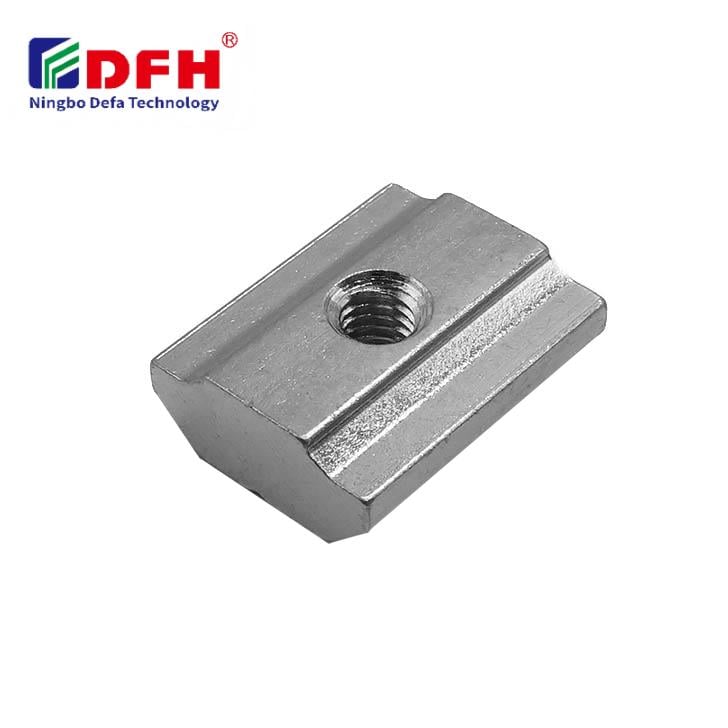
Understanding the load capacity of a T nut is essential for engineers and manufacturers designing structural assemblies, machinery frames, and modular systems. A T nut serves as a critical fastening hardware component that anchors bolts within T-slot profiles, and its ability to withstand applied forces directly impacts system reliability and safety. Load capacity depends on multiple interconnected factors including material composition, bolt diameter, slot profile dimensions, and application environment.
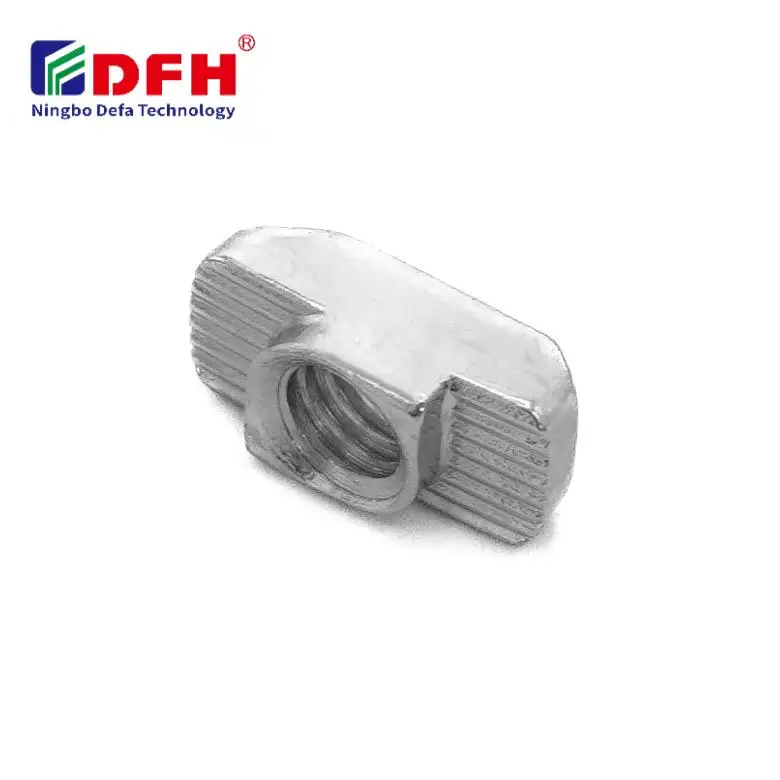
The practical load capacity of a T nut ranges from light-duty applications supporting under 100 kilograms to heavy industrial uses exceeding 1,000 kilograms per fastening point. However, rated capacity varies significantly based on the specific threaded insert design, slot dimensions, and material grade. Selecting the correct T-slot nut requires careful analysis of your application's actual loading conditions, direction of forces, and safety margins to ensure long-term performance and structural integrity.
The material composition of a T nut directly determines its maximum load capacity and resistance to permanent deformation. Steel T nuts, commonly available in zinc-plated or blue-steel finishes, typically support higher loads than aluminum or plastic alternatives. A threaded insert manufactured from high-carbon steel can withstand tensile and shear forces that would damage lower-grade materials, making material selection the first critical design decision.
Steel fastening hardware provides superior strength-to-weight ratios compared to aluminum T nuts, which are lighter but carry lower force ratings. High-strength steel T nuts with M6 or M8 bolt sizes commonly support static loads ranging from 300 to 800 kilograms when properly installed in standard T-slot profiles. Conversely, aluminum threaded insert designs often limit load capacity to 100 to 300 kilograms, making them suitable for lightweight modular workstations rather than heavy machinery applications. Material hardness, determined through heat treatment processes, further influences whether a T-slot nut maintains consistent performance under cyclic loading or high-impact conditions.
The bolt diameter used with your T nut fundamentally affects load capacity because larger bolts distribute stress across greater thread surface areas. M4 fastening hardware typically supports lower loads than M6, which itself underperforms relative to M8 bolts when installed in comparable T-slot profiles. Thread engagement length, measured in millimeters or pitch diameters, amplifies this effect by increasing the contact area between the bolt and the threaded insert nut body.
Engineers generally specify minimum thread engagement of 1.5 times the bolt diameter to achieve rated load capacity, though many industrial applications require deeper engagement for safety margins. A T nut with shallow thread engagement concentrates stress at the outermost threads, accelerating wear and reducing actual load capacity below published specifications. Conversely, T-slot nut designs incorporating full-depth threads can support sustained loads closer to theoretical maximums because stress distributes evenly throughout the thread engagement zone. When selecting fastening hardware, verify that your T nut manufacturer specifies thread engagement depth and provides corresponding load ratings for your specific bolt size.
The T-slot profile dimensions—particularly slot width, depth, and internal corner radius—significantly constrain how much load a T nut can safely support. Standard industrial profiles like 4040 and 4545 aluminum extrusions accommodate specific fastening hardware dimensions, and undersized or oversized T nuts risk misalignment, uneven load distribution, and premature failure. Installation geometry directly affects the effective load capacity because a threaded insert that sits loose or tilted within the slot cannot transfer forces efficiently to the profile material.
Proper fit between the T nut and its T-slot profile prevents stress concentration and ensures load paths remain within design limits. A T-slot nut manufactured to loose tolerances may shift under directional loading, creating edge pressures that exceed material yield points and cause permanent deformation. Precision-manufactured fastening hardware with tight tolerances maintains stable positioning, distributes forces uniformly across the nut shoulder and slot contact surfaces, and preserves rated load capacity throughout the assembly's service life. Industrial applications requiring high reliability typically specify premium threaded insert products that maintain dimensional consistency and load performance across production batches.
Exceeding load capacity causes permanent deformation, thread stripping, or nut rotation within the slot. A threaded insert subjected to sustained overload may crack, bend, or lose contact with the profile, resulting in joint failure. Catastrophic overload can break the nut entirely, causing the bolted assembly to separate suddenly and creating safety hazards in machinery or structural applications.
Calculate the total force load, divide by the number of fastening points, then select a T nut rated for at least 1.5 times that load per fastening hardware location. Verify that the selected threaded insert dimensions match your profile slot, verify thread size compatibility with your bolts, and confirm material grade suits your environment. Consulting manufacturer load tables and engineering guidelines ensures you choose appropriate fastening hardware.
Yes, cyclic loading, corrosion, and material fatigue reduce effective T nut load capacity gradually. A threaded insert exposed to vibration, temperature cycling, or corrosive environments experiences thread wear and stress concentration growth, lowering capacity below initial specifications. Periodic inspection and timely replacement of worn fastening hardware prevents unexpected joint failure and maintains system safety margins.
2026/09/30
Source aluminum profiles for versatile modular framing. Learn extrusion mechanics, strength benefits & corrosion resistance. Request details.
2026/09/30
Source aluminum profiles for construction projects. Learn structural framing, cladding & window benefits for maximum ROI. Download guide.
2026/09/30
Source optimal aluminum profile sizing techniques. Evaluate load, space, alloy, environment & cost factors to prevent deflection. Download guide.
2026/09/30
Struggling with fastener failures or rework? Master screw sizing by diameter, pitch, material, and load—plus industry-specific standards. Optimize reliability & compliance now.
2026/09/30
Source aluminum profiles for industrial engineering. Discover strength-to-weight ratios, corrosion resistance & 30% cost savings. Download guide.
2026/09/30
Source heat-resistant aluminum profile systems. Master thermal expansion science & stress management strategies for industrial builds. Download guide.