EN
EN
What is Aluminum Profile and How Does It Work?
2026/09/30
Source aluminum profiles for versatile modular framing. Learn extrusion mechanics, strength benefits & corrosion resistance. Request details.

2026/09/14
Aluminum profiles have become indispensable across numerous industries, serving as the backbone for structural applications, machinery components, and architectural solutions. These versatile aluminum extrusion products offer exceptional strength-to-weight ratios, corrosion resistance, and design flexibility that traditional materials simply cannot match. Understanding which sectors depend most heavily on aluminum profiles helps manufacturers, engineers, and procurement professionals identify market opportunities and optimize their supply chains. The demand for industrial aluminum components continues to grow as industries seek lightweight, durable, and cost-effective alternatives to steel and other heavier materials.
The global adoption of aluminum structural framing reflects a fundamental shift in how industries approach design, manufacturing, and sustainability. From construction frameworks to automotive assemblies, aluminum profiles deliver predictable performance characteristics that engineers can rely on for decades. This article explores the primary industries leveraging aluminum extrusion technology, examines their specific use cases, and explains why aluminum profiles remain the material of choice for demanding applications worldwide.
The construction industry represents one of the largest consumers of aluminum profiles globally. Commercial buildings, warehouses, and modular housing systems increasingly utilize aluminum structural framing for speed of assembly and design precision. An aluminum profile system allows architects and builders to create scalable solutions that adapt to site conditions without requiring extensive on-site modification. Industrial aluminum components used in curtain walls, window systems, and facade elements demonstrate the material's versatility in both functional and aesthetic applications. The lightweight nature of aluminum extrusion dramatically reduces installation labor costs compared to traditional steel frameworks, making project timelines more predictable and budgets more controllable.
Aluminum profiles form the backbone of modern building envelopes, particularly in high-performance facade systems. The ability to integrate thermal breaks, weather seals, and structural reinforcements directly into the aluminum extrusion profile eliminates the need for secondary assembly steps. Contemporary skyscrapers, retail complexes, and mixed-use developments depend on these integrated aluminum profile systems to meet stringent energy codes while maintaining structural integrity. Architects specify aluminum structural framing for its aesthetic continuity, dimensional stability, and long-term performance in harsh weather environments. The corrosion resistance inherent in properly treated aluminum extrusion ensures that buildings maintain their appearance and structural properties throughout their intended lifespan.
Automotive manufacturers have dramatically increased their use of aluminum profiles to reduce vehicle weight and improve fuel efficiency. Industrial aluminum components form the foundation of frame assemblies, door structures, and internal bracing systems that enhance safety while lowering overall vehicle mass. An aluminum profile-based chassis can reduce vehicle weight by 30 to 40 percent compared to traditional steel designs, directly improving acceleration, braking performance, and fuel consumption. The automotive industry's shift toward electric vehicles has accelerated this trend, as every kilogram of weight reduction extends battery range and reduces charging requirements. Precision aluminum extrusion processes ensure that each profile meets exact specifications required for crash safety standards and long-term durability in the automotive environment.
Aerospace represents perhaps the most demanding segment for aluminum extrusion technology. Aircraft fuselages, wing structures, and landing gear components all rely on specialized aluminum profiles engineered to withstand extreme stresses at altitude. The aerospace industry demands aluminum structural framing with exceptional strength characteristics, precise dimensional control, and complete traceability throughout the manufacturing supply chain. Defense contractors similarly depend on industrial aluminum components for vehicle armor plating, equipment mounting systems, and protective structures. These high-performance applications drive continuous innovation in aluminum profile design, material composition, and manufacturing processes that eventually find their way into mainstream industries.
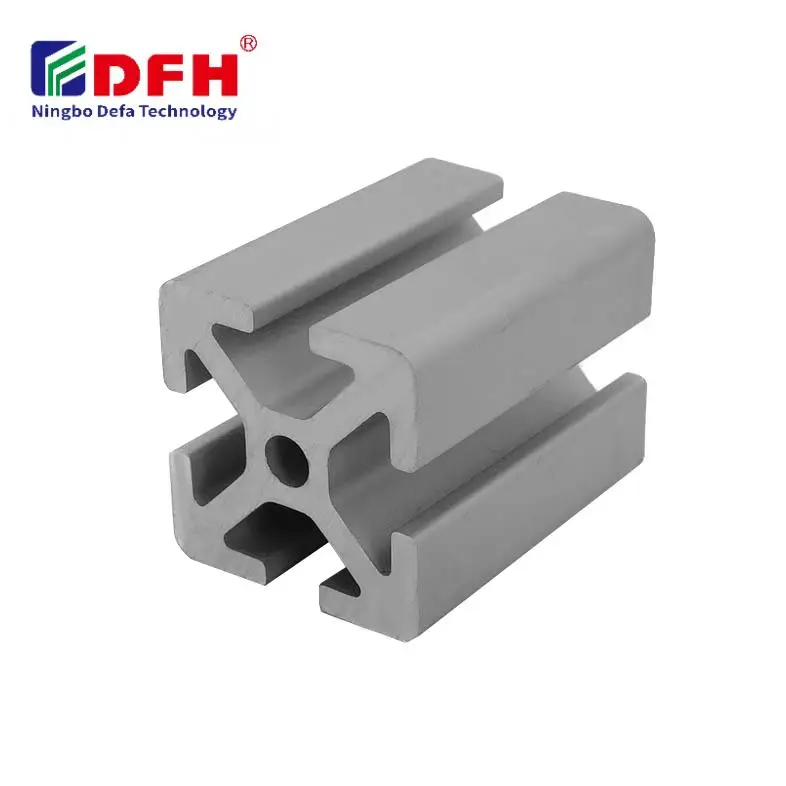
Industrial facilities worldwide depend on aluminum profiles as the primary structural element in automated manufacturing systems, assembly lines, and material handling equipment. The modularity of aluminum extrusion systems allows factories to reconfigure production layouts quickly without replacing entire frameworks. An aluminum profile-based conveyor system, robotic mounting structure, or workstation assembly can be modified, expanded, or relocated in hours rather than days, minimizing production downtime. The precision inherent in aluminum structural framing ensures that critical machine components remain perfectly aligned despite thermal cycling, vibration, and environmental stresses. Industrial aluminum components used in these applications typically feature integrated T-slot channels, pre-drilled mounting points, and standardized connection interfaces that simplify assembly and maintenance procedures.
The electronics industry relies heavily on aluminum profiles for equipment housings, server racks, and thermal management systems. An aluminum extrusion profile conducts and dissipates heat far more effectively than plastic or composite alternatives, protecting sensitive electronic components from thermal degradation. Data centers, telecommunications equipment manufacturers, and industrial control system builders specify aluminum structural framing for its combination of electrical conductivity, thermal performance, and electromagnetic shielding properties. The inherent rigidity of industrial aluminum components prevents vibration-induced failure of delicate circuit boards and optical connections. Additionally, aluminum profiles offer superior cleanroom compatibility compared to materials that shed particles or generate static charges, making them essential for semiconductor manufacturing environments and pharmaceutical production facilities.
The construction industry consumes the largest volume of aluminum profiles globally, driven by continuous demand for commercial buildings, residential complexes, and infrastructure projects. However, the automotive sector represents the fastest-growing market segment as vehicle manufacturers intensify lightweighting efforts. Combined, these two industries account for approximately 60 percent of global aluminum extrusion demand, with aerospace, electronics, and industrial manufacturing comprising the remainder.
Aluminum profiles offer superior strength-to-weight ratios, inherent corrosion resistance without additional coating in many environments, and significantly faster assembly processes compared to steel structural framing. Industrial aluminum components also provide better thermal conductivity and electromagnetic properties, making them ideal for electronics applications. While steel remains superior in certain high-temperature or extreme impact scenarios, aluminum profiles deliver superior overall performance in the majority of modern industrial applications at substantially lower total cost of ownership.
Successful aluminum profile selection requires evaluation of load requirements, environmental exposure conditions, thermal management needs, and assembly methodology. Consult with suppliers of industrial aluminum components to understand alloy options, temper specifications, and surface treatments appropriate for your specific use case. An aluminum extrusion profile supplier can provide detailed engineering support, perform finite element analysis, and recommend optimal cross-sections that balance performance requirements with cost efficiency.
2026/09/30
Source aluminum profiles for versatile modular framing. Learn extrusion mechanics, strength benefits & corrosion resistance. Request details.
2026/09/30
Source aluminum profiles for construction projects. Learn structural framing, cladding & window benefits for maximum ROI. Download guide.
2026/09/30
Source optimal aluminum profile sizing techniques. Evaluate load, space, alloy, environment & cost factors to prevent deflection. Download guide.
2026/09/30
Struggling with fastener failures or rework? Master screw sizing by diameter, pitch, material, and load—plus industry-specific standards. Optimize reliability & compliance now.
2026/09/30
Source aluminum profiles for industrial engineering. Discover strength-to-weight ratios, corrosion resistance & 30% cost savings. Download guide.
2026/09/30
Source heat-resistant aluminum profile systems. Master thermal expansion science & stress management strategies for industrial builds. Download guide.