EN
EN
What is Aluminum Profile and How Does It Work?
2026/09/30
Source aluminum profiles for versatile modular framing. Learn extrusion mechanics, strength benefits & corrosion resistance. Request details.

2026/09/24
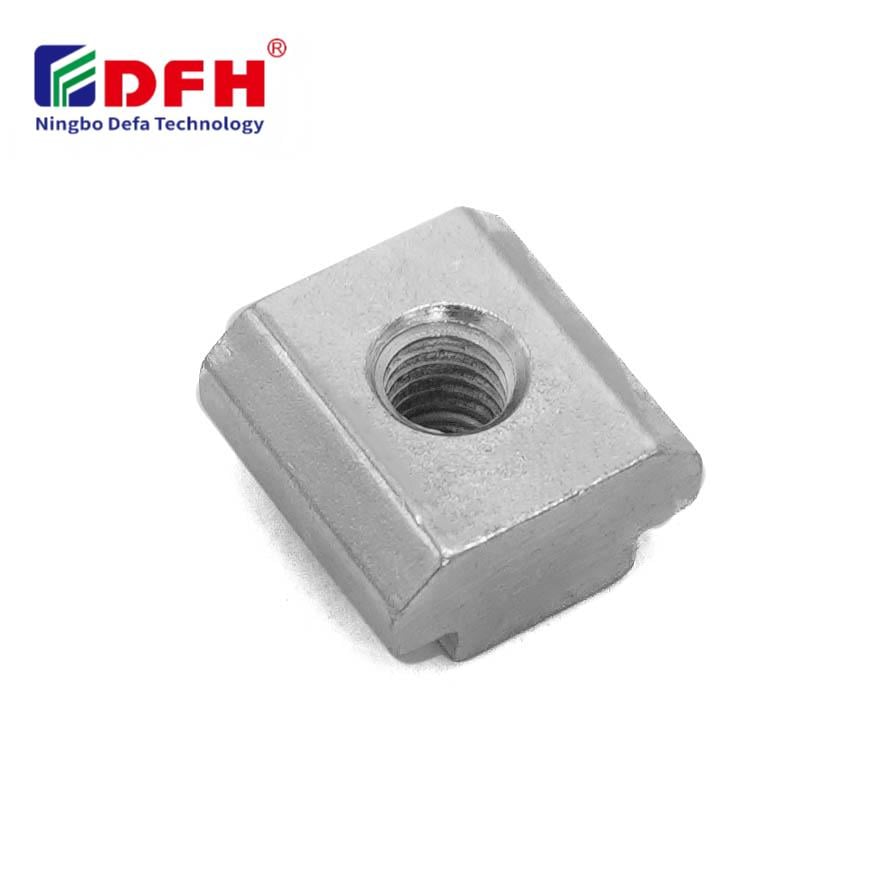
The grip strength of a T nut is a critical measure of its capacity to hold components securely in place. Unlike conventional bolted connections, a T nut relies on its unique geometry and interaction with slot profiles to deliver consistent clamping force and resistance to vibration, making it essential in industrial assembly, machinery mounting, and structural frameworks where reliability is non-negotiable.
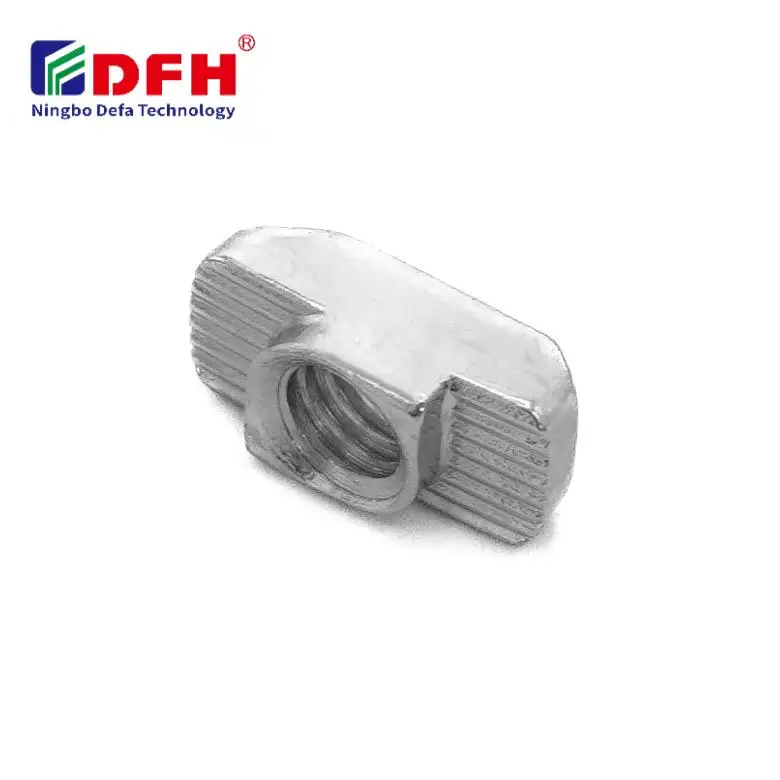
Understanding grip strength in T nut applications means evaluating how load is distributed, how the threaded insert engages with the slot, and what material properties contribute to holding power. This knowledge directly impacts design safety, cost efficiency, and operational longevity across industries ranging from automotive assembly to renewable energy installations.
A T nut operates by wedging itself into the profile slot while the fastening hardware tightens. As the bolt rotates, it draws the threaded insert deeper into the slot, creating a mechanical lock that resists both axial and shear loads. The grip strength depends directly on the depth of insertion, the surface contact area between the T nut flanges and the slot walls, and the bolt torque applied.
The slot nut assembly achieves its holding power through friction and geometric constraint. When properly tensioned, the T nut flanges press against the slot sidewalls with force proportional to the applied torque. This contact pressure creates friction that resists sliding, while the threaded insert's positioning within the slot prevents rotation and lateral movement, ensuring stable load holding under vibration and thermal cycling.
Grip strength varies significantly based on the material composition of the fastening hardware. Steel T nuts, particularly those with zinc or blue-steel plating, offer superior tensile strength and corrosion resistance compared to aluminum or plastic alternatives. The yield strength of the material determines the maximum load before permanent deformation occurs, directly limiting how much clamping force the fastening hardware can safely apply.
Thread pitch, bolt diameter, and material hardness all influence the grip strength equation. A coarser thread pitch allows greater torque application before thread stripping occurs, while finer pitches distribute load across more threads but accept less total torque. Engineers must balance these properties against the specific load requirements of their application to select the appropriate threaded insert configuration.
Industrial standards establish repeatable methods for measuring the grip strength of slot nut assemblies. Tensile testing applies incremental load to a fastened joint until failure occurs, revealing the maximum load the T nut can withstand before slipping or breaking. Pull-out tests measure the force required to dislodge the T nut from the profile slot, directly quantifying grip strength under axial stress.
Vibration testing subjects fastened assemblies to cyclic motion, simulating real-world conditions where grip strength degrades over time. A T nut that maintains its clamping force under vibration demonstrates superior holding power compared to one that loosens or separates. These standardized tests provide manufacturers and engineers with reliable data for design calculations and material selection.
Real-world grip strength performance reveals itself through joint integrity over operational life. Monitoring bolt torque retention, detecting fastener loosening, and inspecting for surface wear on the T nut flanges all indicate whether the threaded insert is maintaining adequate holding power. Applications experiencing frequent assembly and disassembly benefit from regular inspection to ensure the fastening hardware hasn't degraded and lost grip strength capacity.
Machine tool tables, automated assembly fixtures, and modular manufacturing systems rely heavily on T nuts to secure workholding elements, sensors, and actuators. The grip strength of the slot nut assembly directly affects setup stability, dimensional accuracy, and safety in high-speed operations. Inadequate grip strength causes vibration-induced loosening, leading to dimensional drift, tool breakage, and production delays.
Conveyor systems, robotic arms, and material handling equipment demand T nuts that maintain grip strength under dynamic loads and repeated assembly cycles. The fastening hardware must resist both tensile and shear forces while accommodating thermal expansion and vibration inherent in industrial environments. Material selection—particularly steel threaded inserts with protective plating—ensures long-term grip strength and reduces maintenance downtime.
Modular aluminum framing systems used in clean rooms, laboratory environments, and industrial structures depend on T nut grip strength to maintain structural integrity and safety. Connections must withstand temperature fluctuations, vibration from adjacent equipment, and cumulative loading over years of operation. The slot nut assembly's ability to distribute load evenly across multiple connection points enhances overall system stability and reduces stress concentration at individual fastening points.
Solar panel mounting systems, HVAC ductwork supports, and modular building facades all utilize T nuts where grip strength directly impacts safety and weather resistance. Wind loads, seismic activity, and thermal stress demand fastening hardware that maintains clamping force under extreme conditions. Premium-grade steel T nuts with corrosion-resistant coatings provide the grip strength and durability required for these demanding applications.
Temperature variations affect T nut grip strength through thermal expansion and contraction of both the fastening hardware and the profile slot. Materials with similar thermal expansion coefficients maintain consistent grip strength across temperature ranges, while mismatched materials may lose clamping force or develop internal stress. Corrosive environments accelerate surface degradation of the threaded insert, reducing friction and grip strength over extended service life.
Vibration and cyclic loading gradually diminish T nut grip strength as micro-slipping occurs at the contact interface. Thread locking compounds, lock washers, and properly calibrated torque application help mitigate this degradation. Regular maintenance inspections identify grip strength loss before critical failures occur, enabling predictive maintenance strategies that prevent equipment downtime and safety hazards.
Proper installation technique directly determines whether a T nut achieves its rated grip strength. Over-tightening damages the threaded insert or deforms the slot, reducing future holding capacity and causing permanent loss of grip strength. Under-tightening leaves the fastening hardware unable to resist operational loads, resulting in joint separation and catastrophic failures.
Using calibrated torque wrenches ensures consistent bolt tension and optimal grip strength across all fastened connections in an assembly. Training maintenance personnel on correct T nut installation practices prevents costly mistakes and extends the service life of both the fastening hardware and the components being secured. Adherence to manufacturer specifications for torque values, bolt diameter, and thread pitch maximizes grip strength and ensures design safety margins are preserved.
The maximum grip strength depends on the material tensile strength, bolt diameter, thread pitch, slot profile geometry, and the applied torque. Steel threaded inserts with larger diameters and coarser threads typically provide greater grip strength than smaller or finer-pitched alternatives. Proper installation and adherence to torque specifications ensure the T nut achieves its design grip strength capacity.
Vibration causes micro-slipping at the contact interfaces between the T nut flanges and the slot walls, gradually reducing the clamping force and grip strength. This loosening is cumulative and accelerates if the fastening hardware lacks adequate preload or if lock washers and thread-locking compounds are not employed. Regular inspection and re-torquing of critical connections help maintain grip strength in vibration-prone applications.
In some cases, grip strength can be partially restored by re-torquing the bolt to specification, provided the threaded insert and slot remain undamaged. However, if thread stripping, deformation, or corrosion has compromised the fastening hardware, replacement with a new T nut becomes necessary to restore full grip strength. Preventive maintenance and proper installation practices minimize the need for corrective re-work and extend the operational life of slot nut assemblies.
2026/09/30
Source aluminum profiles for versatile modular framing. Learn extrusion mechanics, strength benefits & corrosion resistance. Request details.
2026/09/30
Source aluminum profiles for construction projects. Learn structural framing, cladding & window benefits for maximum ROI. Download guide.
2026/09/30
Source optimal aluminum profile sizing techniques. Evaluate load, space, alloy, environment & cost factors to prevent deflection. Download guide.
2026/09/30
Struggling with fastener failures or rework? Master screw sizing by diameter, pitch, material, and load—plus industry-specific standards. Optimize reliability & compliance now.
2026/09/30
Source aluminum profiles for industrial engineering. Discover strength-to-weight ratios, corrosion resistance & 30% cost savings. Download guide.
2026/09/30
Source heat-resistant aluminum profile systems. Master thermal expansion science & stress management strategies for industrial builds. Download guide.