EN
EN
What is Aluminum Profile and How Does It Work?
2026/09/30
Source aluminum profiles for versatile modular framing. Learn extrusion mechanics, strength benefits & corrosion resistance. Request details.

2026/09/30
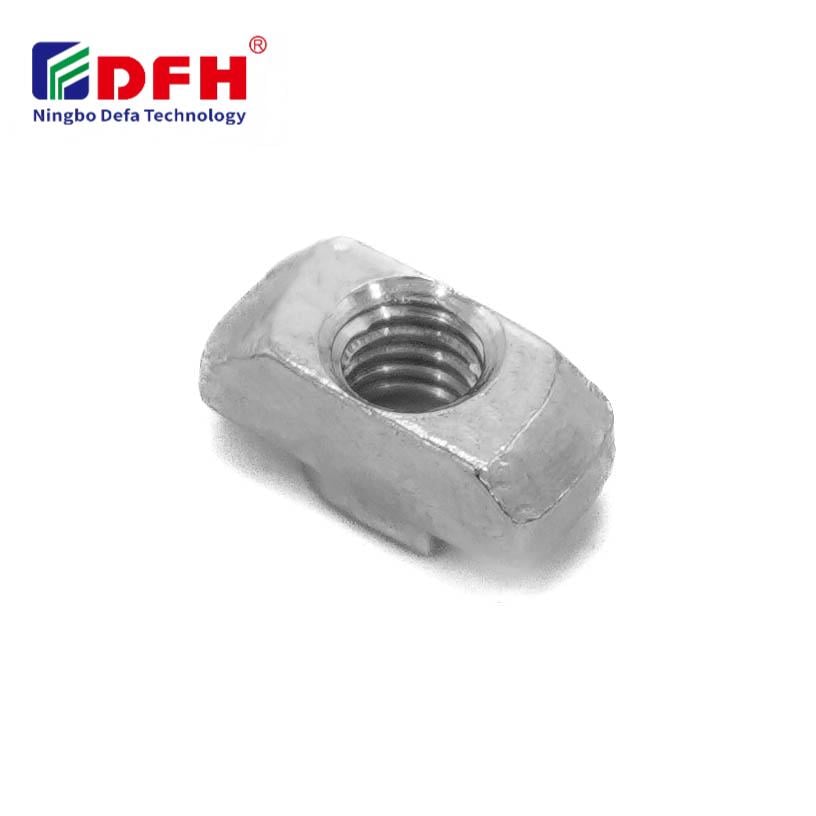
Screws represent one of the most fundamental fasteners in modern industrial and construction applications. These threaded fastening devices have been refined over centuries, yet their basic purpose remains unchanged: to hold materials together securely and reliably. Understanding what screws are and how they function is essential for anyone working in manufacturing, construction, engineering, or maintenance sectors. The versatility and reliability of screws make them indispensable across virtually every industry that requires assembly or structural integrity.
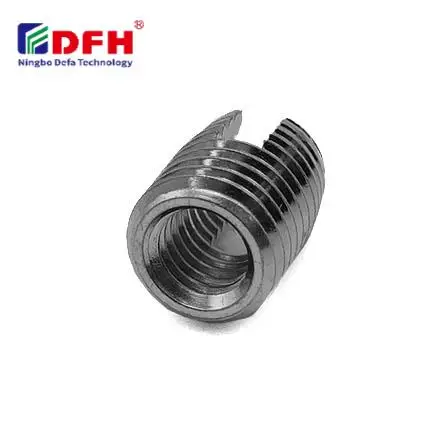
At their core, screws are mechanical fasteners designed to join two or more materials by converting rotational force into linear clamping pressure. Unlike nails, which rely on friction and deformation, screws create a permanent mechanical bond through helical threading. This threaded fastening mechanism provides superior holding power, easier installation, and the ability to be removed and reinstalled multiple times without compromising structural integrity. The sophisticated engineering behind modern fasteners ensures that screws perform reliably in demanding environments, from aerospace applications to everyday consumer products.
Screws consist of several critical components that work together to deliver reliable fastening performance. The head provides the gripping surface where turning force is applied, typically featuring slots, Phillips heads, or hex shapes for different tool compatibility. The shank is the smooth, unthreaded portion beneath the head that transmits rotational force to the threaded section. The thread itself is the helical ridge that engages with the material or nut, converting rotational motion into linear tension. The tip, whether pointed or flat, determines how the screw penetrates or seats into the material being fastened.
The pitch and thread angle of a screw determine how quickly it advances when rotated. A fine pitch produces more turns per inch, offering greater holding capacity but slower insertion, while a coarse pitch advances quickly with fewer rotations. The material composition of fasteners affects their performance characteristics significantly. Steel screws offer excellent strength and are suitable for most applications, while stainless steel fasteners provide corrosion resistance in harsh environments. Brass and specialty alloy screws serve niche applications where specific mechanical or chemical properties are required.
Bolt types in the fastening industry reveal the diversity of screw designs developed for specific purposes. Machine screws have uniform threading along their entire length and require a pre-drilled hole or nut for installation. Wood screws feature larger pitch threading designed to cut into wood fibers without pre-drilling. Self-tapping screws create their own thread within the material, eliminating the need for pre-threading in soft metals or plastics. Each classification within fasteners addresses particular material properties and installation requirements, ensuring optimal performance in its intended application.
Drive types represent another critical classification dimension for fasteners. Phillips head screws use a crosshair slot that allows controlled torque application before slipping. Slotted heads accept straight-blade screwdrivers but offer limited torque capacity. Hex head bolts provide superior mechanical advantage and resist stripping. Robertson heads and Torx drives offer increased driving efficiency and reduced tool wear. The selection of appropriate bolt types and drive systems directly impacts installation speed, tool reliability, and long-term fastening security.
The primary function of threaded fastening is to create permanent or semi-permanent joints between components. Screws achieve this by generating tension in the fastened materials, creating friction that prevents relative motion under stress. This clamping force distributes loads across the joint, preventing component separation under vibration, thermal stress, or mechanical shock. In assembly operations, screws provide the speed and precision needed for high-volume manufacturing while maintaining the reliability required for critical applications.
Beyond simple joining, threaded fastening enables adjustability and maintenance access throughout products and structures. Screws can be removed and reinstalled repeatedly without significant loss of holding power, unlike rivets or welded joints. This capability is essential in industries where regular maintenance, repair, or component replacement is routine. Manufacturing facilities depend on this reversibility to modify designs, service equipment, and facilitate rapid prototyping cycles. The flexibility offered by fasteners distinguishes them from permanent joining methods.
Screws distribute loads across their entire engagement area, preventing stress concentration at single points. The helical thread geometry spreads clamping force uniformly along the fastened joint, reducing the risk of material failure or deformation. In applications subject to vibration or cyclic loading, this distributed load capacity prevents loosening and maintains structural integrity over extended service periods. Engineers rely on threaded fastening principles to design assemblies that withstand extreme environmental conditions, high-temperature exposure, and repetitive mechanical stresses.
The tensile strength and shear resistance of fasteners directly impact overall assembly performance. Properly selected bolt types and fasteners ensure that the joint fails at the parent material rather than at the fastened connection. This hierarchy of failure prevents catastrophic assembly disassembly and allows predictable, safe performance degradation. In critical applications like aerospace and medical devices, fastener selection follows rigorous engineering standards to guarantee performance margins exceeding operational requirements.
Selecting appropriate fasteners requires matching material compatibility with environmental conditions and operational demands. Corrosion-resistant fasteners prevent joint degradation in marine, chemical, or outdoor applications where exposure to moisture and salt is inevitable. Temperature considerations influence material choice significantly; stainless steel fasteners maintain integrity in cryogenic conditions, while standard steel may become brittle. Chemical compatibility between fastener materials and surrounding substances prevents galvanic corrosion and material degradation that compromises holding power.
Load specifications determine minimum fastener grade and material thickness requirements. High-vibrational environments demand fasteners with superior fatigue resistance and locking mechanisms to prevent spontaneous loosening. Agricultural and industrial machinery applications often require fasteners engineered for shock loads and impact resistance beyond steady-state tensile requirements. The complexity of matching threaded fastening specifications to real-world conditions demonstrates why fastener selection represents a critical engineering discipline rather than a commodity procurement decision.
Proper installation techniques directly affect long-term fastening reliability and performance. Over-tightening can strip threads or damage materials, while under-tightening produces inadequate clamping force and joint loosening. Modern manufacturing increasingly employs torque specifications and angle-turn fastening methods to ensure consistent tension application across production runs. Pre-threading, pilot holes, and lubrication strategies optimize installation efficiency while protecting fastener integrity throughout the assembly process.
Locking mechanisms and thread-locking compounds enhance fastening reliability in demanding applications. Nylon inserts, spring washers, and deformed threads create resistance to vibration-induced loosening without permanent joint modification. Thread-locking adhesives provide chemical resistance to joint separation while remaining removable with appropriate tools and solvents. These enhancement technologies extend screw functionality beyond basic mechanical fastening, enabling their use in increasingly challenging industrial environments where standard fasteners would prove insufficient.
Screws differ fundamentally from nails through their threaded design and mechanical locking mechanism. Unlike nails that rely on friction and material deformation, screws create precise helical engagement that enables consistent tensioning and reversible installation. Bolts typically reference fasteners used with nuts or threaded holes, while screws often include their own shaft and head for direct installation into materials. The versatility of screws and their compatibility with diverse driving systems make them the most adaptable fastening solution across industries.
Thread geometry, pitch, and material properties directly determine fastening reliability and assembly performance outcomes. Finer pitches provide greater load distribution and resistance to vibration-induced loosening, while coarse pitches enable rapid assembly in time-sensitive manufacturing environments. Material selection ensures fasteners maintain integrity under operational stresses, temperature extremes, and corrosive exposures. Proper thread engagement depth and fastener grade specifications prevent joint failure, component separation, and safety risks that arise from inadequate fastening engineering.
Different applications impose unique demands on fasteners that require specialized bolt types and material compositions to ensure performance. Aerospace applications demand fasteners meeting strict qualification standards and traceability requirements that standard commercial fasteners cannot satisfy. Medical device manufacturers require biocompatible materials and fatigue-resistant properties that prevent device failure during patient use. Understanding how specific bolt types and fasteners match application requirements prevents premature failures, warranty claims, and safety incidents that compromise product reliability and manufacturer reputation.
2026/09/30
Source aluminum profiles for versatile modular framing. Learn extrusion mechanics, strength benefits & corrosion resistance. Request details.
2026/09/30
Source aluminum profiles for construction projects. Learn structural framing, cladding & window benefits for maximum ROI. Download guide.
2026/09/30
Source optimal aluminum profile sizing techniques. Evaluate load, space, alloy, environment & cost factors to prevent deflection. Download guide.
2026/09/30
Struggling with fastener failures or rework? Master screw sizing by diameter, pitch, material, and load—plus industry-specific standards. Optimize reliability & compliance now.
2026/09/30
Source aluminum profiles for industrial engineering. Discover strength-to-weight ratios, corrosion resistance & 30% cost savings. Download guide.
2026/09/30
Source heat-resistant aluminum profile systems. Master thermal expansion science & stress management strategies for industrial builds. Download guide.