EN
EN
What is Aluminum Profile and How Does It Work?
2026/09/30
Source aluminum profiles for versatile modular framing. Learn extrusion mechanics, strength benefits & corrosion resistance. Request details.

2026/09/29
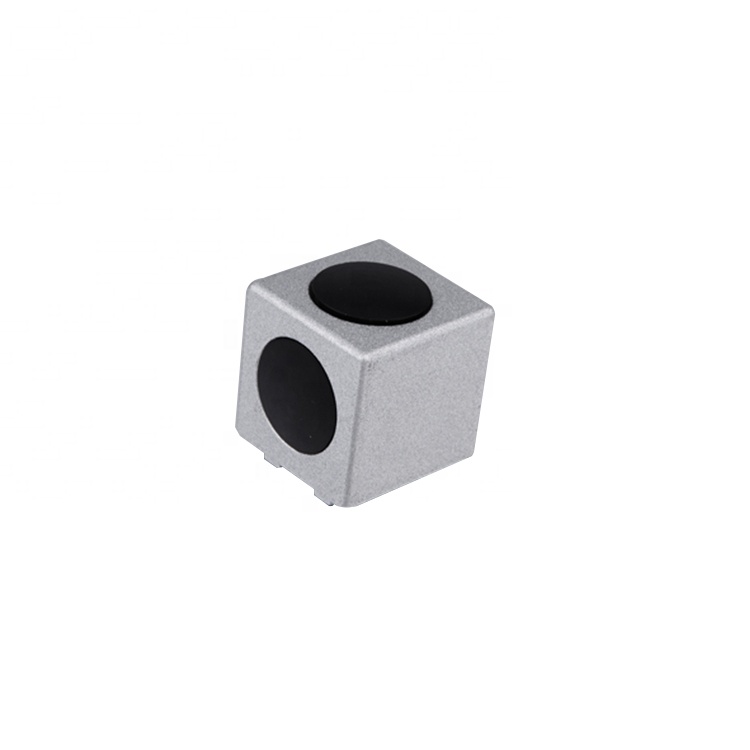
Choosing the correct plate connectors is fundamental to ensuring structural integrity and operational reliability in industrial assemblies. The size of your plate connector directly impacts load distribution, alignment precision, and long-term durability of your system. Selecting the wrong size can lead to premature failure, misalignment, safety hazards, and costly downtime.
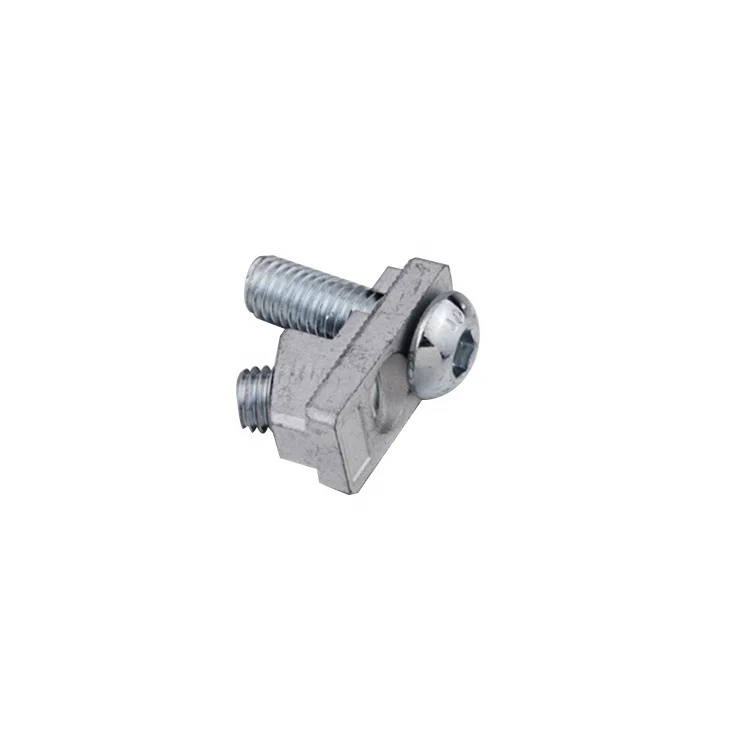
This guide walks you through the critical factors that determine the right plate connector size for your application. Whether you are designing modular connection systems, evaluating structural fastening solutions, or optimizing load-bearing junction components, understanding these selection principles will help you make informed decisions that enhance system performance and reduce risk.
The first step in selecting plate connector size involves calculating the actual loads your structural fastening solutions must handle. Load requirements include static forces, dynamic loads, shear forces, and combined stress patterns. Most industrial applications experience multiple load types simultaneously, requiring thorough analysis of worst-case scenarios.
Structural engineers must determine peak loads in each direction—axial, shear, torsional, and moment loads. Load-bearing junction components must resist not only vertical or horizontal forces but also bending moments and torsional stresses. Undersizing your plate connectors for these loads creates stress concentration points that crack under pressure, while oversizing wastes material and increases cost without proportional benefit.
Industry standards and engineering best practices require applying safety factors to design calculations. Most modular connection systems incorporate safety factors of 1.5 to 4.0, depending on material properties, application criticality, and regulatory requirements. Your plate connector size must accommodate these safety margins while maintaining practical dimensions and cost efficiency.
Fatigue loading is another critical consideration. If your structural fastening solutions operate under cyclic conditions—repeated tightening, thermal cycling, or vibration—you need larger plate connectors than static-load applications demand. Fatigue strength is typically 40 to 60 percent lower than static strength, so connector sizing must reflect this reality to ensure reliable service life.
The material composition of your plate connectors determines their load-bearing capacity at a given size. Steel, aluminum, stainless steel, and composite materials each have distinct yield strengths, tensile properties, and fatigue limits. Higher-strength materials allow smaller connector sizes while maintaining equivalent load capacity, though material cost and machining complexity may increase.
Load-bearing junction components made from higher-grade steel can be 20 to 30 percent smaller than aluminum alternatives handling identical loads, yet cost and application context often favor aluminum in modular connection systems. Corrosion resistance, thermal stability, and surface finish requirements also influence material selection and thus optimal connector size for your structural fastening solutions.
Bearing stress—the pressure exerted where the connector contacts the joined components—directly correlates to required plate connector size. Larger contact areas distribute forces more evenly, reducing localized stress peaks that cause bearing failure or material crushing. Designers must ensure bearing stress remains below material allowable limits, typically 1.0 to 1.5 times the yield strength depending on application.
Friction and surface finish also affect bearing capacity. Smooth, clean surfaces reduce friction coefficient and may require slightly larger load-bearing junction components to maintain equivalent safety margins. Coated or contaminated surfaces may exhibit higher friction, potentially allowing smaller plate connectors while still achieving safe force transmission through modular connection systems.
Practical installation requires plate connector dimensions to fit within available space envelopes and assembly clearances. A theoretically optimal connector size becomes impractical if it exceeds mounting surface dimensions, interferes with adjacent components, or requires specialized assembly tools. Your structural fastening solutions must balance calculated requirements with real-world installation logistics.
Modular connection systems often use standardized connector sizes to simplify inventory management, tooling, and training. Selecting a size from established series—even if a custom intermediate size would theoretically perform better—often delivers greater overall value through reduced cost, faster delivery, and easier maintenance. Load-bearing junction components standardization also enables rapid system reconfiguration and repair when components fail.
Plate connector size determines thread sizing, hole spacing, and fastener diameter. Larger connectors accommodate larger-diameter bolts and screws, increasing joint stiffness and load capacity. However, oversized fasteners create larger stress concentrations at thread runout and may exceed the bearing capacity of connected components if those materials are softer or thinner.
Hole pattern geometry must ensure adequate material strength between fastener holes while maintaining spacing sufficient for installation tool access. Too many holes packed too closely in structural fastening solutions weakens the connector itself, paradoxically reducing joint capacity despite increased fastener count. Engineers must calculate minimum edge distances and hole spacing based on connector material and load conditions to maintain integrity of load-bearing junction components.
Operating environment significantly influences required plate connector size. Elevated temperatures reduce material strength, potentially requiring larger connectors to maintain equivalent safety margins. Modular connection systems exposed to thermal cycling experience stress concentration from differential expansion and contraction, often necessitating slightly oversized structural fastening solutions compared to room-temperature applications.
Corrosive environments demand load-bearing junction components manufactured from corrosion-resistant materials or with protective coatings. Surface degradation from rust, oxidation, or chemical attack effectively reduces connector size by consuming material, so engineers compensate by specifying larger base dimensions or applying protective treatments to maintain long-term load capacity.
Machinery and equipment subjected to vibration or shock loads require larger plate connectors than equivalent static applications. Vibration loosens connections and induces micromotion that accelerates fretting wear and fatigue crack initiation. Increased connector size improves stiffness and damping characteristics, reducing vibration amplitude and extending service life of structural fastening solutions and modular connection systems.
Impact loading from sudden force application demands plate connectors with sufficient mass and surface area to absorb and distribute impact energy. Load-bearing junction components designed only for steady-state loading will fail catastrophically under impact, so applications involving lifting, dropping, or shock events require significantly larger connectors with proportionally higher safety factors and margin against dynamic instability.
The most frequent error is basing connector size on nominal load capacity alone, ignoring safety factors, fatigue conditions, and dynamic load multipliers. Many engineers underestimate actual peak loads and fail to account for impact, vibration, or thermal effects inherent to their application. This leads to premature failure of structural fastening solutions and modular connection systems despite calculations appearing adequate on paper.
Conduct detailed stress analysis using finite element analysis or hand calculations to verify that maximum bearing stress, bending stress, and shear stress all remain below material allowable limits with appropriate safety factors applied. Validate deflection remains within acceptable tolerances to ensure load-bearing junction components maintain alignment and function. Prototype testing and field monitoring provide real-world verification that calculated connector sizing meets actual requirements of structural fastening solutions.
Yes, higher-strength materials allow proportionally smaller modular connection systems while maintaining load capacity. However, material cost increases, machining complexity may rise, and diminishing returns occur at very small sizes. Most engineers find the optimal balance by selecting medium-grade materials with moderately sized plate connectors, rather than premium materials with undersized connectors, to achieve best overall value in load-bearing junction components and structural fastening solutions.
2026/09/30
Source aluminum profiles for versatile modular framing. Learn extrusion mechanics, strength benefits & corrosion resistance. Request details.
2026/09/30
Source aluminum profiles for construction projects. Learn structural framing, cladding & window benefits for maximum ROI. Download guide.
2026/09/30
Source optimal aluminum profile sizing techniques. Evaluate load, space, alloy, environment & cost factors to prevent deflection. Download guide.
2026/09/30
Struggling with fastener failures or rework? Master screw sizing by diameter, pitch, material, and load—plus industry-specific standards. Optimize reliability & compliance now.
2026/09/30
Source aluminum profiles for industrial engineering. Discover strength-to-weight ratios, corrosion resistance & 30% cost savings. Download guide.
2026/09/30
Source heat-resistant aluminum profile systems. Master thermal expansion science & stress management strategies for industrial builds. Download guide.