EN
EN
What is Aluminum Profile and How Does It Work?
2026/09/30
Source aluminum profiles for versatile modular framing. Learn extrusion mechanics, strength benefits & corrosion resistance. Request details.

2026/09/23
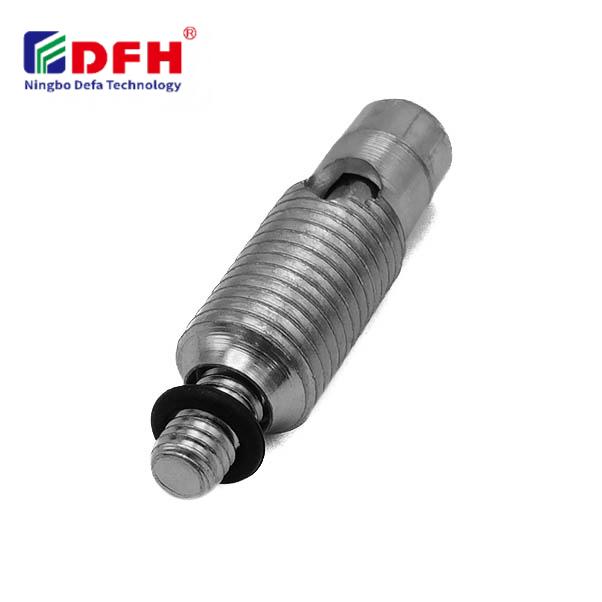
Selecting the right Bolt Connectors is fundamental to ensuring structural integrity, operational safety, and cost efficiency in industrial assembly applications. The process requires careful analysis of load requirements, material compatibility, environmental conditions, and installation constraints. Without proper selection methodology, machinery can experience premature failures, excessive vibration, corrosion, or complete joint breakdown. This guide provides the essential knowledge to make informed decisions when specifying bolt connectors for your assembly projects.
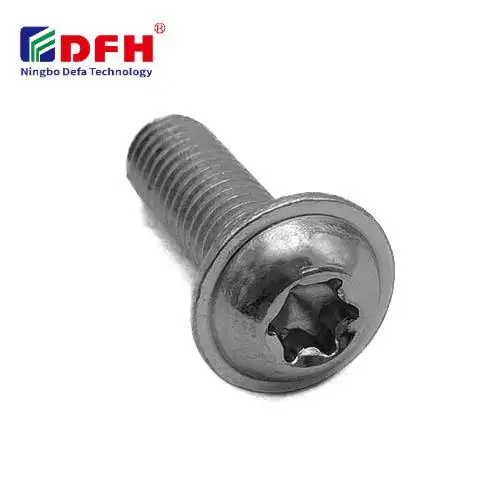
Proper bolt connector sizing involves evaluating multiple technical and practical dimensions beyond simple dimensional matching. Engineers must understand load distribution, stress concentration, joint compliance, and the relationship between threaded fasteners diameter, pitch, and clamp force. The complexity increases when considering industry-specific standards, material grades, and application-specific tensioning requirements. This comprehensive approach prevents under-sizing that leads to joint failure and over-sizing that wastes material and complicates installation.
Load analysis forms the foundation of bolt connector selection. Static loads, dynamic loads, and cyclic loads each demand different safety margins and material grades. Tensile loads pull directly on the fastener, while shear loads attempt to slide components across each other. Combined loading scenarios require more conservative sizing calculations. Understanding your specific load profile allows you to avoid both undersizing and unnecessary over-specification.
Material property tables and engineering standards provide the allowable stress values for threaded fasteners across different grades and diameters. Grade 8.8, 10.9, and 12.9 bolt connectors offer progressively higher strength but reduced ductility. Selecting the appropriate grade ensures sufficient load capacity while maintaining acceptable safety factors. Industrial applications typically require safety factors between 2.5 and 5.0, depending on failure consequences and load predictability.
Environmental exposure significantly influences bolt connector material selection and longevity. Corrosive environments demand stainless steel or galvanized fasteners that resist oxidation and material degradation. Temperature extremes affect material properties, joint preload retention, and threading integrity. Vibration-prone applications require self-locking features or thread-locking compounds to maintain connection stability throughout equipment service life.
Salt spray, chemical exposure, moisture, and thermal cycling create compounded stress on standard threaded fasteners. Selecting chemically resistant materials from the beginning prevents costly replacement cycles and unplanned downtime. Environmental considerations must be integrated into the bolt connector specification before finalizing size and grade decisions.
Bolt connector sizing depends on understanding how diameter, thread pitch, and clamp force work together to create joint integrity. Larger diameters provide greater load-carrying capacity but require proportionally more installation torque. Thread pitch affects the mechanical advantage during installation, with finer pitches providing greater force multiplication and coarser pitches enabling faster assembly. The relationship between these parameters determines both the achievable preload and installation practicality in your assembly environment.
Bolt installation methods vary between manual torque wrench application, hydraulic tensioning, and thermal expansion techniques. Each method influences the precision of preload application and the bolt connector sizing strategy. Manual torque methods work best for standard applications with moderate complexity, while hydraulic methods suit high-precision assemblies requiring exact preload control. Thermal expansion methods, used in automotive and heavy machinery applications, demand specific bolt connector sizing calculations to achieve target clamp forces reliably.
Hole clearance directly affects whether bolt connectors function in tension or shear, fundamentally changing sizing requirements. Clearance holes allow bolt connectors to function purely in tension, relying on clamp force to transfer loads. Close-fit holes or reamed holes allow bolt connectors to function in shear, carrying load directly through the fastener body. Understanding your assembly's hole design determines which load-carrying mechanism applies and adjusts sizing calculations accordingly.
Standard clearance values follow ISO and ANSI specifications, typically ranging from close-fit to clearance categories. Proper hole sizing ensures efficient load transfer and consistent clamping behavior. Oversized holes create slack and inconsistent preload, while undersized holes create installation difficulties and potential material damage during bolt installation and removal cycles.
Systematic bolt connector selection begins with documenting all application requirements in a structured checklist format. Required inputs include maximum and minimum loads, component materials, assembly method, environmental exposure, service temperature range, vibration conditions, and regulatory compliance standards. Organizing this information prevents overlooked requirements and ensures consistent decision-making across multiple fastener selections. Many industrial failures trace back to incomplete specification during the initial selection phase rather than component defects.
Once requirements are documented, cross-reference industry standards appropriate to your industry and geography. Automotive applications follow SAE standards, aerospace follows AS specifications, and machinery commonly uses ISO standards. This structured approach reduces selection time while ensuring compliance with proven engineering practices. Documentation also provides traceability for quality audits and failure investigation.
Connector tensioning strategy directly affects joint performance and service life. Proper preload keeps components tightly clamped, prevents joint separation under load cycles, and improves fatigue resistance. Under-tensioning creates joint flutter and accelerated wear, while over-tensioning reduces bolt connector life and risks stripping or breaking. Achieving optimal preload requires accurate torque application or precision tensioning methods matched to your bolt connector size and grade specifications.
Modern assembly operations increasingly use ultrasonic bolt tensioning or turn-angle methods that provide superior preload consistency compared to torque-only approaches. These methods accommodate friction variable variations and deliver repeatable preload across production runs. Investing in proper tensioning capability improves overall assembly quality and reduces field failures associated with inadequate or inconsistent preload.
Load capacity combined with environmental compatibility represents the most critical selection factor. Accurately calculating the maximum service load and selecting a bolt connector grade with sufficient safety margin prevents catastrophic joint failure. Environmental factors including corrosion exposure and temperature extremes must also be evaluated simultaneously to ensure the selected bolt connector material and size survive the intended service life without degradation.
Sizing charts cross-reference bolt connector diameter with allowable tensile and shear loads based on material grade and safety factors. Engineers locate their required load capacity in the chart and identify the minimum diameter fastener that exceeds that requirement. These standardized charts, provided in ISO and ANSI specifications, simplify the selection process by consolidating complex calculations into convenient lookup tables. However, charts serve as starting points; actual applications may require engineering analysis for complex loading scenarios or unique environmental conditions.
Yes, installation method significantly influences sizing decisions. Bolt installation methods using manual torque wrenches are limited by achievable torque in confined spaces, sometimes requiring larger bolt connectors to generate sufficient preload with practical tool force. Conversely, hydraulic tensioning or thermal expansion methods enable precise preload achievement, potentially allowing smaller fasteners in some applications. Additionally, connector tensioning precision directly affects fatigue life and vibration resistance, making installation methodology integral to the overall sizing strategy.
2026/09/30
Source aluminum profiles for versatile modular framing. Learn extrusion mechanics, strength benefits & corrosion resistance. Request details.
2026/09/30
Source aluminum profiles for construction projects. Learn structural framing, cladding & window benefits for maximum ROI. Download guide.
2026/09/30
Source optimal aluminum profile sizing techniques. Evaluate load, space, alloy, environment & cost factors to prevent deflection. Download guide.
2026/09/30
Struggling with fastener failures or rework? Master screw sizing by diameter, pitch, material, and load—plus industry-specific standards. Optimize reliability & compliance now.
2026/09/30
Source aluminum profiles for industrial engineering. Discover strength-to-weight ratios, corrosion resistance & 30% cost savings. Download guide.
2026/09/30
Source heat-resistant aluminum profile systems. Master thermal expansion science & stress management strategies for industrial builds. Download guide.