EN
EN
What is Aluminum Profile and How Does It Work?
2026/09/30
Source aluminum profiles for versatile modular framing. Learn extrusion mechanics, strength benefits & corrosion resistance. Request details.

2026/09/14
Choosing the right Aluminum Profile is critical for any industrial, architectural, or manufacturing project. The decision involves balancing material properties, dimensional accuracy, load-bearing capacity, cost efficiency, and application-specific requirements. Selecting an inappropriate profile can lead to structural failure, production delays, increased maintenance costs, or premature component replacement. This guide walks you through the essential factors that influence profile selection and helps you make decisions aligned with your project goals.
The aluminum extrusion market offers hundreds of profile designs, each engineered for specific functions. Understanding profile categories, material grades, surface treatments, and dimensional tolerances enables you to narrow options systematically. Industrial aluminum components vary in cross-sectional shape, wall thickness, and alloy composition, making informed comparison essential before placement of orders or integration into assembly workflows.
Aluminum extrusion is the process of forcing aluminum alloy through a shaped die to create profiles with consistent cross-sections. The extrusion method determines profile repeatability, dimensional tolerance, and surface quality. Different aluminum extrusion techniques produce varying mechanical properties and aesthetic finishes. Standard extrusions typically meet ISO, DIN, or ASTM specifications, ensuring compatibility with industry standards and assembly systems.
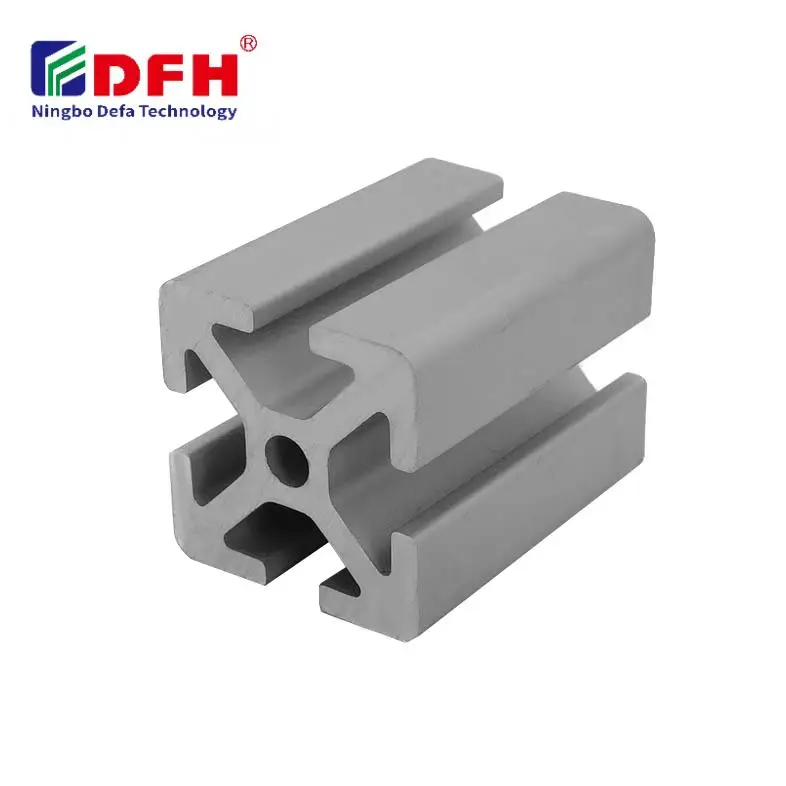
The cross-sectional geometry of aluminum extrusion directly affects load distribution, weight-to-strength ratio, and installation ease. T-slot profiles enable modular assembly and component repositioning without structural modification. Solid rectangular profiles offer maximum rigidity for heavy-load applications. Hollow channel designs reduce weight while maintaining adequate structural capacity. Your project requirements determine which extrusion geometry delivers optimal performance and cost balance.
Aluminum alloys are designated by four-digit codes indicating composition and heat treatment. Common industrial aluminum components use 6063, 6061, and 7075 alloys. The 6063 alloy delivers excellent corrosion resistance and aesthetic appeal, making it ideal for architectural and consumer-facing applications. The 6061 alloy offers superior strength and is preferred for structural framing and load-bearing assemblies. The 7075 alloy provides maximum tensile strength for aerospace and high-stress industrial applications, though it is less corrosion-resistant.
Annealed aluminum extrusion provides maximum malleability for complex forming operations. Heat-treated tempers like T5 and T6 increase hardness and yield strength but reduce formability. Understanding the heat treatment designation ensures the profile meets your application's strength requirements without overspecification, which unnecessarily increases cost and complicates machining or assembly processes.
Assess the maximum static and dynamic loads your profile must withstand throughout its operational life. Industrial aluminum components support everything from machine frames and conveyor systems to architectural façades and robotic automation arms. Calculate bending stress, compression stress, and torsional forces expected during normal operation and worst-case scenarios. Compare these requirements against published section modulus and moment of inertia data provided by extrusion suppliers.
Overloading causes permanent deformation, fatigue cracking, or catastrophic failure. Underspecifying weight capacity creates safety hazards and liability exposure. Most engineers apply a safety factor of 1.5 to 3.0 depending on application risk. This practice ensures the selected aluminum structural framing retains adequate capacity despite material variability, stress concentration points, or unforeseen operational changes.
Outdoor applications, chemical processing environments, marine contexts, and high-humidity facilities demand profiles with superior corrosion resistance. Natural aluminum oxidizes rapidly, forming a thin oxide layer that slows further corrosion but offers limited protection in aggressive environments. Anodizing increases the oxide layer thickness and can include colored dyes for aesthetic branding. Powder coating or liquid paint systems provide additional barriers, though they add cost and require maintenance.
Aluminum extrusion alloys vary in inherent corrosion resistance. The 6063 alloy naturally resists salt spray and atmospheric corrosion better than 7075. When selecting industrial aluminum components for corrosive environments, prioritize alloy composition first, then layer appropriate surface treatments. Galvanic corrosion can occur if aluminum contacts dissimilar metals like steel, copper, or stainless steel, so specify isolation washers and compatible fasteners.
Tight dimensional tolerances ensure seamless assembly, reduce machining costs, and minimize scrap rates. Standard aluminum structural framing typically holds ±0.5mm tolerances on profile dimensions. Precision extrusion services offer tolerances as tight as ±0.1mm for premium applications, increasing material and tooling costs proportionally. Evaluate whether your assembly process, automation equipment, or application tolerances justify the expense of premium accuracy.
Cumulative tolerance stack-up becomes critical when multiple profiles connect in series. A small error on each component compounds across the assembly, potentially causing misalignment or fit failure. Request tolerance certifications and dimension verification data before committing to large volume orders.
Aluminum extrusion pricing depends on alloy type, profile complexity, surface finish, volume, and market conditions. Simple profiles like round rods or rectangular bars cost less than complex multi-chamber designs. Standardized profiles maintained in inventory ship immediately, while custom extrusions require tooling investment and longer lead times. High-volume orders amortize tooling costs and improve per-unit pricing significantly. Evaluate whether a slightly heavier or more robust profile reduces overall system cost through simplified assembly, fewer fasteners, or reduced secondary machining.
Extrusion lead times range from 2 to 12 weeks depending on profile complexity and supplier capacity. Standardized profiles from major suppliers typically ship within 5 to 7 days from inventory. Planning your aluminum structural framing procurement timeline prevents project delays and emergency rush orders that inflate costs. Establish relationships with multiple suppliers to hedge against supply disruptions and negotiate competitive pricing through volume consolidation.
Request samples and test batches before full production commitments. Verify dimensional accuracy, surface quality, and mechanical properties against your specifications. This due diligence prevents costly rework, assembly line disruptions, or field failures that damage reputation and customer relationships.
Aluminum extrusion creates profiles with consistent cross-sections and superior dimensional accuracy by forcing heated aluminum through dies. Casting pours molten aluminum into molds, producing complex shapes but with less dimensional precision and more internal porosity. Extrusion delivers better strength-to-weight ratios and tighter tolerances, making it ideal for structural applications. Casting excels at creating integrated features like mounting bosses or complex geometries that would require extensive machining as extrusions.
Yes, aluminum extrusion profiles can be machined, drilled, tapped, bent, or heat-treated after production to meet custom requirements. Secondary machining adds cost and lead time but enables customization for unique project needs. Some industrial aluminum components include pre-drilled holes or built-in channels to reduce post-extrusion fabrication. Discussing modification requirements with suppliers during the quote phase ensures optimal design and cost efficiency.
Start by identifying your primary requirements: maximum load capacity, corrosion resistance, formability, thermal conductivity, or electrical properties. The 6061 and 6063 alloys serve most general industrial applications and offer good corrosion resistance. The 7075 alloy provides maximum strength but reduced corrosion resistance. Consult material property datasheets, perform finite element analysis for critical applications, and request supplier recommendations based on your specific operating environment and functional requirements.
2026/09/30
Source aluminum profiles for versatile modular framing. Learn extrusion mechanics, strength benefits & corrosion resistance. Request details.
2026/09/30
Source aluminum profiles for construction projects. Learn structural framing, cladding & window benefits for maximum ROI. Download guide.
2026/09/30
Source optimal aluminum profile sizing techniques. Evaluate load, space, alloy, environment & cost factors to prevent deflection. Download guide.
2026/09/30
Struggling with fastener failures or rework? Master screw sizing by diameter, pitch, material, and load—plus industry-specific standards. Optimize reliability & compliance now.
2026/09/30
Source aluminum profiles for industrial engineering. Discover strength-to-weight ratios, corrosion resistance & 30% cost savings. Download guide.
2026/09/30
Source heat-resistant aluminum profile systems. Master thermal expansion science & stress management strategies for industrial builds. Download guide.