EN
EN
What is Aluminum Profile and How Does It Work?
2026/09/30
Source aluminum profiles for versatile modular framing. Learn extrusion mechanics, strength benefits & corrosion resistance. Request details.

2026/09/24
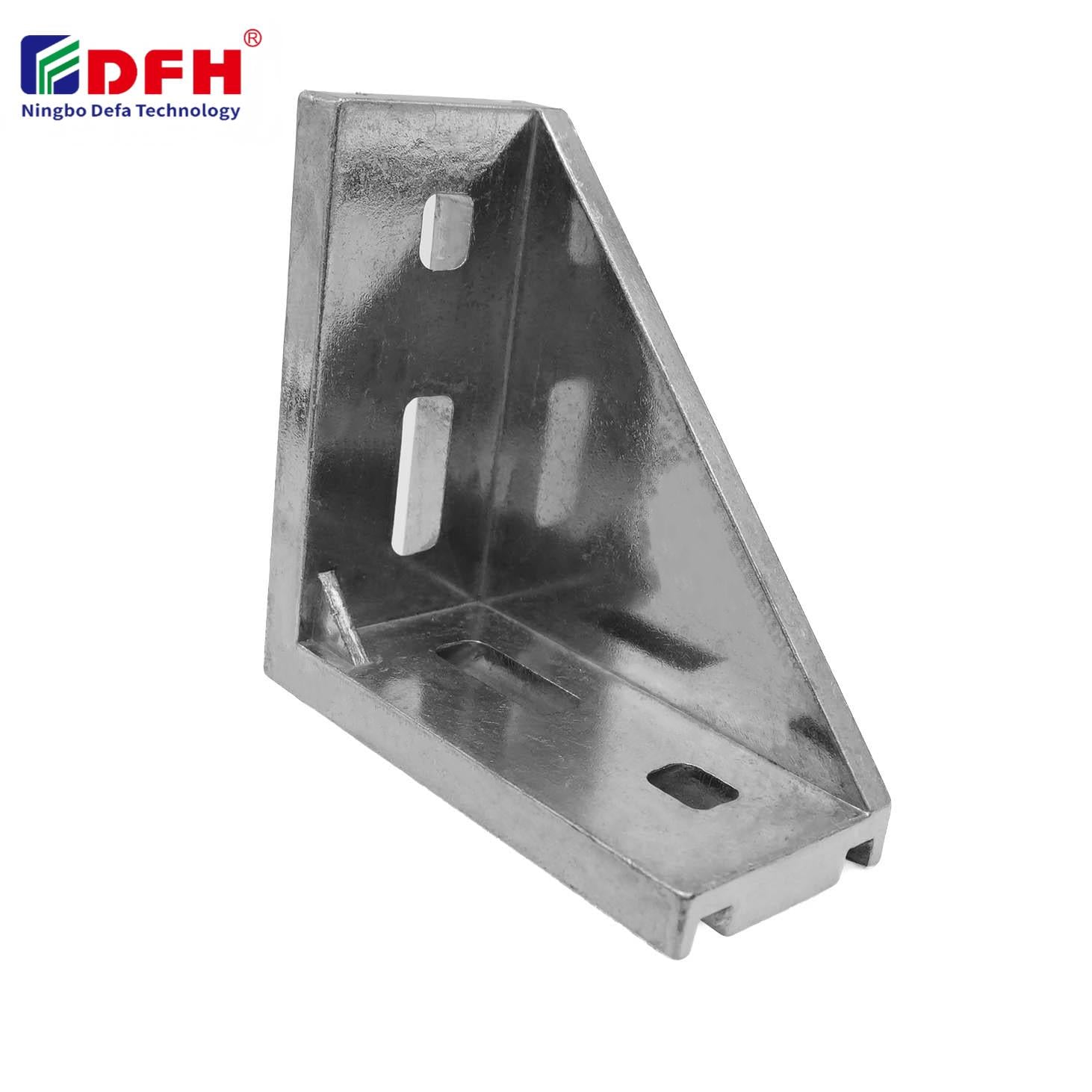
Angle connectors are critical structural components in industrial assembly systems, bearing loads and maintaining alignment across countless applications from machinery frames to architectural support structures. Ensuring the security of angle connectors requires a comprehensive approach that spans material selection, installation methodology, environmental assessment, and ongoing maintenance. When these fastening elements fail, the consequences can range from operational downtime to catastrophic structural failure, making security protocols essential for any facility relying on modular or fixed assembly configurations.
The security of angle connectors depends on multiple interdependent factors, each of which must be evaluated and managed proactively. Material compatibility, load capacity verification, installation torque specifications, environmental exposure, and regular inspection routines form the foundation of a robust security strategy. Industrial operators who understand these factors can implement practical measures that extend component lifespan, prevent unexpected failures, and maintain structural integrity across dynamic and static applications.
Right angle brackets and corner fasteners must match the physical demands of their specific environment. Aluminum alloy connectors offer lightweight advantages for non-critical applications, while stainless steel variants provide corrosion resistance in harsh chemical or moisture-heavy settings. Carbon steel 90 degree joints deliver maximum strength for heavy industrial loads but require protective coatings to prevent rust. The material choice directly influences how well angle connectors resist fatigue, temperature fluctuations, and environmental degradation over time.
Load capacity ratings must never be exceeded, as even moderate overloading accelerates component wear and can trigger unexpected failure modes. Manufacturers specify maximum tensile, shear, and bending loads for each connector type. When calculating actual working loads, include safety margins of at least 1.5 to 2 times the theoretical load, accounting for dynamic forces, vibration, and potential impact events. Right angle brackets rated for static loads require different safety considerations than corner fasteners subjected to repetitive or shock loading.
Industrial angle connectors should comply with recognized standards such as DIN, ISO, ASTM, or equivalent regional specifications. These standards establish material composition, dimensional tolerances, and performance testing protocols that ensure consistency and reliability across production batches. Requesting material certificates and third-party test reports before installation verifies that 90 degree joints meet stated specifications. Non-compliant or counterfeit fasteners represent a serious security risk and can rapidly propagate failure through interconnected systems.
Correct fastener torque is fundamental to angle connector security. Under-tightening creates micro-motion and fretting corrosion, while over-tightening strips threads and weakens bolts. Most manufacturers provide torque specifications in foot-pounds or newton-meters for each bolt size and material pairing. Using calibrated torque wrenches ensures consistent, repeatable engagement across all connection points. For critical applications, documenting torque values during installation creates an audit trail and enables verification during maintenance inspections.
Right angle brackets and corner fasteners benefit from the use of locking mechanisms such as thread-locking compounds, lock washers, or nylock nuts. These prevent vibration-induced loosening, which is a primary cause of structural failure in industrial settings. Chemical thread lockers should be selected based on removal requirements; permanent formulations suit single-assembly applications, while removable types allow future disassembly without component damage. The combination of proper torque plus mechanical or chemical locking provides multi-layer security that significantly extends 90 degree joints reliability.
Surface preparation directly affects connection quality and long-term security. Dirt, oil, rust, or paint films on contact surfaces reduce clamping force and encourage fastener loosening. All mating surfaces of angle connectors should be cleaned with wire brushing or light grinding to remove contaminants and oxidation. Proper surface contact ensures load distribution is consistent and predictable, preventing stress concentration at isolated points.
Alignment of corner fasteners must be verified before final tightening. Misaligned 90 degree joints experience bending stresses rather than pure axial or shear loads, leading to premature fatigue and potential brittle fracture. Using alignment tools, fixtures, or temporary clamps during installation ensures components achieve their designed geometry before permanent fastening occurs. This precision-focused approach maximizes the structural efficiency of right angle brackets and corner fasteners across their intended service life.
Environmental factors dramatically influence angle connectors security and durability. Moisture, salt spray, chemical vapors, temperature cycling, and ultraviolet exposure all degrade unprotected components. Stainless steel variants resist corrosion naturally but at higher cost. Carbon steel and aluminum components require protective measures such as paint systems, galvanizing, or anodizing to guard against environmental attack. Selecting appropriate protective coatings based on the specific environment extends service life and prevents corrosion-initiated failure modes in corner fasteners and right angle brackets.
Temperature fluctuations cause differential expansion and contraction between connected materials, potentially inducing stress cycling and fastener loosening. High-temperature environments may require specialized alloys or ceramic isolators to maintain 90 degree joints security. Cold environments can embrittle certain steel grades, reducing impact resistance. Evaluating thermal conditions during the design phase allows selection of angle connectors and materials suited to the actual operating range, preventing temperature-related security degradation.
Regular inspections are essential to angle connector security. Establish inspection routines based on application criticality, load magnitude, environmental severity, and component history. Visual checks should identify loose fasteners, corrosion initiation, cracks, deformation, or misalignment. Vibration analysis and ultrasonic testing can detect micro-cracks or material degradation invisible to conventional inspection methods. Documenting inspection findings allows trend analysis and predictive maintenance planning, enabling replacement of degraded corner fasteners and right angle brackets before catastrophic failure occurs.
Tightness verification using calibrated torque wrenches or tension measurement devices ensures fasteners maintain their clamping force after installation. Periodic re-torquing during the first operational weeks captures any settling or embedding loss that typically occurs when new 90 degree joints enter service. Establishing a documented maintenance schedule demonstrates due diligence and ensures consistent application of security protocols across all installed angle connectors.
Unexpected failure of angle connectors typically results from inadequate torque application, environmental corrosion, material incompatibility, load overrating, vibration-induced loosening, or manufacturing defects. Insufficient maintenance inspection routines and delayed replacement of degraded components also contribute to failure escalation. Implementing comprehensive material certification, proper installation practices, environmental monitoring, and preventive maintenance dramatically reduces unexpected failure risk.
Inspection frequency depends on application severity, load magnitude, and environmental conditions. Critical high-load applications may require monthly or quarterly inspections, while lightly loaded static systems might justify annual reviews. Applications in corrosive environments need more frequent monitoring than protected indoor installations. Establishing an inspection baseline after initial installation, then adjusting frequency based on observed condition trends, optimizes resource allocation while maintaining 90 degree joints security.
Standard carbon steel and uncoated aluminum angle connectors deteriorate rapidly in outdoor conditions due to moisture, salt, and UV exposure. For outdoor applications, specify stainless steel corner fasteners, hot-dip galvanized components, or apply protective coatings to standard materials. Environmental adaptation at the selection stage prevents costly corrosion-related failures and extends the useful life of right angle brackets in demanding outdoor conditions.
2026/09/30
Source aluminum profiles for versatile modular framing. Learn extrusion mechanics, strength benefits & corrosion resistance. Request details.
2026/09/30
Source aluminum profiles for construction projects. Learn structural framing, cladding & window benefits for maximum ROI. Download guide.
2026/09/30
Source optimal aluminum profile sizing techniques. Evaluate load, space, alloy, environment & cost factors to prevent deflection. Download guide.
2026/09/30
Struggling with fastener failures or rework? Master screw sizing by diameter, pitch, material, and load—plus industry-specific standards. Optimize reliability & compliance now.
2026/09/30
Source aluminum profiles for industrial engineering. Discover strength-to-weight ratios, corrosion resistance & 30% cost savings. Download guide.
2026/09/30
Source heat-resistant aluminum profile systems. Master thermal expansion science & stress management strategies for industrial builds. Download guide.