EN
EN
What is Aluminum Profile and How Does It Work?
2026/09/30
Source aluminum profiles for versatile modular framing. Learn extrusion mechanics, strength benefits & corrosion resistance. Request details.

2026/09/01
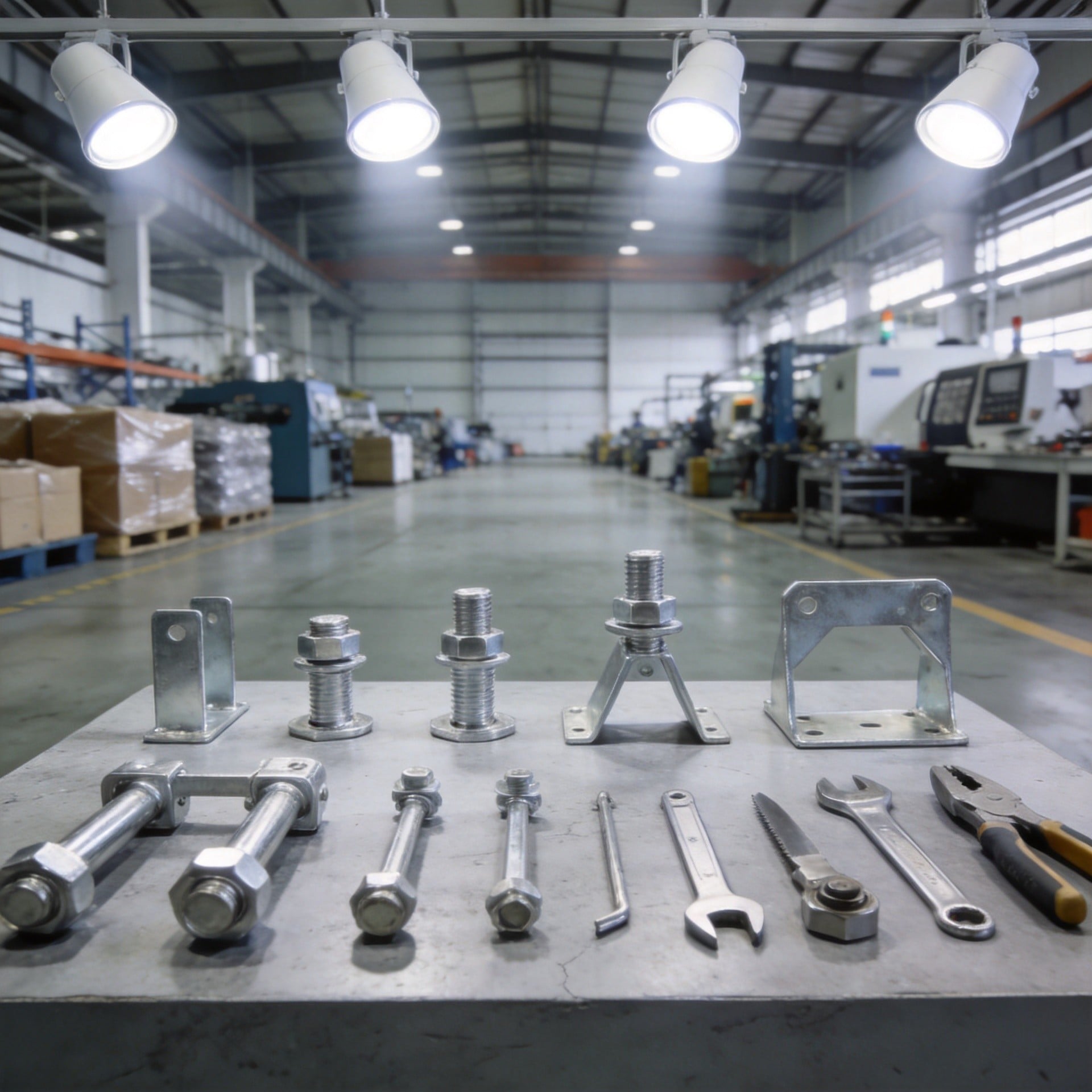
A Pipe Rack System fundamentally transforms how industrial facilities approach piping installation, reducing both time and complexity on the jobsite. Traditional piping methods require extensive field fabrication, custom measurements, and labor-intensive assembly, creating bottlenecks that delay project completion. By contrast, a modern pipe rack system combines prefabrication, standardized components, and strategic design to accelerate the entire installation workflow.
The efficiency gains stem from careful engineering that aligns with jobsite logistics, material handling, and workforce coordination. Industrial facilities across petrochemical, oil and gas, power generation, and manufacturing sectors increasingly recognize that investing in a pipe rack system pays dividends through faster turnaround, reduced rework, and improved safety outcomes. Understanding how these systems streamline installation reveals why they have become indispensable in modern industrial construction.
The modular piping framework underlying a pipe rack system enables components to arrive at the site already assembled or requiring minimal configuration. Rather than cutting, threading, and welding pipes in cramped overhead positions, crews assemble major sections in controlled environments where precision is easier to maintain. This modular approach reduces field welding time by up to 60 percent compared to traditional stick-built methods.
An industrial pipe support structure designed for modular assembly typically uses standardized connection points, quick-disconnect fittings, and pre-drilled mounting holes. Once delivered, these prefabricated modules slot together with minimal field adjustments. The heavy-duty pipe mounting solution framework accommodates thermal expansion, vibration dampening, and load distribution without requiring custom engineering at each joint.
Standardization within a pipe rack system means that support brackets, hangers, clamps, and connectors follow predictable dimensions and load ratings. Crews familiar with one installation can rapidly transfer that knowledge to the next project, eliminating the learning curve that accompanies one-off designs. An industrial pipe support structure built on standardized interfaces also simplifies maintenance, repair, and future modifications when operational requirements change.
This consistency allows project managers to stock common components, reducing lead times and enabling faster response to site conditions. When an unexpected interference or spatial constraint arises, teams can often resolve it with off-the-shelf solutions rather than commissioning custom engineering and fabrication.
A well-engineered pipe rack system and its supporting industrial pipe support structure can cut installation labor by 40 to 50 percent relative to traditional methods. Fewer craft workers need specialized skills in advanced welding, pipe threading, or exotic material handling. The modular piping framework handles much of the complexity before arrival, allowing general laborers to focus on placement, alignment, and fastening rather than fabrication.
This shift reduces dependency on highly specialized trades and allows project teams to manage workforce scheduling more flexibly. Projects that might have required six weeks of continuous welding crews can often complete the same piping layout in two to three weeks using a heavy-duty pipe mounting solution framework, translating directly to cost savings and faster commissioning.
Installation schedules become more predictable when using a pipe rack system because components arrive on a known timeline and assembly sequences are defined in advance. Unlike field-fabricated piping, which depends on real-time problem-solving, a modular piping framework follows a choreographed workflow. Crane scheduling, worker coordination, and inspection points align with prefabricated sections, eliminating delays caused by unexpected design conflicts.
Project managers gain clearer visibility into material consumption, labor hours, and critical path items. This predictability is especially valuable on complex industrial sites where multiple trades must coordinate installation efforts and schedule conflicts frequently derail timelines.
A pipe rack system manufactured in a controlled shop environment undergoes rigorous inspection before leaving the facility, ensuring that weld quality, dimensional accuracy, and material compliance meet or exceed specification. Industrial pipe support structures built in shops benefit from consistent environmental conditions, calibrated tooling, and experienced fabricators who execute the same procedures repeatedly. The heavy-duty pipe mounting solution framework delivered to site has already passed pressure tests, visual inspection, and dimensional verification.
This factory-level quality control eliminates many of the defects that arise from field welding in adverse weather, awkward positions, or by less-experienced crews. When installation proceeds with pre-qualified components, pressure testing and hydrostatic trials proceed faster and with fewer surprises, accelerating the path to operational start-up.
Working at heights and with heavy piping components ranks among the most hazardous jobsite activities. A modular piping framework reduces exposure to these risks by completing much of the fabrication work in a safer shop setting. Field installation of prefabricated sections requires less welding overhead, fewer hours working at height, and more opportunities for workers to stand on stable platforms during assembly.
The industrial pipe support structure framework also incorporates fall protection attachment points and load paths that have been engineered and verified before installation begins. Workers can reference clear installation diagrams and follow proven procedures rather than adapting techniques to unexpected field conditions, reducing improvisation and the accidents that often accompany it.
A pipe rack system and its modular piping framework typically reduce installation duration by 30 to 50 percent depending on project complexity, scope, and site conditions. Smaller projects with straightforward layouts may achieve greater percentage savings, while larger installations see absolute time reductions in weeks or months. The industrial pipe support structure prefabrication shifts much of the labor to the shop, where controlled conditions accelerate work rates.
Modern pipe rack systems and the heavy-duty pipe mounting solution frameworks they employ retain significant design flexibility. While the modular piping framework standardizes common elements, engineers can tailor layout, spacing, and capacity to match specific operational requirements. Field modifications and custom sections remain possible, though the goal is to minimize them; most projects achieve 80 to 95 percent of their piping through standard modules.
Petrochemical plants, oil and gas refineries, power generation stations, and chemical processing facilities derive the greatest advantage from an industrial pipe support structure and pipe rack system. These environments feature extensive, complex piping networks, high pressure ratings, and strict operational requirements. The modular piping framework's ability to combine speed, precision, and scalability makes it especially valuable where downtime costs are measured in thousands of dollars per hour and safety compliance is non-negotiable.
2026/09/30
Source aluminum profiles for versatile modular framing. Learn extrusion mechanics, strength benefits & corrosion resistance. Request details.
2026/09/30
Source aluminum profiles for construction projects. Learn structural framing, cladding & window benefits for maximum ROI. Download guide.
2026/09/30
Source optimal aluminum profile sizing techniques. Evaluate load, space, alloy, environment & cost factors to prevent deflection. Download guide.
2026/09/30
Struggling with fastener failures or rework? Master screw sizing by diameter, pitch, material, and load—plus industry-specific standards. Optimize reliability & compliance now.
2026/09/30
Source aluminum profiles for industrial engineering. Discover strength-to-weight ratios, corrosion resistance & 30% cost savings. Download guide.
2026/09/30
Source heat-resistant aluminum profile systems. Master thermal expansion science & stress management strategies for industrial builds. Download guide.