EN
EN
What is Aluminum Profile and How Does It Work?
2026/09/30
Source aluminum profiles for versatile modular framing. Learn extrusion mechanics, strength benefits & corrosion resistance. Request details.
2026/09/09
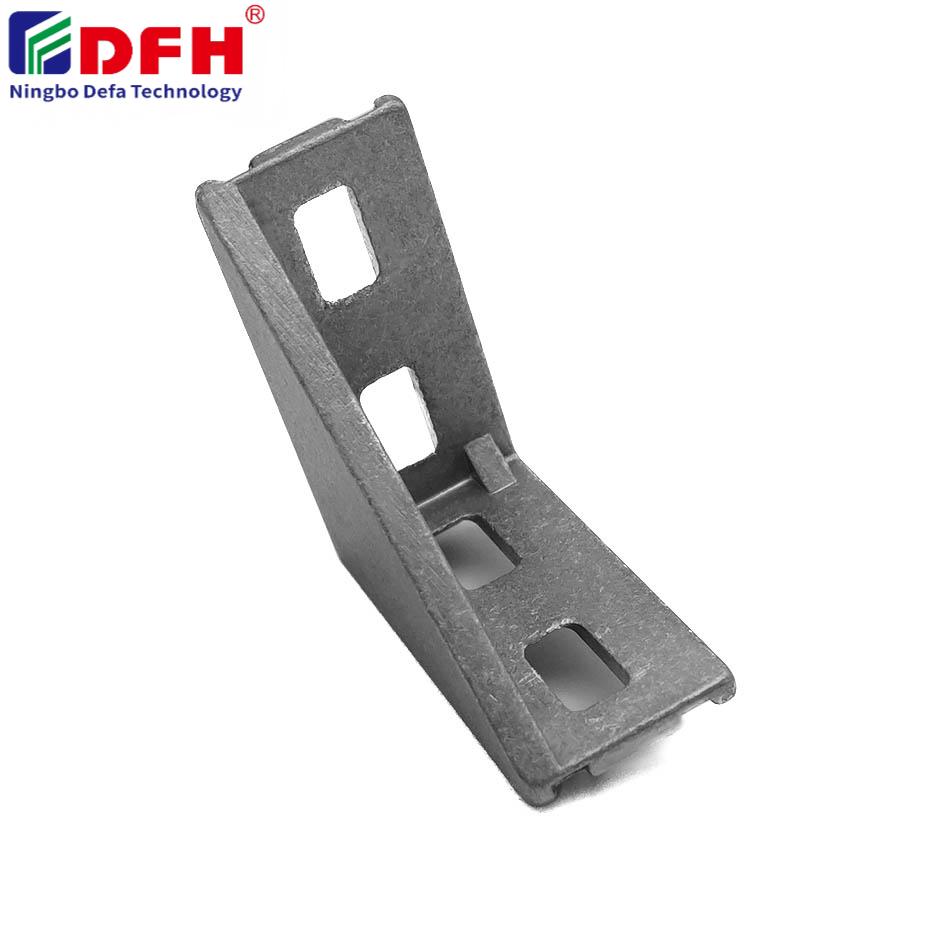
Structural integrity is the foundation of any reliable assembly system, and inner connectors play a critical role in achieving this goal. In industrial applications ranging from machinery frames to building systems, the quality and design of connection points determine how well structures withstand stress, vibration, and environmental factors. Inner connectors are specialized internal fastening components that link structural elements together, creating seamless load paths and distributing forces evenly across the entire assembly. Understanding how these components enhance structural integrity is essential for engineers, manufacturers, and systems integrators who need durable, stable solutions.
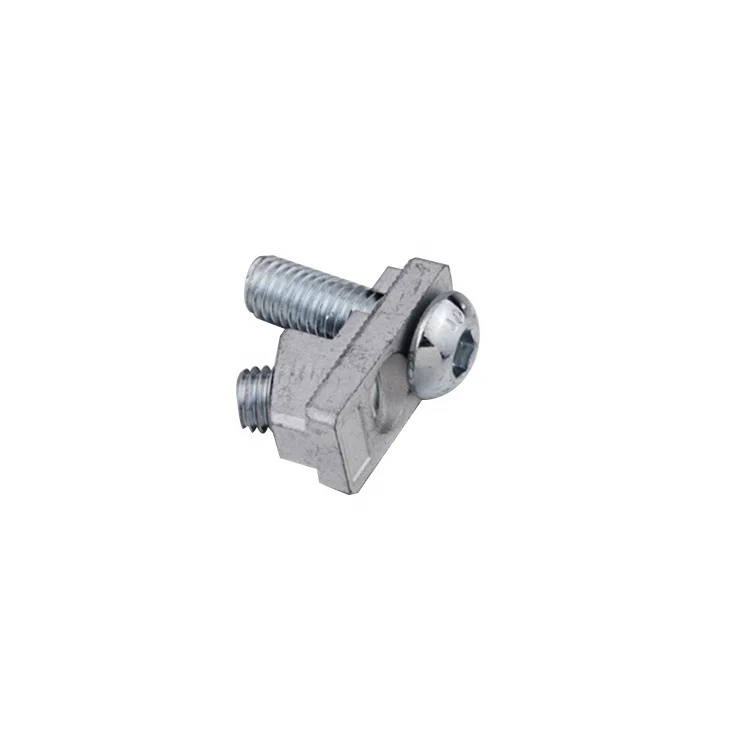
The performance of any modular assembly depends on how well its components connect internally. Internal connection hardware serves as the invisible backbone that holds structures together under demanding conditions. Whether supporting heavy loads, resisting dynamic forces, or enduring thermal cycles, profile joint systems must provide consistent strength and reliability. By examining how inner connectors function within these systems, manufacturers can optimize their designs, reduce failure rates, and extend the service life of their products significantly.
Inner connectors establish direct load paths between structural members, ensuring that forces travel through the most efficient route. When internal connection hardware is properly designed, it minimizes stress concentrations and distributes loads uniformly across contact surfaces. This uniform distribution prevents localized failure points and reduces the likelihood of crack initiation. Profile joint systems that incorporate quality inner connectors can handle significantly higher operational stresses without degradation. The mechanical advantage gained through proper connector design translates directly into increased structural longevity and safety margins.
Maintaining precise alignment and force continuity across connection points is fundamental to structural integrity. Inner connectors ensure that components remain perfectly aligned throughout assembly and during operation. Misalignment can introduce bending moments and lateral stresses that compromise the entire structure. Modular assembly components benefit tremendously from connectors that maintain rigid geometric control. When inner connectors keep elements perfectly positioned, the structure behaves as a unified whole rather than as disconnected parts, multiplying the effective strength of the entire system.
The choice of material for inner connectors directly impacts how well structures resist stress and deformation. Premium alloys and hardened steels provide superior strength-to-weight ratios compared to standard materials. Internal connection hardware manufactured from high-performance materials exhibits minimal yield and maintains dimensional stability across temperature ranges. Profile joint systems utilizing advanced metallurgy can operate at higher safety factors with reduced component thickness. This material advantage allows manufacturers to create lighter, stronger assemblies that maintain exceptional structural integrity while reducing overall system mass.
Surface treatments applied to inner connectors significantly extend structural lifespan by preventing corrosion and wear. Specialized coatings and hardening processes protect modular assembly components from environmental degradation. Internal connection hardware exposed to moisture, salt spray, or industrial chemicals requires robust protection mechanisms. When corrosion compromises connector geometry, structural integrity deteriorates rapidly and unpredictably. Advanced surface treatment methods ensure that profile joint systems maintain their full strength throughout their intended service life, even in harsh environments.
Precision manufacturing of inner connectors ensures that every component meets strict geometric specifications. Tight tolerances create consistent, repeatable connections that eliminate micro-movements and fretting wear. Internal connection hardware produced to exacting standards provides predictable load-carrying capacity across production batches. Profile joint systems benefit from this consistency because each connection performs identically to the next. Modular assembly components designed with precision connectors exhibit superior structural integrity because variation and uncertainty are minimized throughout the fabrication process.
Modern inner connector designs incorporate optimized geometries that channel forces through the strongest material pathways. Advanced computer modeling and simulation guide the development of shapes that maximize strength while minimizing material volume. Internal connection hardware engineered with geometry optimization distributes stresses more effectively than conventional designs. Profile joint systems utilizing advanced connector geometries achieve higher load ratings and longer fatigue lives. These design innovations reflect a fundamental understanding of material mechanics, and they directly translate to structures with superior structural integrity that perform reliably under demanding conditions.
Industries requiring modular assembly components include automotive, manufacturing equipment, renewable energy systems, aerospace, and heavy machinery. Any sector relying on structural frameworks, precision machinery bases, or load-bearing frames benefits from investing in high-quality internal connection hardware. Profile joint systems are particularly valuable in applications where components must be reconfigured or maintained regularly. Inner connectors enable these industries to achieve the reliability and adaptability their operations demand.
Inner connectors and internal connection hardware offer distinct advantages over welding in many applications. Connectors provide reusable, maintainable connections without heat distortion or material weakening at the joint. Profile joint systems using modular assembly components allow for easy disassembly and reconfiguration. While welding creates permanent bonds with unique strength characteristics, inner connectors excel in applications requiring repeatability, adjustability, and long-term reliability. Both approaches serve different purposes depending on application requirements and design philosophy.
Regular inspection of inner connectors identifies loosening, wear, or corrosion before they compromise structural performance. Internal connection hardware should be checked for proper torque, alignment, and surface condition according to manufacturer specifications. Profile joint systems and modular assembly components benefit from preventive maintenance schedules that address potential issues proactively. Lubrication, protective coating touch-ups, and fastener tightening extend the operational life of connector systems significantly. Consistent maintenance ensures that structural integrity remains high throughout the expected service lifetime of the assembly.
2026/09/30
Source aluminum profiles for versatile modular framing. Learn extrusion mechanics, strength benefits & corrosion resistance. Request details.
2026/09/30
Source aluminum profiles for construction projects. Learn structural framing, cladding & window benefits for maximum ROI. Download guide.
2026/09/30
Source optimal aluminum profile sizing techniques. Evaluate load, space, alloy, environment & cost factors to prevent deflection. Download guide.
2026/09/30
Struggling with fastener failures or rework? Master screw sizing by diameter, pitch, material, and load—plus industry-specific standards. Optimize reliability & compliance now.
2026/09/30
Source aluminum profiles for industrial engineering. Discover strength-to-weight ratios, corrosion resistance & 30% cost savings. Download guide.
2026/09/30
Source heat-resistant aluminum profile systems. Master thermal expansion science & stress management strategies for industrial builds. Download guide.