EN
EN
What is Aluminum Profile and How Does It Work?
2026/09/30
Source aluminum profiles for versatile modular framing. Learn extrusion mechanics, strength benefits & corrosion resistance. Request details.

2026/09/22
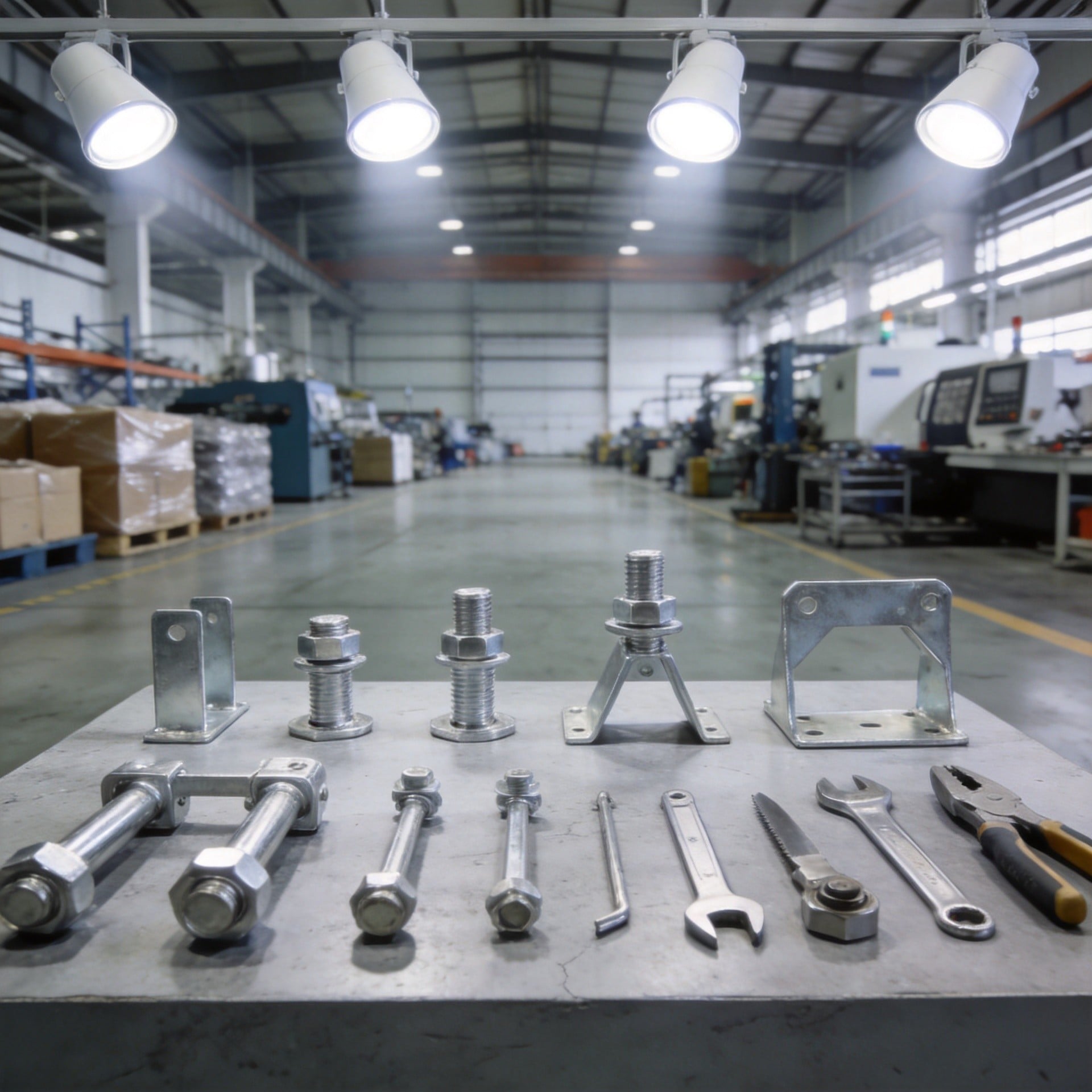
Bolt connectors form the backbone of structural integrity across countless industrial applications, from heavy machinery to infrastructure frameworks. When properly selected and installed, these fundamental fastening components deliver exceptional long-term stability by maintaining consistent clamping force, resisting vibration-induced loosening, and accommodating thermal expansion cycles without compromising joint performance. Understanding how bolt connectors achieve this enduring reliability requires insight into their mechanical principles, installation protocols, and the critical role of connector tensioning in preserving structural safety over decades of operational demands.
Industrial environments demand fastening solutions that withstand dynamic loads, temperature fluctuations, and corrosive conditions without degradation. Bolt connectors excel in these demanding scenarios because they create preloaded joints that resist separation, maintain alignment under stress, and adapt to material expansion and contraction. The relationship between initial bolt installation methods, ongoing connector tensioning practices, and the inherent properties of threaded fasteners determines whether assemblies remain secure for their intended service life or gradually deteriorate into unsafe conditions.
The fundamental mechanism enabling bolt connectors to provide stability involves establishing and maintaining adequate preload across the joined surfaces. When a bolt is tightened, it stretches elastically, creating tension that clamps the connected components together with tremendous force. This preload acts as the primary defense against joint separation, vibration-induced movement, and external shear loads that could otherwise compromise structural integrity. Properly calibrated connector tensioning ensures that clamping force remains sufficient throughout the service life, even as materials experience inevitable relaxation and stress redistribution.
The preload magnitude depends critically on proper bolt installation methods, including controlled tightening sequences, accurate torque specifications, and verification techniques. Industrial protocols demand that technicians apply consistent methodology when installing bolt connectors, as uneven tightening creates stress concentrations and asymmetric loading that accelerates fatigue failure. Advanced installation methods such as angle-of-turn tightening or ultrasonic bolt tension monitoring provide superior precision compared to basic torque wrench approaches, especially in safety-critical applications where predictable long-term performance is non-negotiable.
One of the most common threats to assembly longevity comes from vibration-induced bolt loosening, where cyclic stresses gradually reduce clamping force and allow fasteners to back out. Quality bolt connectors paired with appropriate installation methods and connector tensioning strategies mitigate this risk through multiple mechanisms. The friction between bolt shank and hole walls, combined with the elastic property of the bolt material itself, creates natural resistance to loosening. Threaded fasteners with adequate preload inherently resist micro-slip that would otherwise initiate the loosening spiral.
Modern industrial practice enhances this natural resistance through locking devices, thread-locking adhesives, and advanced fastener designs that distribute loads more evenly across engaged threads. The selection between these methods depends on application severity, environmental exposure, maintenance accessibility, and disassembly frequency. Industries managing critical equipment increasingly specify bolt connectors engineered specifically for vibration environments, incorporating hardened threads and optimized bearing surfaces that maintain consistent tension despite continuous dynamic stress.
The way bolt connectors are initially installed fundamentally shapes their long-term behavior and reliability. Standard bolt installation methods involve applying torque according to manufacturer specifications, yet this approach alone does not guarantee predictable preload because bolt geometry, surface conditions, and material variability introduce inconsistency. Advanced bolt installation methods address these variables through systematic approaches: the turn-of-nut method establishes preload by rotating the fastener through a calculated angle after initial snug-tight contact, ensuring reproducible tension regardless of friction variations.
Ultrasonic bolt tension verification represents a technological leap in installation precision, allowing technicians to measure actual bolt elongation and confirm preload before the joint enters service. This non-destructive approach prevents costly over-tensioning that could yield fasteners prematurely or under-tensioning that leaves joints vulnerable. For facilities managing extensive bolt connector applications, implementing robust installation method protocols with worker training and quality verification dramatically improves the consistency and longevity of assembled structures.
Connector tensioning strategies extend well beyond initial installation, encompassing periodic re-tightening schedules, condition monitoring protocols, and maintenance interventions timed to prevent failure. Many industrial operations schedule connector tensioning inspections at regular intervals during equipment break-ins, when thermal cycling first introduces relaxation effects that commonly occur within the first operational period. Threaded fasteners exhibit material stress relaxation, where elastic deformation gradually becomes partially plastic, reducing preload by five to fifteen percent depending on bolt grade, temperature exposure, and material composition.
Systematic connector tensioning maintenance involves establishing baseline measurements early in service life, then tracking changes to identify when re-tightening becomes necessary. Ultrasonic measurement, load-cell monitoring, or direct torque verification provide quantitative data guiding maintenance decisions. Facilities that implement predictive connector tensioning strategies based on actual joint performance data achieve superior uptime and safety records compared to operations relying on generic interval-based schedules, because targeted interventions address actual fatigue rather than arbitrary timelines.
The inherent properties of threaded fasteners significantly influence long-term bolt connector stability, with material grade, hardness, and corrosion resistance determining how well fasteners maintain preload under environmental stress. Carbon steel bolts offer economical performance for moderate-duty applications, while alloy steel grades provide superior strength retention at elevated temperatures and enhanced fatigue resistance under cyclic loading. Stainless steel threaded fasteners deliver exceptional corrosion resistance in wet, chemical, or coastal environments, though their lower modulus requires careful preload management to prevent inadequate clamping under vibration.
Selection of appropriate bolt connector material grades reflects realistic service conditions: oversizing material specifications wastes resources without improving actual stability, while under-specification leaves joints vulnerable to premature failure. Industrial engineers evaluate material properties against expected loads, temperature ranges, corrosion exposure, and maintenance access when specifying threaded fasteners for long-term applications. This systematic material selection process, combined with proper bolt installation methods and connector tensioning protocols, creates the foundation for decades of reliable performance.
Temperature fluctuations introduce complex stresses in bolt connector assemblies, as different materials expand at different rates and temperature changes alter the elastic properties of fasteners themselves. Elevated temperatures reduce bolt preload by decreasing material modulus and accelerating stress relaxation in threaded fasteners, making connector tensioning adjustments necessary during equipment warm-up phases in thermal cycling applications. Conversely, temperature drops increase preload dramatically, potentially over-stressing bolts and connected components in ways that connector tensioning calculations must anticipate.
Long-term stability in thermally challenging environments requires bolt connectors engineered with temperature compensation considerations, such as differential thread designs that maintain preload across temperature ranges or fasteners with controlled stress relaxation characteristics. Industrial applications ranging from steam systems to cryogenic equipment demand this specialized attention, where standard bolt installation methods and generic connector tensioning strategies prove inadequate. Facilities operating in these extreme thermal conditions invest in specialized training, measurement equipment, and material selections that specifically address temperature-related degradation.
Bolt connectors resist loosening through multiple mechanisms: the elastic properties of the bolt itself create inherent resistance to micro-slip, friction between bolt and hole surfaces opposes rotational movement, and proper preload magnitude determined through correct bolt installation methods establishes clamping forces that exceed external stresses. Enhanced stability comes from locking devices, thread-locking compounds, or specialized fastener designs that distribute loads across thread flanks more evenly. Implementing systematic connector tensioning monitoring allows early detection of preload loss before critical loosening occurs, enabling preventive re-tightening before safety or performance suffers.
Connector tensioning inspection frequency depends on application severity, load type, and operating environment, typically ranging from monthly checks during equipment break-in to annual verification in stable conditions. The most effective approach involves establishing baseline preload measurements when equipment enters service, then tracking changes to identify when re-tightening becomes necessary rather than following arbitrary schedules. Critical applications like aerospace, power generation, or heavy manufacturing justify more frequent connector tensioning verification and ultrasonic bolt tension measurement, while routine industrial equipment may require only periodic spot checks supplemented by operator awareness of abnormal vibration or movement indicators.
Threaded fasteners can provide stable long-term performance in corrosive environments when manufactured from appropriate materials like stainless steel, coated alloys, or specialty corrosion-resistant grades that withstand chemical attack without degradation. Material selection for bolt connectors must match specific corrosive substances present: stainless steel resists most general corrosion but may suffer in chloride-rich environments, while specialized alloys address unique chemical exposures. Combining corrosion-resistant threaded fasteners with protective coatings, sealants, and systematic connector tensioning protocols ensures that preload loss from corrosion-related stress relaxation remains minimal, maintaining stability despite hostile environmental conditions.
2026/09/30
Source aluminum profiles for versatile modular framing. Learn extrusion mechanics, strength benefits & corrosion resistance. Request details.
2026/09/30
Source aluminum profiles for construction projects. Learn structural framing, cladding & window benefits for maximum ROI. Download guide.
2026/09/30
Source optimal aluminum profile sizing techniques. Evaluate load, space, alloy, environment & cost factors to prevent deflection. Download guide.
2026/09/30
Struggling with fastener failures or rework? Master screw sizing by diameter, pitch, material, and load—plus industry-specific standards. Optimize reliability & compliance now.
2026/09/30
Source aluminum profiles for industrial engineering. Discover strength-to-weight ratios, corrosion resistance & 30% cost savings. Download guide.
2026/09/30
Source heat-resistant aluminum profile systems. Master thermal expansion science & stress management strategies for industrial builds. Download guide.