EN
EN
What is Aluminum Profile and How Does It Work?
2026/09/30
Source aluminum profiles for versatile modular framing. Learn extrusion mechanics, strength benefits & corrosion resistance. Request details.

2026/09/30
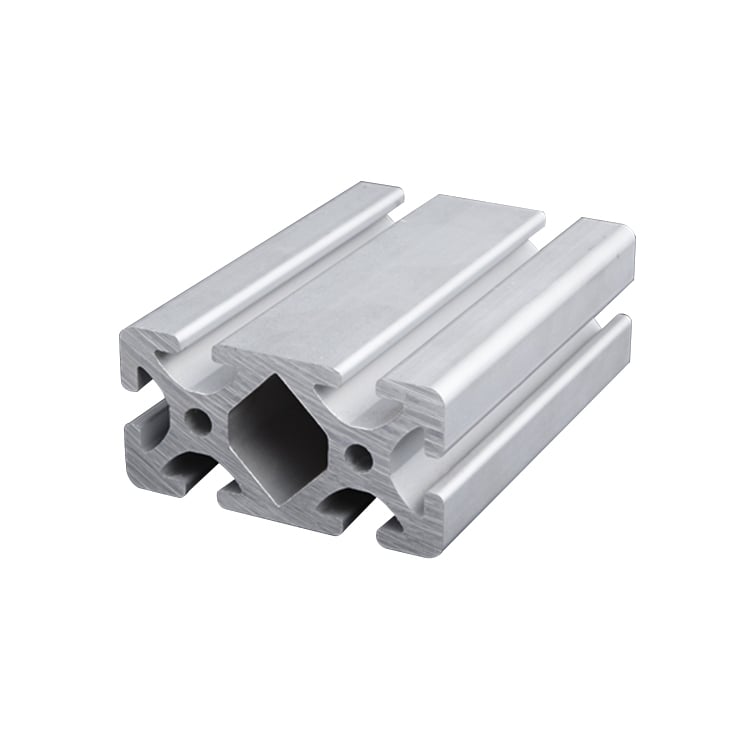
Strength is one of the most critical factors when selecting structural materials for industrial applications, and understanding how different aluminum profiles compare is essential for engineers and manufacturers. An aluminum profile delivers impressive strength-to-weight ratios, making it a preferred choice across machinery, automotive, construction, and automation sectors. The performance characteristics vary significantly depending on alloy composition, cross-sectional design, heat treatment, and application context.
Comparing aluminum profile strength requires understanding the mechanical properties of specific alloys and how design geometry influences load-bearing capacity. Industrial aluminum extrusions come in standardized and custom configurations, each suited to different stress conditions, environmental factors, and cost constraints. This guide explains the key strength metrics, alloy differences, and design considerations that determine whether a particular aluminum profile will perform reliably in your application.
Tensile strength, yield strength, and modulus of elasticity define how extruded aluminum responds to applied loads. Common series such as 6061, 6063, and 7075 offer distinct mechanical profiles suited to different industrial demands. The 6061 alloy delivers balanced strength and corrosion resistance, making it ideal for frame systems and structural components exposed to moderate environmental stress. The 7075 alloy provides superior tensile strength, preferred for aerospace and high-performance machinery where maximum load capacity is non-negotiable.
Heat treatment significantly influences the final strength of aluminum frame systems. An annealed profile offers maximum ductility and formability but lower strength. T4, T5, and T6 tempers progressively increase hardness and tensile strength by introducing controlled precipitation hardening. Engineers must match the temper condition to the specific application requirements, balancing strength gains against cost, machinability, and fatigue resistance concerns.
The 6061-T6 extruded aluminum variant achieves approximately 35,000 PSI (240 MPa) tensile strength, providing reliable performance for standard industrial aluminum extrusions in automated systems, conveyor components, and support structures. The 7075-T6 alloy reaches 73,000 PSI (505 MPa) tensile strength, nearly double that of 6061, making it suitable for high-stress aerospace applications and specialty machinery. The 5083 alloy, commonly used in marine and harsh environments, delivers 46,000 PSI (318 MPa) with superior corrosion resistance, ideal for demanding outdoor and chemical exposure scenarios.
Cross-sectional geometry dramatically affects how industrial aluminum extrusions perform under stress, independent of material composition. An I-beam or box-section profile distributes loads more efficiently than a simple rectangular profile of equivalent weight, delivering superior stiffness and bending resistance. T-slot aluminum frame systems leverage hollow rectangular sections with optimized wall thickness, allowing engineers to achieve maximum strength while minimizing material consumption and final component weight.
Second moment of inertia (I-value) quantifies the geometric resistance to bending, directly determining deflection under load. A taller profile with equivalent cross-sectional area delivers greater bending stiffness than a shorter, wider alternative. Extruded aluminum manufacturers optimize cavity placement, web thickness, and flange dimensions to maximize this geometric advantage, enabling industrial aluminum extrusions to support heavier loads across longer spans than solid alternatives.
Increasing wall thickness in an aluminum profile directly enhances strength, stiffness, and load capacity, though it also increases material weight and cost. Strategic reinforcement at high-stress zones—such as corners, joint areas, and load concentration points—improves performance without unnecessary weight penalties. Industrial aluminum extrusions often feature variable wall thickness, thicker sections where mechanical demands peak and thinner sections where loads remain minimal.
The relationship between wall thickness and buckling resistance becomes critical in compression-dominated applications. Slender profiles susceptible to buckling require thicker walls or internal ribbing to maintain column stability. Engineers designing aluminum frame systems must calculate Euler buckling loads and ensure the selected profile geometry provides adequate lateral bracing and stability margins for the anticipated operational stresses.
Raw aluminum strength values represent static load performance under laboratory conditions, but real-world durability depends on environmental exposure and cyclic loading patterns. Corrosion can gradually weaken an aluminum profile, reducing effective cross-sectional area and compromising structural integrity over extended service life. Anodizing, powder coating, and chromate conversion treatments protect industrial aluminum extrusions from oxidation and salt-air degradation, preserving mechanical properties in harsh environments.
Fatigue strength, distinct from tensile strength, determines how many load cycles an aluminum frame system can endure before initiating crack propagation and eventual failure. Cyclic stresses from machinery vibration, repeated assembly-disassembly operations, or varying thermal conditions can cause cumulative damage even when individual stress levels remain below yield strength. Material defects, notches, and stress concentration areas significantly reduce fatigue performance, making profile design, manufacturing precision, and surface finish critical considerations.
Elevated temperatures reduce the strength of extruded aluminum, particularly in alloys designed for high-performance applications. At 200°C, many aluminum frame systems lose 10–15 percent of room-temperature tensile strength, while at 300°C the reduction reaches 25–30 percent. Industrial applications involving heated machinery, thermal cycling, or flame exposure require careful temperature derating and potentially alloy substitution to maintain adequate safety margins.
Sustained loading at constant stress, known as creep, causes gradual deformation in industrial aluminum extrusions at elevated temperatures. Unlike brittle materials that fail suddenly, aluminum deforms slowly under prolonged stress, potentially exceeding geometric tolerance limits before catastrophic fracture occurs. Design calculations must account for acceptable creep limits, service duration, and operational temperature ranges to ensure aluminum profile components remain functionally adequate throughout their intended service life.
The 6061-T6 aluminum profile delivers the optimal balance between tensile strength, corrosion resistance, weldability, and cost for most industrial aluminum extrusions. It provides 35,000 PSI strength while remaining lightweight and easy to machine. For aerospace and maximum-performance requirements, 7075-T6 offers superior absolute strength, though at higher cost and reduced corrosion resistance. The choice depends on whether your application prioritizes weight savings, environmental durability, welding capability, or ultimate load capacity.
Thicker walls in industrial aluminum extrusions increase bending stiffness, compressive strength, and buckling resistance proportionally to the increase in second moment of inertia. However, thicker walls add material weight and expense without always proportionally increasing load capacity. The optimal wall thickness balances mechanical requirements against weight penalties and manufacturing feasibility. Modern aluminum frame systems often employ variable wall thickness, reinforcing critical zones while maintaining minimal thickness elsewhere.
Yes, corrosion gradually reduces the effective cross-sectional area of an aluminum profile by removing material, which directly decreases load-bearing capacity and stiffness. While aluminum naturally forms a protective oxide layer, severe environmental conditions can penetrate this barrier, causing localized pitting and material loss. Protective coatings like anodizing, powder coating, and sealers significantly extend the service life of industrial aluminum extrusions and preserve their structural integrity in harsh outdoor, marine, or chemical environments.
2026/09/30
Source aluminum profiles for versatile modular framing. Learn extrusion mechanics, strength benefits & corrosion resistance. Request details.
2026/09/30
Source aluminum profiles for construction projects. Learn structural framing, cladding & window benefits for maximum ROI. Download guide.
2026/09/30
Source optimal aluminum profile sizing techniques. Evaluate load, space, alloy, environment & cost factors to prevent deflection. Download guide.
2026/09/30
Struggling with fastener failures or rework? Master screw sizing by diameter, pitch, material, and load—plus industry-specific standards. Optimize reliability & compliance now.
2026/09/30
Source aluminum profiles for industrial engineering. Discover strength-to-weight ratios, corrosion resistance & 30% cost savings. Download guide.
2026/09/30
Source heat-resistant aluminum profile systems. Master thermal expansion science & stress management strategies for industrial builds. Download guide.