EN
EN
What is Aluminum Profile and How Does It Work?
2026/09/30
Source aluminum profiles for versatile modular framing. Learn extrusion mechanics, strength benefits & corrosion resistance. Request details.

2026/09/14
The manufacturing of an aluminum profile involves a sophisticated multi-stage process that transforms raw aluminum ingots into precision-engineered components used across industries. Understanding how aluminum extrusion works and the steps involved in creating industrial aluminum components reveals why these materials are essential for everything from architectural framing to heavy machinery. The journey from raw material to finished product encompasses material selection, heating, extrusion, cooling, and finishing operations that demand precision and technical expertise.
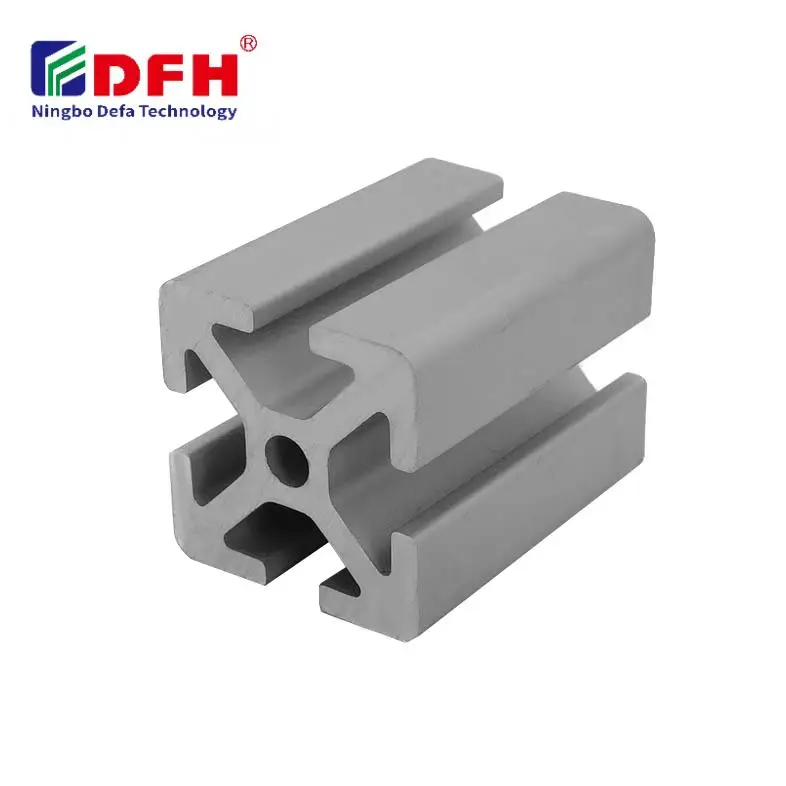
Modern aluminum profile manufacturing is a carefully controlled process where every stage impacts the final product's quality, strength, and dimensional accuracy. Industrial aluminum components require consistent adherence to specifications, making the manufacturing methodology critical for industries relying on aluminum structural framing and other demanding applications. This article explores each phase of aluminum extrusion manufacturing, from raw material preparation through quality assurance and finishing treatments.
The manufacturing process begins with selecting premium aluminum ingots that meet strict purity and composition standards. These ingots are typically composed of recycled aluminum and virgin aluminum combined to achieve desired properties. Quality control starts here, as impurities or inconsistent alloy composition will affect the final aluminum profile performance. Manufacturers source ingots from certified suppliers who maintain rigorous testing protocols for chemical composition and mechanical properties.
Before extrusion can occur, aluminum ingots must be heated to precise temperatures, typically between 400 and 500 degrees Celsius, depending on the alloy grade. This heating phase, called homogenization, ensures uniform material properties throughout the ingot and eliminates segregation that could weaken the final aluminum profile. The heating process is carefully monitored because overheating degrades material properties while insufficient heating prevents proper flow during extrusion. Industrial aluminum components require this meticulous temperature control to guarantee structural integrity and dimensional consistency in the finished product.
The core of aluminum profile manufacturing occurs in the extrusion press, where heated ingots are forced through a die at extreme pressure. The extrusion process subjects the aluminum to pressures exceeding 1,000 bars, forcing the material to conform precisely to the die shape. This is where the actual Aluminum Profile takes its final cross-sectional form, whether it is a T-slot frame, structural beam, or custom industrial aluminum component. Extrusion specialists monitor pressure, speed, and temperature continuously to ensure each aluminum extrusion meets dimensional tolerances and material specifications.
Dies are precision-engineered tools that define the exact shape of every aluminum structural framing element produced. Each die is custom-designed for specific profile geometries, incorporating cooling passages, bearing surfaces, and pressure relief channels. The complexity of die design directly influences the quality of the resulting aluminum extrusion and determines production efficiency. Manufacturers maintain extensive die libraries and invest in advanced CAD design and die-making technology to produce consistent, high-quality industrial aluminum components.
Immediately after extrusion, the newly formed aluminum profile must be cooled rapidly to preserve its mechanical properties and prevent warping. Water spray cooling systems or air cooling are applied within seconds of the profile exiting the die. This rapid cooling, known as quenching when applied to certain alloys, hardens the material and stabilizes its internal crystal structure. Proper cooling of aluminum extrusion ensures that the final industrial aluminum components maintain their intended strength and dimensional accuracy throughout their service life.
Once cooled, the aluminum profile enters straightening equipment that corrects any minor bending or distortion that may have occurred during extrusion or cooling. Precision cutting saws then cut the continuous extrusions to customer-specified lengths. Surface treatment options for aluminum structural framing include anodizing, powder coating, and polishing, each providing different benefits such as corrosion resistance, aesthetic appeal, or wear protection. These finishing processes transform the basic aluminum profile into a market-ready industrial aluminum component ready for assembly or integration into end products.
Throughout aluminum extrusion manufacturing, rigorous testing ensures every aluminum profile meets specified dimensions and performance requirements. Coordinate measuring machines verify cross-sectional geometry, wall thickness, and straightness with micron-level precision. Tensile testing, hardness testing, and fatigue analysis confirm that industrial aluminum components possess required strength and durability. Documentation and traceability systems track each batch of aluminum structural framing, enabling full material history review when needed for critical aerospace, automotive, or industrial applications.
Visual inspection detects surface defects, oxidation issues, or finishing inconsistencies that could compromise the aluminum profile's performance or appearance. Trained inspectors examine each aluminum extrusion for cracks, delamination, or contamination before final packaging. Industrial aluminum components are carefully bundled and protected to prevent damage during transport. Quality assurance extends beyond the manufacturing floor, with many producers offering batch certificates and compliance documentation to customers purchasing aluminum structural framing for regulated industries.
A typical aluminum extrusion consists of aluminum as the primary element, combined with elements like silicon, copper, magnesium, or zinc depending on the desired properties. The specific alloy composition determines strength, corrosion resistance, and machinability. Common aluminum structural framing alloys include 6061, 6063, and 7075, each serving different industrial aluminum component applications. The precise composition is selected during raw material sourcing to match the end-use requirements of the customer.
From raw ingot to finished aluminum profile, the manufacturing cycle can range from several hours to a full day depending on ingot size, complexity, and surface treatment requirements. The aluminum extrusion phase itself takes only minutes per piece once the ingot is heated. However, homogenization heating may require 12 to 24 hours, and cooling, finishing, and quality testing of industrial aluminum components add additional time. Custom aluminum structural framing orders may require longer lead times for die creation and production scheduling.
Temperature directly influences the material's flow properties, mechanical strength, and final dimensional accuracy of the aluminum profile. Excessive heat during aluminum extrusion can cause defects like surface cracks or improper material flow through the die, degrading industrial aluminum components quality. Insufficient heat prevents proper material deformation and compromises the structural integrity of aluminum structural framing. Maintaining precise temperature windows throughout heating, extrusion, and cooling ensures consistent, reliable products that meet engineering specifications and customer expectations.
2026/09/30
Source aluminum profiles for versatile modular framing. Learn extrusion mechanics, strength benefits & corrosion resistance. Request details.
2026/09/30
Source aluminum profiles for construction projects. Learn structural framing, cladding & window benefits for maximum ROI. Download guide.
2026/09/30
Source optimal aluminum profile sizing techniques. Evaluate load, space, alloy, environment & cost factors to prevent deflection. Download guide.
2026/09/30
Struggling with fastener failures or rework? Master screw sizing by diameter, pitch, material, and load—plus industry-specific standards. Optimize reliability & compliance now.
2026/09/30
Source aluminum profiles for industrial engineering. Discover strength-to-weight ratios, corrosion resistance & 30% cost savings. Download guide.
2026/09/30
Source heat-resistant aluminum profile systems. Master thermal expansion science & stress management strategies for industrial builds. Download guide.