EN
EN
What is Aluminum Profile and How Does It Work?
2026/09/30
Source aluminum profiles for versatile modular framing. Learn extrusion mechanics, strength benefits & corrosion resistance. Request details.

2026/09/23
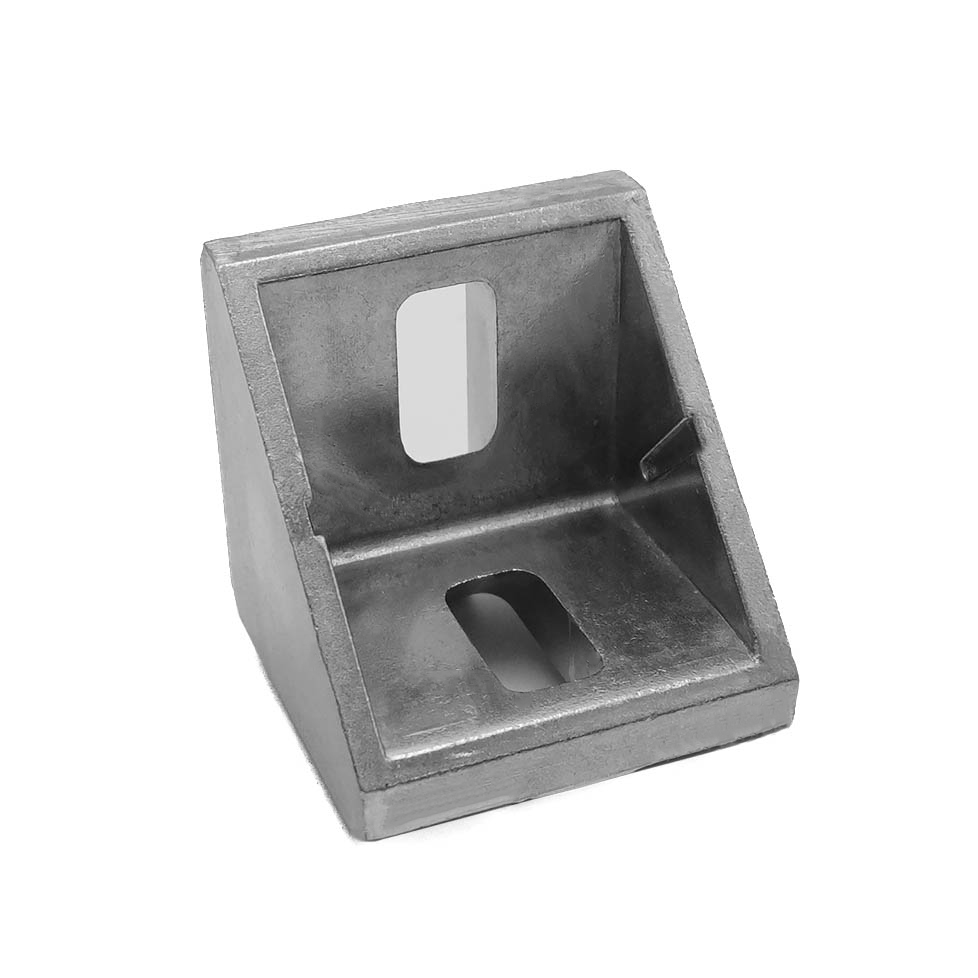
High vibration environments present unique challenges for structural fastening systems. When machinery operates at elevated speeds or experiences repetitive shock loads, every component must be engineered to resist fatigue, loosening, and failure. Angle Connectors are increasingly specified for such demanding applications, but their suitability depends on material choice, joint design, and assembly technique. This article examines whether Angle Connectors can reliably function under high vibration conditions and what factors determine their success or failure in these critical settings.
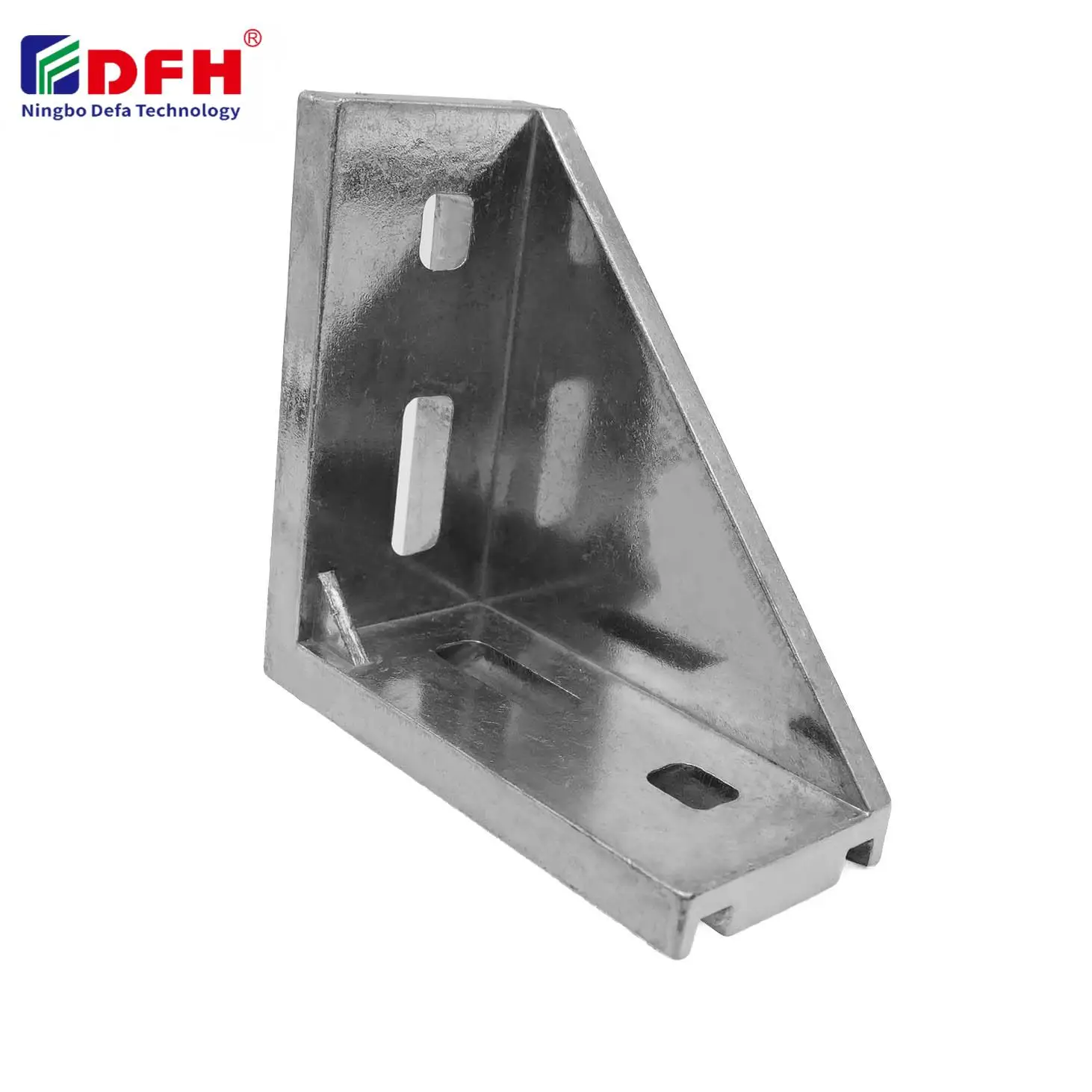
Vibration-induced loosening and stress concentration remain the primary concerns when deploying fasteners and structural connections in high vibration zones. Industrial equipment such as pumps, compressors, motors, and conveyor systems generate continuous or intermittent vibration that can degrade joint preload, encourage micro-slip at contact surfaces, and accelerate fatigue crack initiation. Understanding how right angle brackets and corner fasteners respond to these forces is essential for design engineers seeking reliable assembly solutions that maintain structural integrity over extended operational lifecycles.
Vibration causes cyclic loading that reverses stress direction repeatedly. When corner fasteners join two members at right angles, the joint experiences shear stress, bending moment, and normal force in multiple planes simultaneously. High amplitude or high frequency vibration accelerates fatigue crack growth in the base material and at stress concentration points such as hole edges and fillet radii. The preload in fasteners gradually relaxes under cyclic loading, reducing clamping force and allowing relative motion between joined surfaces, a condition known as fretting.
The choice of material directly influences how well Angle Connectors withstand vibration. Aluminum extrusion accessories offer lightweight, corrosion-resistant solutions, but aluminum exhibits lower fatigue strength than steel. High-strength steel right angle brackets tolerate cyclic stresses more effectively and maintain preload better under vibration. Materials with higher damping capacity, such as ductile iron or composite-reinforced polymers, naturally dissipate vibration energy and reduce stress amplitude at joint interfaces. When specifying 90 degree joints for vibration-intensive applications, engineers must balance material properties against environmental constraints such as temperature, chemical exposure, and weight limits.
A stiffer joint resists micro-slip and maintains consistent preload under vibration. Angle Connectors with larger bearing surfaces, thicker cross-sections, and larger fastener diameters distribute loads over greater areas and exhibit higher bending stiffness. The contact patch between corner fasteners and the members they join should be maximized to reduce local stress concentrations. Welded corner fasteners eliminate the preload relaxation problem entirely by creating a monolithic assembly, but they sacrifice modularity and adjustability. Bolted right angle brackets remain popular because they enable quick assembly and disassembly, provided that fastener tension is monitored and maintained throughout service life.
Connections with inherent damping characteristics reduce vibration transmission and lower peak stress levels. 90 degree joints that incorporate elastomeric layers, viscoelastic coatings, or surface treatments that increase friction at the contact interface dissipate more vibrational energy than bare metal connections. Preload management becomes critical in damped assemblies; higher preload increases friction and damping but also increases the baseline stress level. Designers must optimize preload to balance vibration damping against fatigue life, considering both static and dynamic load conditions. Field experience shows that corner fasteners with anti-vibration coatings or lock-type fastener designs outperform standard hardware in high vibration zones.
Proper installation of Angle Connectors directly influences vibration performance. All fasteners must be torqued to specification using calibrated tools, and preload should be verified with tension indicators or ultrasonic methods when reliability is critical. Threadlocker compounds applied to bolt threads reduce self-loosening by increasing friction within the thread interface. Right angle brackets benefit from regular inspection schedules that identify loosened fasteners before catastrophic failure occurs. Vibration monitoring equipment can detect early signs of joint degradation by measuring acceleration, frequency response, or displacement at the connection zone.
Not all 90 degree joints require identical vibration resistance. Low-amplitude, low-frequency vibration in structures such as framework or support shelving poses minimal risk and allows use of standard corner fasteners. High-amplitude, high-frequency vibration in rotating machinery or impact-prone environments demands reinforced Angle Connectors, lock fasteners, and continuous monitoring. Medium-vibration applications benefit from quality fasteners, adequate preload control, and periodic inspection. The cost premium for vibration-rated corner fasteners is justified only when the consequences of failure are severe, such as equipment downtime, safety hazard, or product damage. Engineers must assess failure modes and select right angle brackets accordingly.
Standard Angle Connectors may loosen under continuous high vibration within months or years, depending on amplitude, frequency, and fastener preload. While they do not immediately fail, preload relaxation and micro-slip reduce their structural reliability. For applications requiring uninterrupted service, lock fasteners, higher material grades, or welded corner fasteners are recommended.
High-strength steel right angle brackets typically outperform aluminum or standard steel in vibration resistance due to superior fatigue properties and stiffness. Stainless steel offers additional corrosion protection for harsh environments. Material selection must balance vibration performance against weight, cost, and environmental factors such as temperature or chemical exposure.
Inspection frequency depends on vibration severity and failure consequences. Critical 90 degree joints should be checked monthly or quarterly during the first service period to establish baseline loosening rates. After baseline data is established, inspection intervals can be adjusted based on observed trends. Continuous vibration monitoring systems provide real-time data and can alert operators to degradation before fasteners fail completely.
2026/09/30
Source aluminum profiles for versatile modular framing. Learn extrusion mechanics, strength benefits & corrosion resistance. Request details.
2026/09/30
Source aluminum profiles for construction projects. Learn structural framing, cladding & window benefits for maximum ROI. Download guide.
2026/09/30
Source optimal aluminum profile sizing techniques. Evaluate load, space, alloy, environment & cost factors to prevent deflection. Download guide.
2026/09/30
Struggling with fastener failures or rework? Master screw sizing by diameter, pitch, material, and load—plus industry-specific standards. Optimize reliability & compliance now.
2026/09/30
Source aluminum profiles for industrial engineering. Discover strength-to-weight ratios, corrosion resistance & 30% cost savings. Download guide.
2026/09/30
Source heat-resistant aluminum profile systems. Master thermal expansion science & stress management strategies for industrial builds. Download guide.