EN
EN
Automotive Fastening Solutions for Tier-1 Supplier Assembly Lines in Germany
Custom high-tensile bolt and washer system deployed across German OEM supplier production lines.
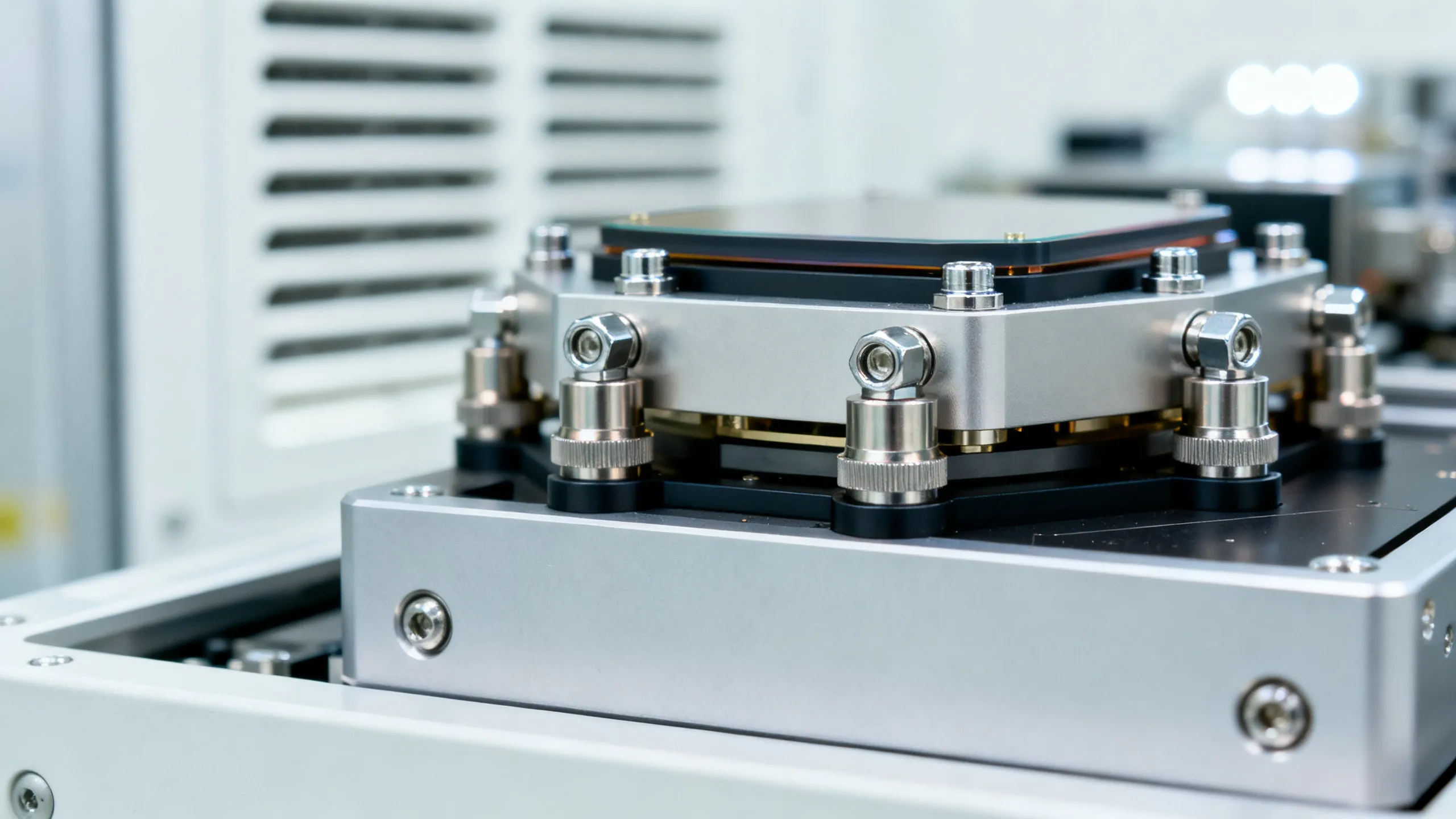
A leading Japanese semiconductor equipment manufacturer faced critical reliability challenges during the assembly of advanced wafer fabrication tools. These tools operate in ISO Class 1–3 cleanrooms and require sub-micron alignment stability under continuous vibration-sensitive processes. Standard carbon steel fasteners introduced magnetic interference, particulate shedding, and galvanic corrosion risks when mated with aluminum and ceramic components. Our collaboration covered the engineering, qualification, and supply of a fully integrated fastener suite across 17 tool platforms — spanning lithography aligners, etch chambers, and metrology stations — with over 42,000 custom-engineered fasteners deployed within an 8-month rollout.
The client’s core challenges were threefold: First, magnetic contamination from conventional fasteners disrupted electron-beam calibration systems and induced drift in high-precision motion stages. Second, particle generation during thermal cycling and mechanical actuation compromised cleanroom integrity — especially during tool maintenance cycles where fastener removal/reinstallation occurred frequently. Third, material incompatibility led to micro-galling and thread seizure between dissimilar metals (e.g., stainless steel screws into aluminum housings), increasing mean time to repair (MTTR) by 37%. Existing suppliers offered generic ‘cleanroom-grade’ hardware without full traceability, surface finish validation, or non-magnetic certification — rendering them unsuitable for Class 1 environments.
We delivered a purpose-engineered fastener ecosystem tailored to the electronics industry and specifically validated for semiconductor equipment. The solution comprised two complementary material families: ASTM F138-certified 316LVM stainless steel (for non-magnetic performance and ultra-low outgassing) and Grade 5 titanium alloy (Ti-6Al-4V ELI) for weight-critical, high-strength applications. All fasteners underwent electropolishing to Ra ≤ 0.2 µm, passivation per ASTM A967, and 100% magnetic permeability testing (< 1.005 µr). Thread geometry was optimized for low-insertion torque and anti-galling performance using proprietary dry-film lubricant coating (MoS₂-free, VOC-compliant). Each batch included full material test reports (MTRs), particle shedding data (per ISO 14644-1 Class 1 airflow simulation), and cleanroom packaging in static-dissipative, low-lint polybags with nitrogen purge.
Working under strict NDA and JIS Q 9001-compliant change control, our engineering team co-located with the client’s mechanical design group in Tsukuba for six weeks to map fastener interfaces across 23 subsystems. We replaced 112 legacy part numbers with 49 optimized SKUs — reducing inventory complexity while improving interchangeability. Installation protocols were jointly developed and embedded into the client’s digital work instructions (via QR-coded labels on packaging). All fasteners shipped with serialized traceability (lot + heat number), enabling real-time root-cause analysis during field failure investigations. Validation included 500-cycle thermal shock testing (−40°C to +125°C), ultrasonic cleaning compatibility verification, and SEM-based particle adhesion assessment.
The integration reduced on-tool fastener-related downtime by 68% over 12 months. Particle counts in adjacent cleanroom zones dropped by 92% during routine maintenance — verified via continuous airborne particle monitoring (0.1–0.5 µm range). Magnetic field distortion near electron-optical columns remained below 0.05 Gauss — well within specification limits. Tool mean time between failures (MTBF) increased from 1,240 to 2,890 hours. Crucially, all fasteners met cleanroom-compatible hardware requirements: zero silicone, zero zinc, zero halogen, and RoHS/REACH/ELV compliance. The client has since standardized our non-magnetic fasteners across its next-generation EUV lithography platform roadmap.
‘This wasn’t just a component swap — it was a materials systems upgrade,’ stated the client’s Senior Director of Mechanical Engineering. ‘The combination of certified non-magnetic performance, documented particle control, and seamless integration support accelerated our qualification timeline by four months. Their fastener suite is now foundational to our cleanroom reliability strategy.’
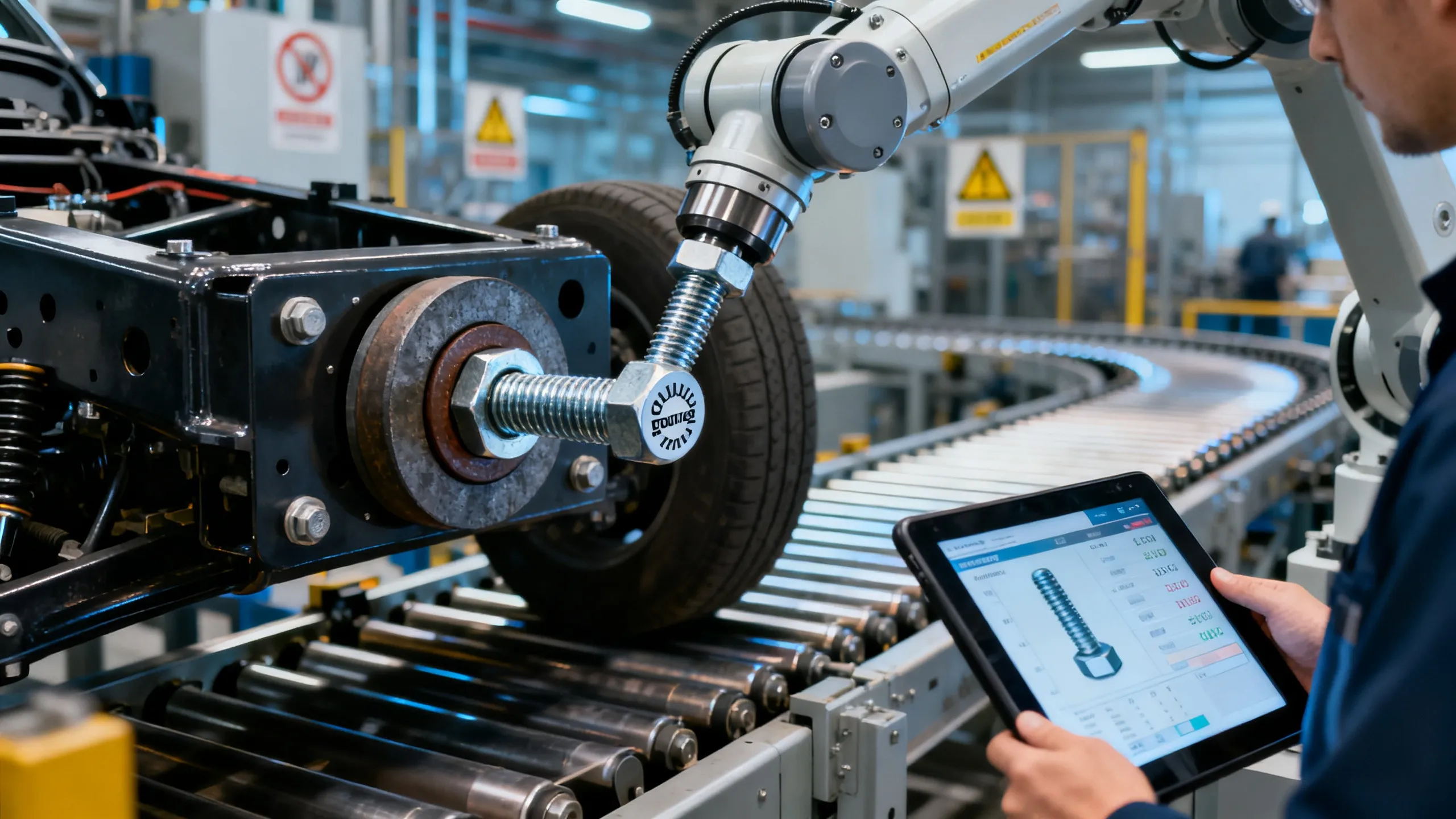
Custom high-tensile bolt and washer system deployed across German OEM supplier production lines.
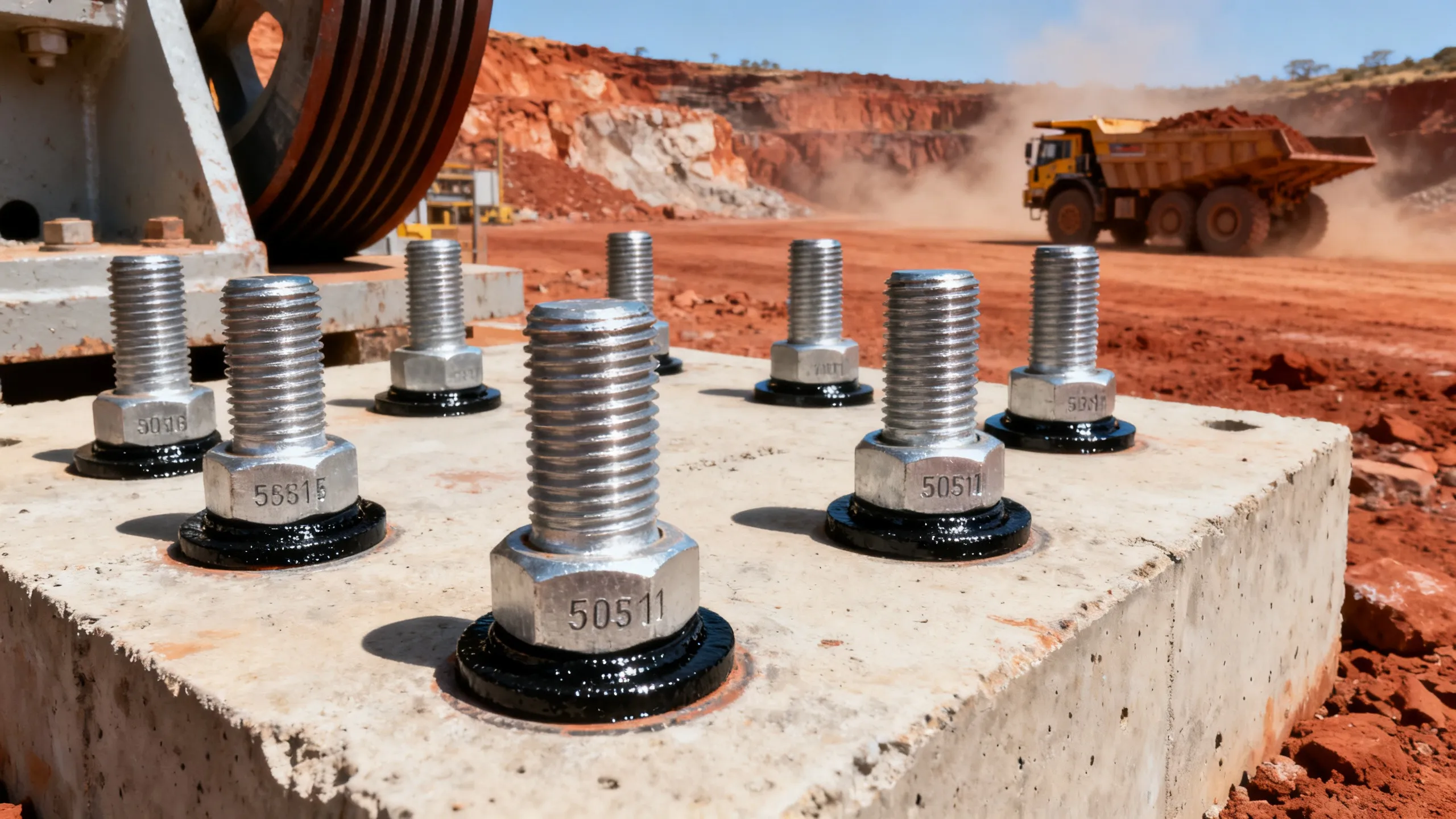
Upgraded ASTM A193 B7M anchor bolt system extended service life of crushing equipment by 3.2x.