EN
EN
Precision Fastener Integration for Semiconductor Manufacturing Equipment in Japan
Stainless steel and titanium fastener suite enabling vibration-free, particle-free operation in wafer fab tools.
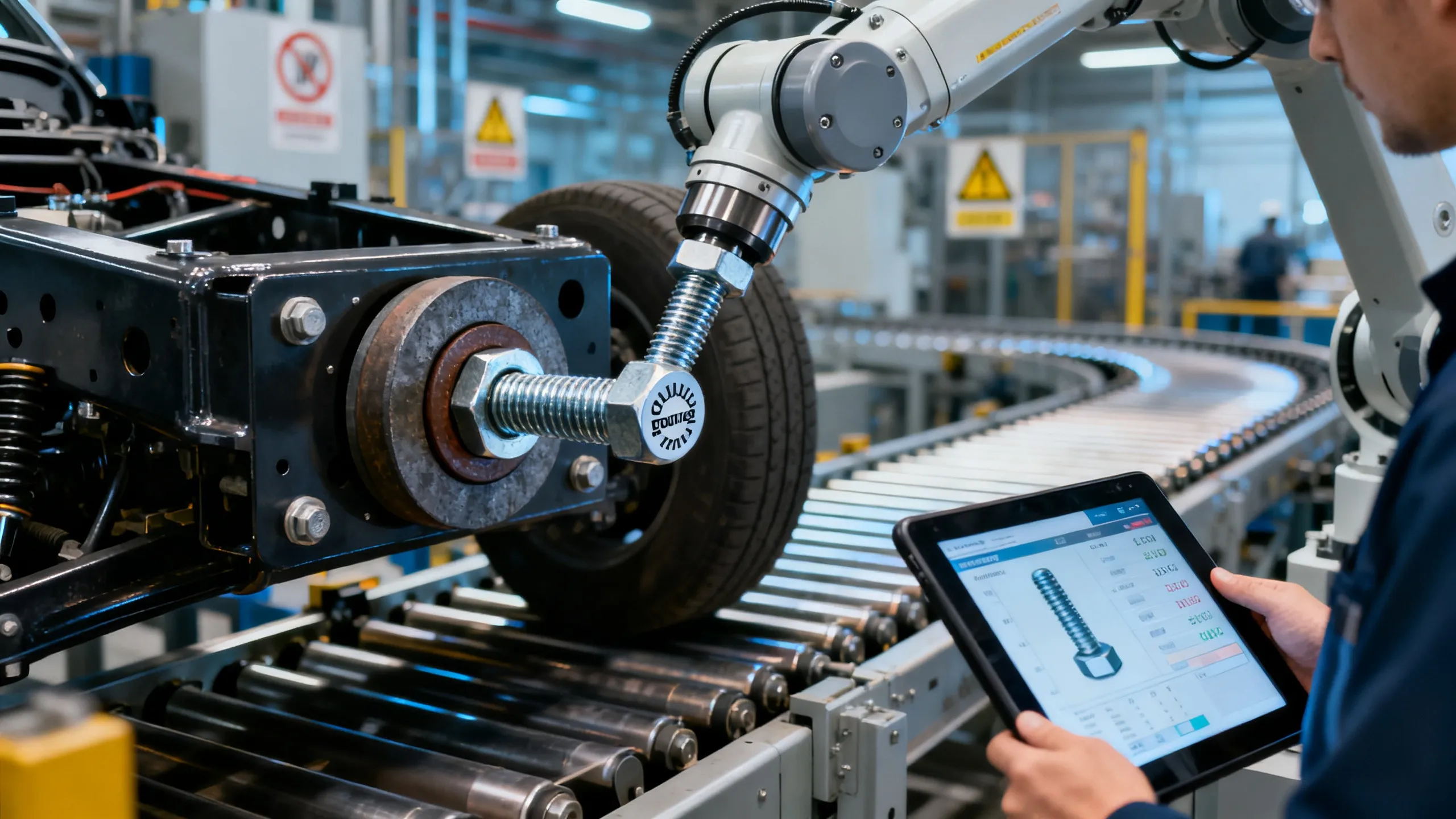
A leading German Tier-1 automotive supplier—specializing in chassis and powertrain modules for premium European OEMs—faced recurring quality deviations and line-stop incidents during final assembly. Across three high-volume production lines in Wolfsburg and Neckarsulm, over 12,000 fastening operations per shift relied on legacy bolt-washer combinations that failed to maintain consistent clamp load under dynamic torque sequencing. With annual production exceeding 450,000 vehicle units, even a 0.3% failure rate translated into significant rework, warranty exposure, and audit nonconformities against IATF 16949 requirements.
The core challenges were multifaceted: First, standard DIN 933 bolts exhibited inconsistent thread friction due to variable plating thickness, causing torque-to-tension scatter beyond ±15%—well above the ±8% tolerance mandated for critical suspension joints. Second, flat washers lacked sufficient surface hardness (HV120), resulting in plastic deformation during automated tightening, compromising preload retention over thermal cycling. Third, traceability was fragmented: fasteners arrived in mixed batches without lot-level documentation, violating ISO 9001 Clause 8.5.2 on identification and traceability. These issues triggered repeated customer PPAP rejections and internal process capability (Cpk) scores below 1.0 for joint integrity metrics.
We delivered a fully integrated, certified fastening system engineered specifically for high-speed robotic assembly. The solution comprised:
Deployment followed a phased, low-risk rollout over 10 weeks. Phase 1 involved joint process mapping with the supplier’s PFMEA team to identify 7 critical fastening stations (e.g., control arm pivot, subframe mounting). Phase 2 included torque validation using calibrated Kistler multi-axis sensors and digital twin simulation of joint relaxation under 150,000 km equivalent vibration profiles. Phase 3 covered operator training, tool calibration updates (for Bosch PSB 1800 EC tools), and integration with the supplier’s MES for real-time SPC dashboards. Zero production downtime occurred; changeover was executed during scheduled maintenance windows.
Within three months of full deployment, measurable improvements included:
‘This isn’t just a fastener swap—it’s a reliability enabler,’ stated the supplier’s Head of Production Engineering. ‘The combination of certified material consistency, embedded traceability, and application-specific friction control has transformed our joint integrity assurance from reactive inspection to predictive confidence. As we ramp up EV platform volumes, this partnership gives us foundational readiness for higher-torque, aluminum-intensive assemblies.’ The project reaffirms how precision-engineered automotive fasteners, backed by rigorous ISO 9001 certified fasteners protocols, serve as mission-critical enablers—not commodities—in modern automotive industry manufacturing and assembly line fastening excellence.
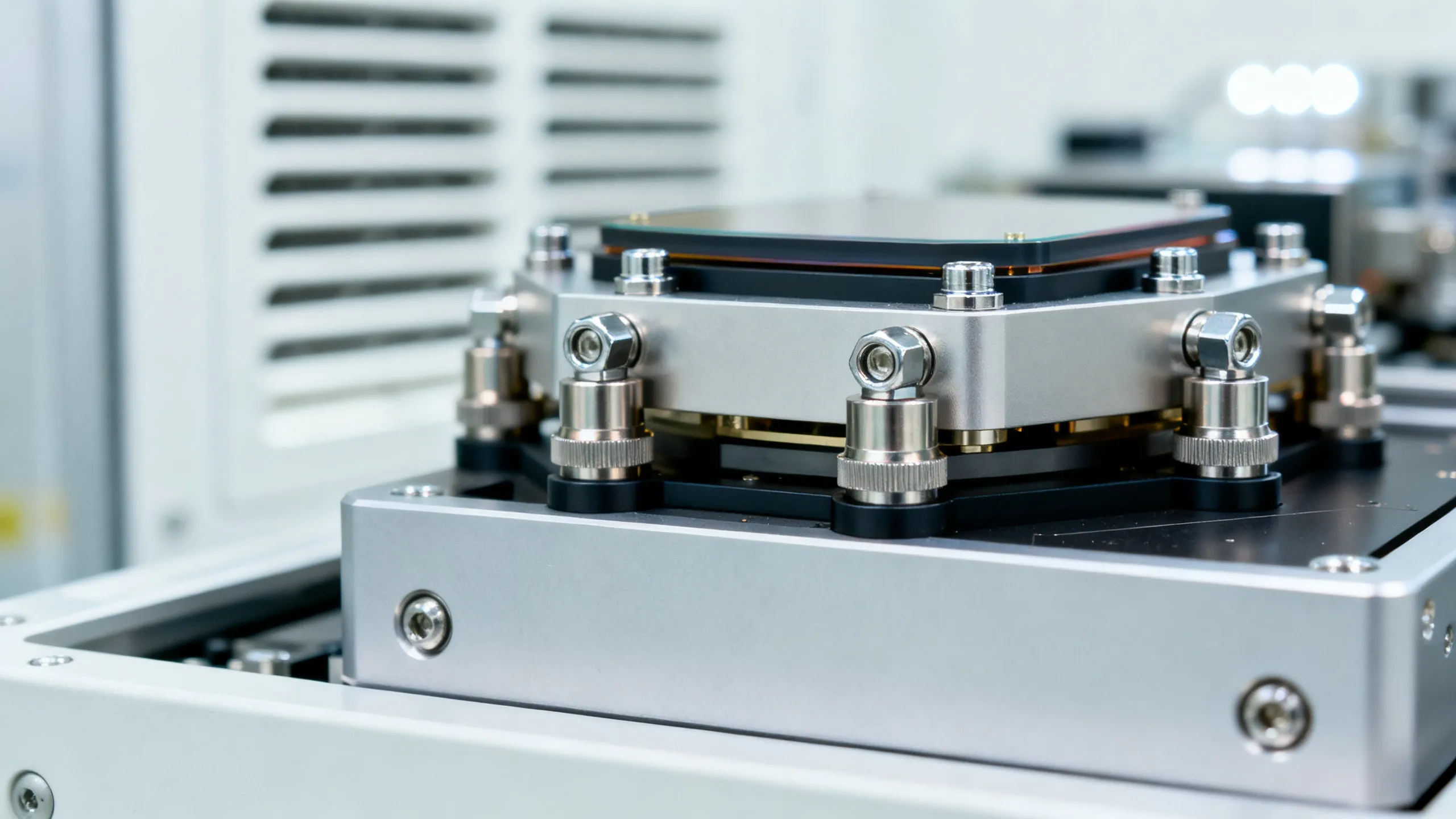
Stainless steel and titanium fastener suite enabling vibration-free, particle-free operation in wafer fab tools.
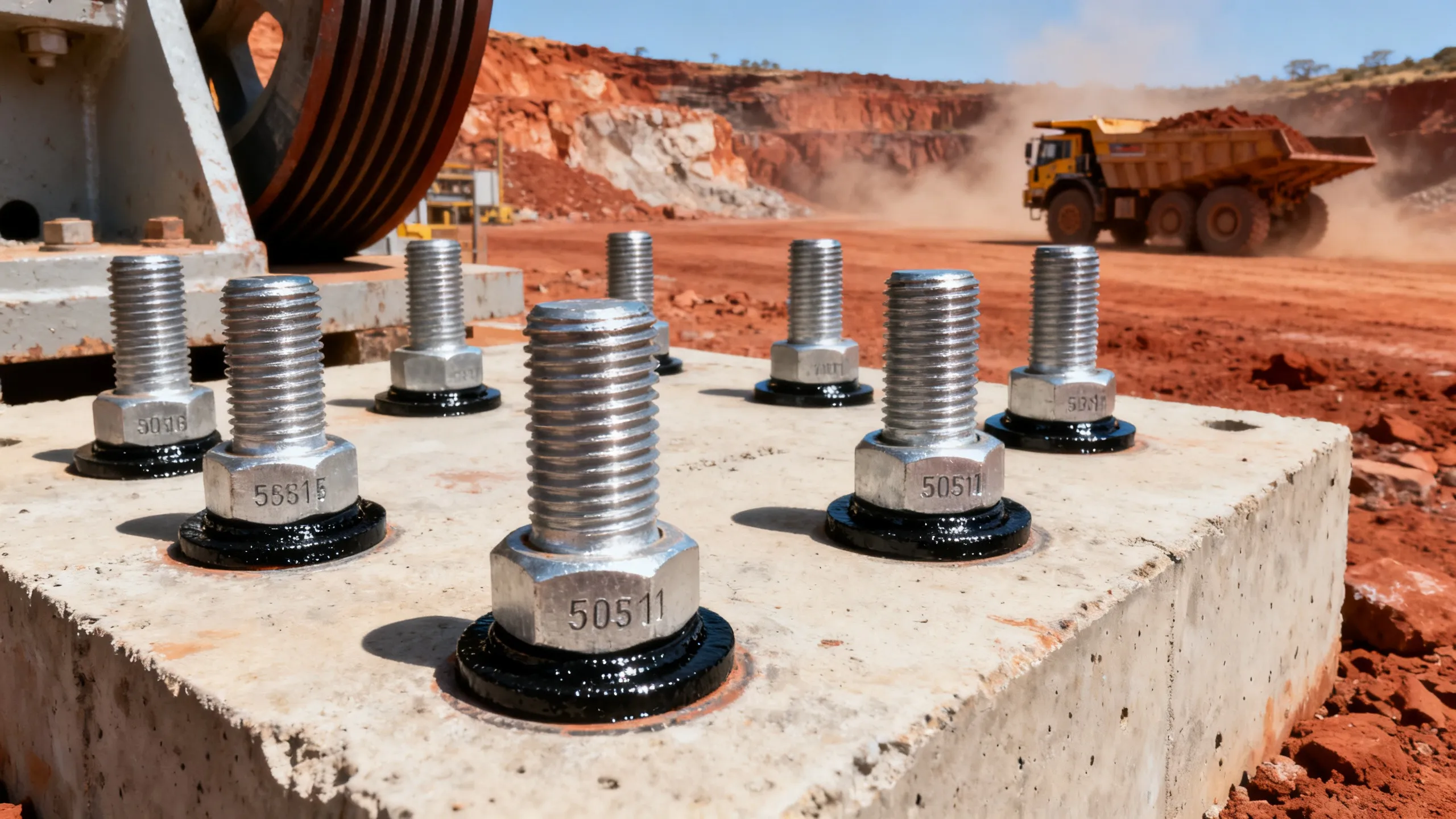
Upgraded ASTM A193 B7M anchor bolt system extended service life of crushing equipment by 3.2x.